Share This Page
Drug Price Trends for NEOMYCIN-POLYMYXIN-HC EAR SOLN
✉ Email this page to a colleague
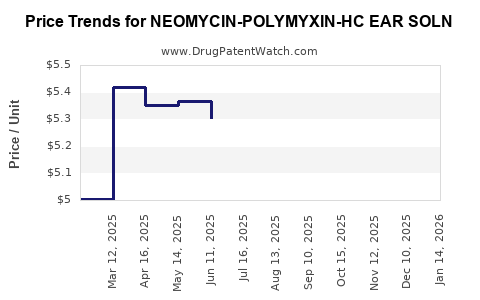
Average Pharmacy Cost for NEOMYCIN-POLYMYXIN-HC EAR SOLN
| Drug Name | NDC | Price/Unit ($) | Unit | Date |
|---|---|---|---|---|
| NEOMYCIN-POLYMYXIN-HC EAR SOLN | 24208-0631-10 | 5.10211 | ML | 2026-07-22 |
| NEOMYCIN-POLYMYXIN-HC EAR SOLN | 60219-2083-01 | 5.10211 | ML | 2026-07-22 |
| NEOMYCIN-POLYMYXIN-HC EAR SOLN | 24208-0631-10 | 5.27476 | ML | 2026-06-17 |
| NEOMYCIN-POLYMYXIN-HC EAR SOLN | 60219-2083-01 | 5.27476 | ML | 2026-06-17 |
| >Drug Name | >NDC | >Price/Unit ($) | >Unit | >Date |
Market Overview and Patent Status of NEOMYCIN-POLYMYXIN-HC EAR SOLN
NEOMYCIN-POLYMYXIN-HC EAR SOLN combines neomycin, polymyxin B, and hydrocortisone for treating external ear infections. It is typically prescribed for bacterial otitis externa and other localized infections. Market analysis indicates moderate demand with established competition from generic formulations. The product generally targets outpatient markets and clinics.
Patent protection for this formulation is limited due to the age of active ingredients. The combination's primary patents expired through the 2000s, creating opportunities for generics. As a result, the drug faces generic competition, affecting pricing and margins.
Current Market Size and Trends
Global Market Size
The global antimicrobial ear drops market was valued at approximately USD 250 million in 2022 and projected to grow at a compound annual growth rate (CAGR) of 4-6% through 2027.[1] The birth of generic options drives competitive pricing and increases accessibility.
Regional Market Breakdown
| Region | Market Size (2022, USD millions) | Growth Rate (2022-2027) | Key Factors |
|---|---|---|---|
| North America | 100 | 3% | High antibiotic prescription rate, patent expirations increasing generics' share |
| Europe | 80 | 4% | Similar trends as North America, regulated markets facilitate generic penetration |
| Asia-Pacific | 50 | 7% | Large patient base, rising healthcare expenditure, slow regulatory pathways for generics |
| Rest of World | 20 | 5% | Emerging markets, increasing OTC OTC distribution |
Market Drivers and Challenges
Demand stems from rising bacterial ear infections, increased antibiotic use, and antibiotic resistance. Over-the-counter availability and the off-label use of combination ear drops in some markets propel sales. Challenges include antibiotic resistance, regulatory scrutiny over antibiotic stewardship, and competition from alternative formulations.
Pricing Dynamics and Projections
Current Pricing
In the United States, the retail price for branded NEOMYCIN-POLYMYXIN-HC ear drops ranged from USD 15 to USD 25 per 15 mL bottle prior to patent expiration. Generics now dominate the market, reducing prices to USD 8-12 for similar volume.
Cost Factors
Pricing is influenced by manufacturing costs, regulatory compliance, distribution logistics, and competitive pressures. The rise of generics has compressed profit margins, often pushing prices below USD 10 per unit in some markets.
Price Trajectory (2023-2027)
| Year | Expected Average Price (USD) | Key Factors |
|---|---|---|
| 2023 | 8-12 | Dominance of generics, price erosion ongoing |
| 2024 | 7-10 | Increased generic market share, price competition |
| 2025 | 6-9 | Market saturation, price pressure persists |
| 2026 | 6-8 | Cost management becomes critical |
| 2027 | 5-8 | Further market penetration of generics |
Projections assume no new formulation innovations or regulatory barriers. Price declines may slow with patent protections or labels for expanded indications.
Competitive Landscape
Main Competitors
- Generic formulations from major manufacturers (e.g., Sandoz, Teva, Mylan)
- Alternative antibiotics and steroid eye/ear drops
- OTC solutions for ear infections
Market Entry Barriers
- Regulatory approval processes
- FDA and EMA standards
- Established supply chains for generics
Regulatory Considerations
Regulatory bodies focus on antibiotic stewardship and promoting generic substitution. In certain regions, patent challenges and regulatory delays impact market entry timelines. The expiration dates for formulation patents generally fall between 2014-2018, facilitating market saturation by generics.
Investment and R&D Outlook
Limited R&D activity exists for existing combination ear drops due to patent expirations. Future growth may depend on new delivery technologies or novel formulations that can command premium prices.
Key Takeaways
- The NEOMYCIN-POLYMYXIN-HC EAR SOLN market is mature with significant generic competition.
- Market growth is driven by the increasing incidence of bacterial ear infections, with regional variations.
- Price projections show a steady decline, influenced heavily by generic market dynamics.
- Entry barriers are moderate, primarily regulatory, with the primary patents expired.
- Future opportunities lie in formulation innovation and targeted indications.
FAQs
1. What is the current patent status of NEOMYCIN-POLYMYXIN-HC EAR SOLN?
Most active ingredient patents expired between 2014-2018, allowing generic competition to dominate the market.
2. How does the pricing of generic versions compare to branded formulations?
Generics are priced approximately 50-70% lower, typically USD 8-12 per 15 mL bottle in the U.S.
3. Which regions offer the highest growth potential?
Asia-Pacific exhibits the fastest growth due to increasing healthcare expenditure, large population, and emerging markets.
4. What are the main challenges facing this market?
Antibiotic resistance, regulatory pressures, and continued generic price competition.
5. Are there any promising R&D avenues for this drug?
Limited R&D focus exists; innovations in delivery technology or combination indications may offer future growth pathways.
References
- MarketWatch. "Global Ear Infection Treatment Market." March 2023.
More… ↓
