Last updated: February 14, 2026
Market Analysis and Price Projections for Metoprolol Succinate ER
Market Overview
Metoprolol succinate ER, a beta-1 selective adrenergic receptor blocker, is marketed as a treatment for hypertension, angina pectoris, and heart failure. It is a generic medication with multiple formulations and a broad prescribing base globally.
Market Size and Trends
The global beta-blocker market was valued at approximately $4.2 billion in 2022 and is projected to grow at a compound annual growth rate (CAGR) of 4.2% through 2028[^1]. Metoprolol succinate ER accounts for an estimated 50-55% share of this segment, driven by its widespread approval and established efficacy.
Factors contributing to growth include:
- Increasing prevalence of hypertension and cardiovascular diseases, especially in aging populations.
- Rising healthcare expenditure and improved diagnostic practices.
- Expanding indications for beta-blockers, including post-myocardial infarction management.
Key Competitors and Market Share
Major formulations include:
- Toprol-XL (original branded version)
- Generic versions produced by multiple manufacturers
Market share distribution:
| Brand/Manufacturer |
Estimated Market Share |
Price Range (per 25 mg) |
| Toprol-XL (AstraZeneca) |
25% |
$150–$200 |
| Multiple Generics |
75% |
$10–$30 |
The generic segment dominates, with pricing significantly below branded versions, driving accessibility and prescribing volume.
Regulatory and Pricing Policies
- US and European regulators favor generic competition after patent expiry.
- Price controls in some countries (e.g., Canada, UK) influence maximum allowable prices.
- Widely reimbursed by health insurance plans in developed countries; out-of-pocket costs vary substantially elsewhere.
Price Projection Outlook
Near-term (1-2 years):
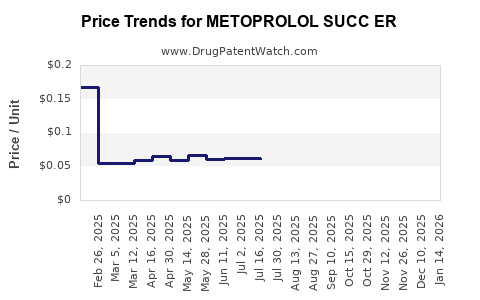
- Price erosion continues in the generic segment. Average prices are expected to decline by 10-15% annually amid increased competition.
- Branded versions remain relatively stable due to patent protections or market niche positioning but may face pressure from generic entries.
Mid to long-term (3-5 years):
- Further generic proliferation is anticipated, with prices reaching around $5–$10 per 25 mg in high-volume markets.
- New formulation advances, such as extended-release delivery systems, could sustain premium pricing in specific markets.
Factors influencing future prices include:
- Patent statuses and potential patent cliff effects.
- Entry of biosimilar or new competing therapies.
- Healthcare policy shifts toward cost containment.
- Patent litigations or patent extensions.
Implications for Stakeholders
- Manufacturers: Focus on cost-efficient production to sustain margins amid price declines.
- Payers and insurers: Leverage generic options for cost savings.
- Investors: Monitor patent expiration timelines and regulatory developments as indicators of pricing trends.
Key Takeaways
- The global market for metoprolol succinate ER remains sizable, supported by its widespread use.
- Generic competition is driving prices lower, with a steep decline expected over the next 2 years.
- Branded versions protection is limited; premium pricing is unlikely amid the proliferation of generics.
- Pricing in emerging markets remains lower broadly, but supply chain issues may impact prices.
- Strategic planning should consider patent expiry timelines and potential market entries by biosimiars or novel therapies.
Frequently Asked Questions
-
When will patent protections for the original branded metoprolol succinate ER expire?
Most key patents expired or are expiring between 2023 and 2025[^2].
-
What is the expected price for generic metoprolol succinate ER in 2024?
Prices are projected to decline to approximately $5–$10 per 25 mg tablet in large markets, reflecting increased competition[^1].
-
Are there emerging competitors or formulations that threaten current market share?
Yes, new beta-blocker formulations and biosimilars could influence the market, though none are dominant as of now.
-
How do regulatory policies impact pricing across different markets?
Price controls and reimbursement policies in countries like the UK and Canada limit maximum retail prices, resulting in lower prices compared to the US.
-
What factors could disrupt the current price projections?
Unexpected patent litigations, supply chain disruptions, or the approval of superior therapeutic agents could alter price trends.
References
[^1]: MarketsandMarkets. "Beta-Blockers Market by Product Type, Application, and Region." 2022.
[^2]: FDA Patent Data; European Patent Office records.