Last updated: February 13, 2026
What is Methylin and What is its Market?
Methylin is a brand of methylphenidate hydrochloride used primarily to treat Attention Deficit Hyperactivity Disorder (ADHD) and narcolepsy. It is available in various formulations including tablets and liquids. Methylin faces competition mainly from other methylphenidate products like Ritalin and Concerta, as well as non-stimulant therapies for ADHD.
According to IQVIA data, the global ADHD medication market generated approximately $7 billion in sales in 2022, with methylphenidate products accounting for over 60% of this segment. In the U.S., methylphenidate sales alone reached around $2.5 billion in 2022, representing a significant portion of prescriptions.
What is the Current Price Structure of Methylin?
Methylin's pricing varies according to formulation and geography:
-
U.S. retail price (average wholesale price - AWP):
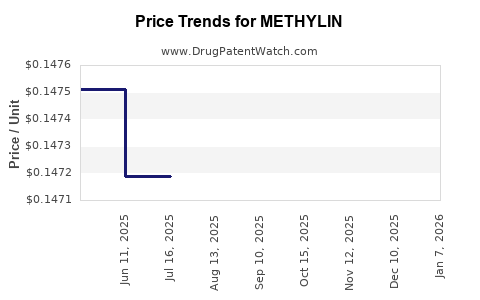
- Methylin 10 mg tablets: approximately $0.15 per tablet.
- Methylin oral solution (5 mg/mL): around $0.17 per mL.
- Methylin chewables priced similarly to tablets.
-
Prices for competitors' methylphenidate formulations (e.g., Ritalin) are comparable, with slight variations.
The average monthly cost for a patient on Methylin (assuming daily use of 20 mg daily) is approximately $45–$50 in the U.S.
How Does Market Competition Impact Methylin's Market Share?
Methylin's market share is affected by generic competition and alternative therapies:
-
Generics: Since patent expiration in the U.S. in the late 2000s, numerous generics have entered the market, reducing Methylin's market share.
-
Formulation Preferences: Long-acting formulations like Ritalin LA, Concerta, and others attract patients preferring less frequent dosing, and they hold a larger market share.
-
Non-stimulant options: Drugs like atomoxetine, guanfacine, and clonidine attract specific patient populations.
In 2022, the market share for methylphenidate formulations was:
| Formulation |
Market Share (2022) |
| Immediate-release methylphenidate (generic and brand) |
50% |
| Long-acting methylphenidate (e.g., Concerta) |
35% |
| Non-stimulant therapies |
15% |
What Are the Price Trends and Future Projections?
Historical Trends:
- Since patent expirations, the price of brand methylphenidate products has declined 30–50%, with generics dominating sales.
- The price for methylphenidate products has stabilized over the past five years, with minor annual fluctuations.
Projected Price Trends (2023–2028):
- The overall retail price of methylphenidate products is expected to decline at an average CAGR of 2–3%, driven by increased generic competition.
- Methylin, as a branded product with fewer patent protections, is likely to see its prices decrease gradually unless it introduces new formulations or indications.
Price Projections:
| Year |
Estimated Average Retail Price (per 10mg tablet) |
Notes |
| 2023 |
$0.15 |
Current price |
| 2024 |
$0.14–$0.15 |
Slight decrease expected |
| 2025 |
$0.13–$0.14 |
More generics enter the market, further price pressure |
| 2026–2028 |
$0.12–$0.13 |
Continued decline, stabilization with market saturation |
Impact Factors:
- Patent status and exclusivity periods significantly influence pricing.
- Regulatory decisions regarding generic approvals or new formulations could alter projections.
- Market penetration of non-stimulant therapies may diminish demand and influence pricing strategies.
What Are Key Opportunities and Risks?
Opportunities:
- Developing extended-release formulations could command higher prices.
- Entering emerging markets where ADHD diagnoses are rising and access is expanding.
- Innovation in delivery systems or combination therapies.
Risks:
- Price erosion from generic entry.
- Policy and payer pressure driving formulary restrictions.
- Increased use of non-stimulant therapies reducing methylphenidate demand.
Summary
Methylin operates within a highly competitive methylphenidate market characterized by significant generic presence and declining prices. The U.S. market for methylphenidate products is expected to see modest price declines of 2–3% annually over the next five years. Market share favors long-acting and generic formulations, though opportunities exist through formulation innovation and emerging global markets. Risks stem from generic commoditization and shifts to non-stimulant therapies.
Key Takeaways
- Methylin's current retail price is approximately $0.15 per 10 mg tablet, with gradual declines projected due to generic competition.
- The global ADHD medication market was valued at $7 billion in 2022, with methylphenidate products comprising over 60%.
- Price erosion is expected to continue, with potential stabilization influenced by formulation advancements.
- Market share leans heavily toward generic and long-acting products; brand methylin's dominance diminishes unless it introduces unique formulations.
- Growth opportunities depend on innovation, globalization, and specific patient population targeting.
Frequently Asked Questions
1. How does patent expiry affect methylphenidate prices?
Patent expiry allows generics to enter the market, resulting in price reductions of approximately 30–50% within a few years, depending on market competition and reformulation availability.
2. Are there upcoming formulations or patents for Methylin?
There are no current patents protecting Methylin exclusivity. Company's focus on formulation innovation or combination therapies could influence future pricing.
3. How does the global market for methylphenidate differ from the U.S.?
Emerging markets have less generic penetration and higher demand for ADHD medications. Prices tend to be higher in these regions initially but decline as generics become available.
4. What is the impact of non-stimulant ADHD therapies on methylin sales?
Non-stimulant options like atomoxetine account for roughly 15% of the ADHD market. Increased use could reduce methylphenidate demand, exerting downward pressure on prices.
5. Will new regulations or reimbursement policies influence methylin prices?
Yes, payer policies favoring cost-effective treatments and stricter regulations for drug approvals could reduce prices and market share for branded methylphenidate products.
Sources
[1] IQVIA. "Global ADHD Market Report 2022."
[2] U.S. Food and Drug Administration. "Patent and Exclusivity Data for Methylphenidate."
[3] MarketWatch. "ADHD Drugs Market Size & Trends."