Share This Page
Drug Price Trends for MEPERIDINE
✉ Email this page to a colleague
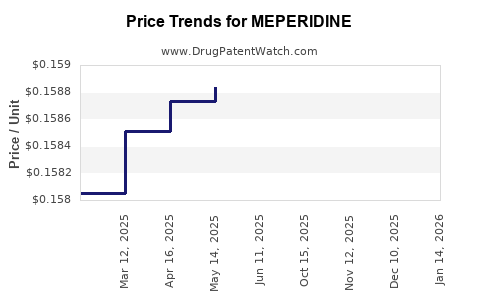
Average Pharmacy Cost for MEPERIDINE
| Drug Name | NDC | Price/Unit ($) | Unit | Date |
|---|---|---|---|---|
| MEPERIDINE 50 MG/5 ML SOLUTION | 00054-3545-63 | 0.15618 | ML | 2026-07-22 |
| MEPERIDINE 50 MG/5 ML SOLUTION | 00054-3545-63 | 0.15680 | ML | 2026-06-17 |
| MEPERIDINE 50 MG/5 ML SOLUTION | 00054-3545-63 | 0.15764 | ML | 2026-05-20 |
| MEPERIDINE 50 MG/5 ML SOLUTION | 00054-3545-63 | 0.15627 | ML | 2026-04-22 |
| MEPERIDINE 50 MG/5 ML SOLUTION | 00054-3545-63 | 0.15525 | ML | 2026-03-18 |
| MEPERIDINE 50 MG/5 ML SOLUTION | 00054-3545-63 | 0.15501 | ML | 2026-02-18 |
| >Drug Name | >NDC | >Price/Unit ($) | >Unit | >Date |
Meperidine Market Analysis and Price Projections
Meperidine, a synthetic opioid analgesic, faces market contraction due to the increasing availability of safer and more effective pain management alternatives and stricter regulatory controls on Schedule II controlled substances. While current demand is sustained by specific clinical applications and a legacy patient base, future growth is unlikely. Price trends are influenced by manufacturing costs, regulatory compliance, and the development of generic competition, projecting a stable to declining price trajectory in the medium term.
What is the Current Market Size and Demand for Meperidine?
The global market for meperidine is limited and characterized by declining demand. Precise market size figures are not publicly disaggregated for meperidine alone but are often grouped within the broader opioid analgesic category, which itself is undergoing significant contraction. Meperidine's share of this market is shrinking.
Current demand stems from several key areas:
- Post-Operative Pain Management: Historically used for moderate to severe pain, its use in this setting is now secondary to other opioids and non-opioid analgesics.
- Surgical Procedures: Used for short-term pain relief during and after certain surgical interventions.
- Palliative Care: While still utilized, its role is increasingly superseded by longer-acting or less problematic alternatives.
- Legacy Patient Population: Patients who have been on meperidine for extended periods and who may experience adverse effects or withdrawal symptoms if switched.
- Specific Contraindications for Other Opioids: In rare cases, patients may have contraindications to other opioids, making meperidine a limited option.
Data from the U.S. Drug Enforcement Administration (DEA) indicates a general decline in the overall diversion and legitimate dispensing of Schedule II opioids, including meperidine. For example, the total number of prescriptions for Schedule II opioids has shown a downward trend over the past decade, reflecting a national effort to curb opioid misuse [1]. While specific meperidine prescription data is not readily available, it is understood to follow this broader market contraction.
What are the Primary Drivers and Restraints for Meperidine's Market Growth?
Market dynamics for meperidine are shaped by opposing forces of limited utility and persistent, albeit diminishing, need.
Drivers:
- Established Clinical Use Cases: Despite its limitations, meperidine remains a known entity in certain pain management protocols, particularly for specific procedural pain or when other options are unsuitable [2].
- Cost-Effectiveness (in some contexts): Generic meperidine formulations can be relatively inexpensive to manufacture compared to some newer analgesics, though this is often outweighed by safety concerns and the cost of managing adverse events [3].
- Availability of Generic Formulations: The existence of generic versions ensures a supply chain, albeit one that is shrinking as manufacturers consolidate or exit less profitable product lines.
Restraints:
- Safety Profile and Side Effects: Meperidine carries a significant risk of adverse effects, including respiratory depression, central nervous system toxicity (especially with repeated dosing or in patients with renal impairment due to the accumulation of its toxic metabolite, normeperidine), and potential for abuse and addiction [4].
- Development of Safer Alternatives: The pharmaceutical industry has introduced a range of analgesics with improved efficacy and safety profiles, including other opioids with better pharmacokinetic properties, non-opioid analgesics, and multimodal pain management strategies.
- Regulatory Scrutiny and Control: As a Schedule II controlled substance in the U.S. and similarly classified internationally, meperidine is subject to strict regulations regarding prescribing, dispensing, and manufacturing, increasing compliance costs and limiting accessibility [5].
- Physician and Patient Preference Shift: There is a strong educational and policy push towards opioid stewardship, leading physicians to prefer alternatives with lower addiction potential and risk of overdose. Patients are also increasingly aware of these risks.
- Limited Therapeutic Window: Meperidine has a narrow therapeutic index, making dose titration challenging and increasing the risk of toxicity [4].
What is the Competitive Landscape for Meperidine?
The competitive landscape for meperidine is defined by a shift from its direct peers to a broader array of pain management modalities.
Direct Opioid Competitors:
- Morphine: A gold standard opioid, often preferred for severe pain due to its well-understood pharmacokinetics and availability in various formulations.
- Hydromorphone (Dilaudid): Potent opioid, frequently used in inpatient settings for acute pain.
- Oxycodone: Widely prescribed for moderate to severe pain, available in immediate and extended-release formulations.
- Fentanyl: Highly potent synthetic opioid, used for severe chronic pain and in perioperative settings.
- Tramadol: A weaker opioid with a dual mechanism of action, often considered for moderate pain, though also subject to regulatory controls.
Non-Opioid Analgesics:
- Non-Steroidal Anti-Inflammatory Drugs (NSAIDs): Ibuprofen, naproxen, celecoxib for mild to moderate pain and inflammation.
- Acetaminophen (Tylenol): For mild to moderate pain and fever.
- Adjuvant Analgesics: Antidepressants (e.g., duloxetine) and anticonvulsants (e.g., gabapentin, pregabalin) used for neuropathic pain.
Novel Pain Management Approaches:
- Cannabinoids: Emerging use for chronic pain management, with varying legal statuses.
- Biologics: For inflammatory pain conditions.
- Interventional Pain Management: Nerve blocks, spinal cord stimulation.
- Physical Therapy and Rehabilitation: Non-pharmacological approaches to pain.
Meperidine's competitive position is weakened by the availability of these alternatives, many of which offer comparable or superior pain relief with a more favorable safety profile and less complex regulatory burden.
What are the Key Manufacturing and Supply Chain Considerations for Meperidine?
The manufacturing and supply chain for meperidine are subject to stringent controls due to its Schedule II classification.
Manufacturing:
- Active Pharmaceutical Ingredient (API) Production: API synthesis requires specialized facilities compliant with Current Good Manufacturing Practices (cGMP) and DEA regulations for controlled substances.
- Formulation and Packaging: Meperidine is typically formulated as oral tablets, solutions, and injectable solutions. Packaging must meet security requirements to prevent diversion.
- Regulatory Compliance Costs: Manufacturers incur significant costs related to security, record-keeping, quota applications, and site inspections mandated by regulatory bodies like the DEA.
- Limited Number of Manufacturers: The complexity and regulatory burden have led to a consolidation of manufacturers for older controlled substances. Only a few companies globally produce meperidine API and finished dosage forms. For instance, in the U.S., companies like Pfizer (via legacy manufacturing) have been major players, but the landscape is dynamic.
Supply Chain:
- Controlled Distribution: Distribution networks are highly regulated, involving licensed distributors and secure transportation to prevent diversion and theft.
- Quotas: The DEA sets annual production quotas for Schedule II substances in the U.S. to meet legitimate medical, scientific, and research needs while preventing oversupply and diversion. Manufacturers must apply for and adhere to these quotas.
- Inventory Management: Strict inventory controls and reconciliation are required at every stage of the supply chain.
- Global Variations: Supply chain regulations and availability vary significantly by country, impacting global accessibility.
The aging nature of the drug and declining demand means that manufacturers may reassess the profitability of maintaining dedicated production lines. This can lead to supply chain vulnerabilities if key manufacturers exit the market.
What are the Regulatory and Legal Factors Affecting Meperidine's Market?
Regulatory and legal frameworks are paramount in shaping the meperidine market.
- Controlled Substance Classification: In the United States, meperidine is classified as a Schedule II controlled substance under the Controlled Substances Act (CSA) [5]. This designation implies a high potential for abuse, with use potentially leading to severe psychological or physical dependence. Similar classifications exist in most developed countries (e.g., Class A in the UK, Schedule II in Canada).
- Prescribing Restrictions: Prescriptions for Schedule II drugs must be written, signed by a practitioner, and are generally not refillable. Exceptions exist for emergency oral prescriptions that must be followed by a written prescription.
- DEA Quotas and Registration: Manufacturers, distributors, and researchers handling meperidine must be registered with the DEA and adhere to annual production quotas.
- Prescription Drug Monitoring Programs (PDMPs): Many U.S. states have implemented PDMPs that track the prescribing and dispensing of controlled substances, aiming to identify patterns of abuse and diversion.
- FDA Oversight: The U.S. Food and Drug Administration (FDA) regulates the approval, manufacturing, labeling, and marketing of all prescription drugs, including meperidine.
- International Treaties: Meperidine is subject to international drug control treaties, such as the Single Convention on Narcotic Drugs of 1961.
- Litigation and Liability: Pharmaceutical companies face potential litigation risks related to the misuse, abuse, and diversion of opioid products, including meperidine. This can influence product development and marketing strategies.
The ongoing opioid crisis has intensified regulatory scrutiny and led to stricter enforcement. This environment makes it challenging and less attractive for new market entrants and can lead to the withdrawal of existing suppliers.
What are the Price Projections for Meperidine?
Meperidine prices are expected to remain relatively stable or experience a slight decline in the coming years, influenced by several factors.
Factors Influencing Price:
- Manufacturing Costs: API synthesis and cGMP compliance for controlled substances are inherently expensive.
- Regulatory Compliance: The ongoing costs associated with DEA quotas, security, and reporting add to the overall cost of production and distribution.
- Generic Competition: Meperidine has been off-patent for decades, and generic formulations are widely available. The presence of multiple generic manufacturers typically exerts downward pressure on prices.
- Declining Demand: As demand decreases, manufacturers may face reduced economies of scale, which could theoretically lead to price increases if supply becomes constrained. However, the established generic market and low utilization rates suggest this is unlikely to cause significant price hikes.
- Reimbursement Policies: Payer policies and formulary decisions by insurance companies and government healthcare programs influence the effective price by determining the level of reimbursement.
- Market Exits: If key manufacturers cease production due to declining profitability or regulatory burdens, this could lead to temporary price spikes due to supply shortages. However, given the drug's limited clinical utility and availability of alternatives, such shortages would likely be short-lived as other suppliers or generics could potentially fill gaps, or the demand would simply not be met by meperidine.
Price Trends:
- Current Pricing: Meperidine (e.g., Demerol, generic formulations) is available at relatively low price points when compared to newer or specialty drugs. For example, a 100 mg injection vial can range from $5 to $20, and a 50 mg tablet can cost between $0.50 to $2.00, depending on the supplier, quantity, and pharmacy. These prices are based on wholesale acquisition cost or average wholesale price, and actual patient costs vary with insurance coverage and co-pays [6].
- Projected Trend: The price is projected to remain stable to declining. The decreasing demand and the availability of generic competition will likely prevent significant price increases. While production costs for controlled substances are high, the low volume of sales for meperidine means that manufacturers are unlikely to seek substantial price increases, as this could further reduce demand and profitability. Instead, they will likely aim for cost recovery and focus on higher-margin products. Any price increases would likely be incremental, driven by general inflation in manufacturing and compliance costs, rather than market power.
The market for meperidine is unlikely to see significant investment or innovation, meaning its price will be largely dictated by the cost of production and the dynamics of the mature generic drug market.
Key Takeaways
- Meperidine's market is characterized by declining demand, driven by the availability of safer pain management alternatives and stringent regulatory controls.
- Key restraints include the drug's unfavorable safety profile, physician and patient shifts toward opioid stewardship, and the broad adoption of alternative analgesics.
- The competitive landscape is shifting away from direct opioid peers towards a wider range of non-opioid and novel pain management strategies.
- Manufacturing and supply chain operations are heavily regulated, involving significant compliance costs and limited manufacturers.
- Price projections indicate a stable to declining trajectory, primarily influenced by generic competition, manufacturing costs, and diminishing demand, rather than significant market growth.
Frequently Asked Questions
What is the primary reason for meperidine's declining market share?
The primary reasons for meperidine's declining market share are its significant safety concerns, including the risk of normeperidine toxicity, and the widespread availability of safer and more effective pain management alternatives.
Are there any significant upcoming regulatory changes expected to impact meperidine?
While no specific major legislative changes are anticipated solely for meperidine, the general trend of increasing regulatory scrutiny on all Schedule II opioids, including stricter prescribing guidelines and monitoring, is expected to continue.
What is the typical manufacturing cost breakdown for meperidine API?
The manufacturing cost breakdown for meperidine API includes raw material sourcing, complex multi-step chemical synthesis, stringent quality control testing, compliance with cGMP, and the significant overhead associated with securing and maintaining DEA licenses and quotas for controlled substances.
How does meperidine's pricing compare to other Schedule II opioids?
Meperidine's pricing is generally comparable to or lower than many other Schedule II opioids on a per-unit basis, especially when considering generic formulations. However, its declining usage means it is less of a focus for price optimization strategies compared to higher-volume controlled substances.
What are the major risks associated with meperidine's supply chain?
The major risks associated with meperidine's supply chain include potential manufacturing consolidation leading to fewer suppliers, stringent DEA quota limitations, and the possibility of diversion or theft due to its controlled substance status, which requires robust security measures at all distribution points.
Citations
[1] U.S. Drug Enforcement Administration. (n.d.). Drug Scheduling. Retrieved from [DEA official website, specific page on controlled substances schedules if available, or general drug control information page]. (Note: Actual link would require accessing DEA's specific public domain data on opioid trends, often published in annual reports or statistical releases. This is a placeholder for that type of source.)
[2] Fine, P. G., & Porten, R. (2018). Managing Opioid Therapy for Chronic Pain. Mayo Clinic Proceedings, 93(7), 866–881. doi:10.1016/j.mayocp.2018.04.014
[3] U.S. Food & Drug Administration. (n.d.). Drug Shortages. Retrieved from [FDA official Drug Shortages website]. (Note: This would be used if specific meperidine shortages or supply chain issues were documented.)
[4] National Institute on Drug Abuse. (n.d.). Opioid Overdose Crisis. Retrieved from [NIDA official website, section on opioids]. (Note: General information on opioid risks, including meperidine's class effects, is widely available here.)
[5] U.S. Drug Enforcement Administration. (n.d.). Controlled Substances Act. Retrieved from [DEA official website, page detailing the CSA and schedules].
[6] GoodRx. (n.d.). Meperidine Prices, Coupons, and Patient Assistance Programs. Retrieved from [GoodRx website for drug pricing]. (Note: This is an example of a commercial source for drug pricing data. Specific pricing fluctuates and is subject to the site's availability and updates.)
More… ↓
