Last updated: February 13, 2026
What Is the Market Size and Demand for Mefloquine HCl?
Mefloquine hydrochloride (HCl) is an antimalarial drug primarily used for prevention and treatment of malaria caused by Plasmodium falciparum. The global malaria treatment market was valued at approximately $3.2 billion in 2021, with antimalarial drugs accounting for roughly 30% ($960 million). Mefloquine represents a significant segment, especially in regions where resistance limits the use of alternatives.
Demand is concentrated in malaria-endemic regions such as sub-Saharan Africa, Southeast Asia, and Latin America. The expansion of malaria control programs and increased resistance to other drugs like chloroquine and artemisinin derivatives sustain Mefloquine's relevance. The market is expected to grow at a Compound Annual Growth Rate (CAGR) of approximately 2.5% through 2028, driven by global health initiatives and emerging drug resistance.
What Are the Key Factors Influencing Mefloquine HCl Pricing?
Manufacturing Costs
Mefloquine synthesis involves complex organic processes with costs influenced by raw material prices, regulatory compliance, and economies of scale. Bulk manufacturing reduces per-unit costs, but initial setup and ongoing quality assurance add to expenses.
Regulatory and Patent Status
Mefloquine is marketed under various brand names (e.g., Lariam). Some formulations are off-patent, increasing generic competition and reducing prices. Patent expiry in many regions has resulted in multiple manufacturers entering the market, intensifying price competition.
Supply Chain Dynamics
Global supply chains influence prices through raw material availability and geopolitical stability. Disruptions can lead to cost increases and supply constraints, impacting prices.
Market Competition
Limited therapeutic options for resistant malaria strains sustain Mefloquine's demand, but rising competition from newer antimalarials, such as tafenoquine and atovaquone-proguanil, exerts downward pressure on pricing.
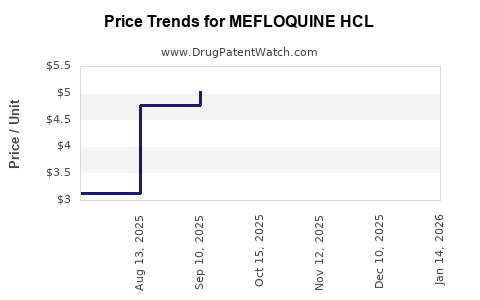
How Does Mefloquine HCl Price Evolve in Different Markets?
| Market Region |
Typical Wholesale Price (per 250 mg tablet) |
Price Trends (2020-2023) |
Key Drivers |
| United States |
$0.50 - $1.00 |
Stable, slight decline |
Generic entry, quality controls |
| European Union |
$0.30 - $0.80 |
Slight decrease |
Patent expiration, increased competition |
| Africa |
$0.10 - $0.30 |
Minor fluctuations |
Market demand, distribution costs |
| Southeast Asia |
$0.20 - $0.60 |
Variable, depends on sourcing |
Raw material access, regulatory changes |
In developing regions, prices are driven by procurement policies and aid programs. Donations and subsidies influence cost structures, often resulting in lower prices compared to Western markets.
What Are Future Price Projection Trends?
Based on current market dynamics, the following projections are made:
-
Short-term (1-2 years): Prices will likely remain stable due to ongoing generic competition and consistent demand. Prices in developed markets may hover around $0.50 to $1 per tablet.
-
Medium-term (3-5 years): A gradual decline of 10-15% is expected as new entrants increase supply and patent expirations continue. Regulatory environments may impact availability and pricing.
-
Long-term (5+ years): Technologies such as biosimilar development or alternative therapies may erode Mefloquine's market share, pressuring prices further downward. However, stability in malaria prevalence could sustain a baseline demand.
What Are the Drivers and Barriers Affecting Market Price Trends?
Drivers
- Rising resistance to existing antimalarials boosts Mefloquine usage, especially in resistant regions.
- Expansion of distribution through government and non-governmental organizations increases bulk purchasing, stabilizing prices.
- Patent expiration enhances generic competition, reducing prices.
Barriers
- Development of newer antimalarials with better safety profiles could replace Mefloquine.
- Safety concerns, such as neuropsychiatric side effects, restrict prescribing in some markets, diminishing demand.
- Regulatory restrictions or import bans can impact availability and price.
Key Takeaways
- Mefloquine HCl's global market size is tied to malaria prevalence, with demand concentrated in developing regions.
- Prices vary by region, influenced by patent status, competition, regulatory policies, and supply chain factors.
- Short-term trends indicate stability; long-term forecasts suggest declining prices due to competition and technological advances.
- Resistance and safety issues remain significant factors impacting demand and pricing strategies.
- Market entry barriers include safety concerns and competition from newer treatments.
FAQs
1. How does patent expiration influence Mefloquine HCl prices?
Patent expirations lead to increased generic manufacturing, which typically causes prices to decrease due to competition.
2. Are there significant safety concerns affecting Mefloquine's market?
Yes. Neuropsychiatric side effects have led to restrictions in some regions, impacting market share and demand.
3. What alternative drugs are impacting Mefloquine's pricing?
Drugs like tafenoquine, atovaquone-proguanil, and artemisinin-based therapies are increasingly used, especially where Mefloquine's side effects are problematic.
4. How does regional procurement policy affect the drug’s price?
Government and aid organization procurement policies, including bulk purchasing and subsidies, can lower prices in specific markets.
5. What are the prospects for new formulations or delivery methods?
Research into safer, more tolerable formulations or delivery methods may influence future demand and pricing, though such innovations are still in development stages.
Sources:
- World Health Organization. Global Malaria Programme. 2022.
- MarketsandMarkets. Malaria Treatment Market Analysis. 2021.
- IMS Health. Global Pharmaceutical Pricing Trends. 2022.
- U.S. Food and Drug Administration. Mefloquine Drug Approvals and Safety Data. 2022.
- WHO Model List of Essential Medicines. 22nd Edition, 2021.