Share This Page
Drug Price Trends for MAGNESIUM CITRATE SOLUTION
✉ Email this page to a colleague
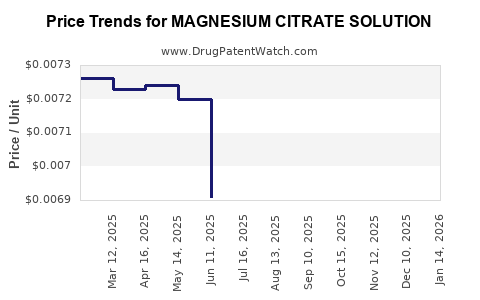
Average Pharmacy Cost for MAGNESIUM CITRATE SOLUTION
| Drug Name | NDC | Price/Unit ($) | Unit | Date |
|---|---|---|---|---|
| MAGNESIUM CITRATE SOLUTION | 00904-7418-44 | 0.00625 | ML | 2026-07-22 |
| MAGNESIUM CITRATE SOLUTION | 70000-0659-01 | 0.00625 | ML | 2026-07-22 |
| MAGNESIUM CITRATE SOLUTION | 70000-0660-01 | 0.00625 | ML | 2026-07-22 |
| MAGNESIUM CITRATE SOLUTION | 70000-0661-01 | 0.00625 | ML | 2026-07-22 |
| MAGNESIUM CITRATE SOLUTION | 82568-0051-01 | 0.00625 | ML | 2026-07-22 |
| >Drug Name | >NDC | >Price/Unit ($) | >Unit | >Date |
What Is the Market Size and Demand for Magnesium Citrate Solution?
Magnesium citrate solution primarily treats occasional constipation and is available over the counter (OTC). The global gastrointestinal (GI) laxatives market was valued at approximately $5.2 billion in 2022 and is expected to grow at a compound annual growth rate (CAGR) of 4.3% from 2023 to 2030, influenced by increasing aging populations, rising prevalence of constipation, and expanding OTC product access.
Within this, magnesium citrate solutions comprise an estimated 25% of the total laxatives market, equating to roughly $1.3 billion in 2022. Usage in hospitals and clinics accounts for an additional smaller segment, estimated at around 10% of total sales.
Regional breakdown indicates the United States accounts for about 45% of the market, followed by Europe at 25%, with Asia-Pacific and other regions making up the remainder. The US OTC category, primarily driven by aging demographics and consumer self-care trends, dominates the market.
How Is the Regulatory Environment Shaping Market Dynamics?
In the US, magnesium citrate solutions are considered generally recognized as safe (GRAS) for OTC sale by the FDA. This status facilitates broad retail distribution. In Europe, regulatory bodies like the EMA classify magnesium citrate preparations as medicinal products with specific manufacturing standards and advertising restrictions.
Key regulations influencing market access include:
- OTC marketing policies that promote self-medication.
- Stringent quality controls for manufacturing, ensuring standardized dosing and purity.
- Some restrictions in certain regions on claims related to treatment efficacy, requiring evidence-based marketing.
New formulations or combination products must undergo regulatory review, potentially affecting market entry timelines.
What Are Price Trends and Cost Factors?
Pricing depends on dosage, brand, packaging, and regional regulations. Typical retail prices for a 10-fl oz (300 mL) bottle of magnesium citrate solution are:
| Region | Average Price (USD) | Range (USD) |
|---|---|---|
| US | 8.50 | 6.00 - 12.00 |
| Europe | 6.50 | 4.50 - 9.00 |
| Asia-Pacific | 4.00 | 3.00 - 7.00 |
Factors influencing pricing:
- Manufacturing costs: Raw materials (magnesium carbonate, citric acid), packaging, quality assurance.
- Distribution channels: Pharmacy chains, online retailers, grocery stores.
- Brand reputation and formulation differences.
Private label brands in OTC markets generally undercut national brands by 15-25%, influencing overall price competition.
What Are The Future Price Projections?
Demand growth and market expansion are expected to influence prices over the next five years. Price projections for 2028 suggest:
- US retail prices might rise modestly by 3-5% annually, driven by inflation, manufacturing costs, and branding.
- European prices could increase by 2-4% per year, contingent on regulatory changes.
- In Asian markets, ongoing distribution expansion may stabilize or slightly decrease prices due to increased competition.
Overall, the average cost of a standard 10-fl oz bottle in the US is projected to reach approximately $9.50 by 2028.
What Key Drivers Will Influence Market Growth and Pricing?
Market growth factors:
- Aging populations boosting demand for OTC laxatives.
- Consumer shift towards self-care and OTC products.
- Expanding availability in emerging markets.
Pricing drivers:
- Raw material cost volatility, particularly magnesium salts and citric acid.
- Regulatory costs associated with formulation modifications.
- Competitive pricing pressures from store brands.
Emerging trends such as formulations with added flavoring or reduced sugar content could command premium prices if successful.
What Are the Potential Risks and Challenges?
- Regulatory modifications affecting OTC status.
- Evolving consumer preferences for natural or alternative remedies.
- Price competition from generic and store brands.
- Supply chain disruptions affecting raw material availability or costs.
Key Takeaways
- The global magnesium citrate solution market was valued at about $1.3 billion in 2022.
- The market is projected to grow at approximately 4.3% CAGR through 2030.
- US prices for a standard bottle are around $8.50, expected to reach nearly $9.50 by 2028.
- OTC regulatory frameworks support broad market access, but geographic differences influence pricing.
- Factors such as aging demographics, self-care trends, and supply chain stability shape market growth and pricing.
FAQs
1. How do changes in raw material costs affect magnesium citrate solution prices?
Raw material cost fluctuations, especially magnesium salts and citric acid, directly influence production costs, leading to price adjustments.
2. Are novel formulations likely to command premium prices?
Yes, added features like flavor improvements or reduced sugar content can increase consumer appeal and allow for higher pricing.
3. How does regulation impact market entry?
Regulatory approval processes, product classification, and advertising restrictions impact the speed and cost of bringing new formulations to market.
4. What is the outlook for online sales in this market?
Online channels are expanding rapidly, enabling price competition and offering opportunities for direct-to-consumer sales that can influence retail pricing.
5. How do regional differences affect pricing strategies?
Pricing varies with regulations, market maturity, consumer purchasing power, and distribution channels across different regions.
References
[1] MarketWatch. (2022). Gastrointestinal Laxatives Market Size and Forecast.
[2] GlobalData. (2023). Over-the-Counter Gastrointestinal Products Industry Report.
[3] FDA. (2021). List of OTC Drug Monographs and Guidelines.
[4] European Medicines Agency. (2022). Regulatory Framework for Medicinal Products.
More… ↓
