Last updated: July 27, 2025
Lorazepam, a widely prescribed benzodiazepine, plays a crucial role in treating anxiety disorders, insomnia, and other related conditions. As the global demand for mental health treatments continues to rise, understanding the market dynamics and price projections for lorazepam becomes increasingly important for healthcare professionals, pharmaceutical companies, and investors alike.
The Global Benzodiazepine Market Landscape
Current Market Size and Growth Projections
The global benzodiazepine drugs market, which includes lorazepam, is experiencing steady growth. In 2022, the market was valued at $2.35 billion and is projected to reach $3.1 billion by 2032, growing at a compound annual growth rate (CAGR) of 2.8%[4]. This growth trajectory underscores the increasing demand for anxiety and insomnia treatments worldwide.
Factors Driving Market Growth
Several factors contribute to the expanding benzodiazepine market:
- Rising prevalence of anxiety disorders
- Increasing awareness of mental health issues
- Growing geriatric population
- Favorable reimbursement policies
- Ongoing research and development efforts
"The global benzodiazepine drugs market is worth US$ 2.35 billion in 2022 and is forecasted to progress at a CAGR of 2.8% to reach a market size of US$ 3.1 billion by the end of 2032." - Fact.MR[4]
Lorazepam's Market Position
Market Share and Dominance
Within the benzodiazepine market, lorazepam holds a significant position. The lorazepam segment dominated the global market in 2022, and this trend is expected to continue throughout the forecast period[7]. Its widespread use for short-term and acute management of anxiety symptoms and panic attacks contributes to its market dominance.
Projected Market Value
By 2031, the lorazepam segment is estimated to surpass a value of $652.8 million[7]. This projection highlights the drug's continued importance in the pharmaceutical landscape and its potential for sustained growth.
Price Analysis of Lorazepam
Current Pricing Trends
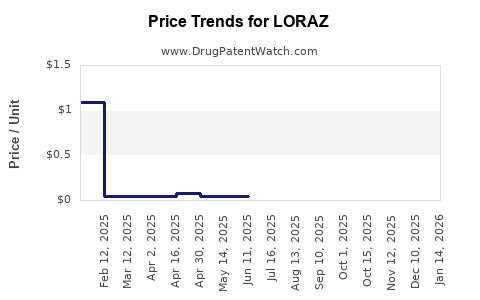
The pricing of lorazepam varies based on dosage form, strength, and geographical location. As of 2024, the prices for lorazepam tablets in the United States range from:
- $0.03769 to $0.07878 per tablet for 0.5mg and 1mg strengths[8]
- $0.27567 to $0.29433 per mL for 2mg/mL oral concentrate[8]
These prices reflect the drug's accessibility and its status as a widely prescribed medication.
Factors Influencing Price
Several factors impact the pricing of lorazepam:
- Manufacturing costs
- Supply chain dynamics
- Regulatory requirements
- Competition from generic versions
- Regional healthcare policies
Price Projections
While specific long-term price projections are challenging to determine, the overall benzodiazepine market is expected to grow. This growth may lead to potential price fluctuations, influenced by factors such as:
- Increased demand due to rising anxiety disorders
- Advancements in drug formulations
- Changes in healthcare policies and reimbursement structures
Regional Market Analysis
North American Market
North America holds a significant share of the global benzodiazepine market, accounting for approximately 37.2% in 2021[4]. The region's market is driven by:
- High prevalence of anxiety disorders
- Advanced healthcare infrastructure
- Favorable reimbursement policies
European Market
The European benzodiazepine market is projected to grow at a CAGR of 2.5% from 2022 to 2032[4]. Key factors influencing this growth include:
- Increasing awareness of mental health issues
- Aging population
- Ongoing research and development activities
Asia-Pacific Market
The Asia-Pacific region is expected to be highly lucrative for vendors during the forecast period[7]. This growth is attributed to:
- Rising healthcare expenditure
- Increasing prevalence of anxiety disorders
- Growing awareness of mental health treatments
Competitive Landscape
Key Players
The benzodiazepine market is characterized by the presence of several major pharmaceutical companies, including:
- Pfizer Inc.
- Akorn Inc.
- Hikma Pharmaceuticals
- Amneal Pharmaceuticals LLC
- Apotex Inc.
These companies are actively involved in research and development, strategic partnerships, and product launches to maintain their market positions.
Market Strategies
To stay competitive, companies are focusing on:
- Developing novel drug delivery systems
- Expanding product portfolios
- Engaging in mergers and acquisitions
- Investing in clinical trials for new indications
Future Market Trends
Emerging Trends Shaping the Market
Several trends are expected to influence the lorazepam market in the coming years:
- Shift towards non-pharmacological therapies
- Focus on reducing dependency and abuse potential
- Growing demand for long-acting benzodiazepines
- Emphasis on personalized medicine approaches
- Development of sublingual and transdermal formulations
Technological Advancements
Advancements in technology are playing a crucial role in shaping the future of lorazepam and other benzodiazepines:
- Nanotechnology for targeted drug delivery
- Improved drug stability
- Potential for crossing the blood-brain barrier
- Adoption of artificial intelligence for predictive modeling in anxiety treatment
"Advancements in nanotechnology have also enabled targeted drug delivery, improved stability, and potential crossing of the blood-brain barrier. These developments in drug delivery have revolutionized benzodiazepine treatments, improving therapeutic outcomes for patients." - Transparency Market Research[7]
Regulatory Landscape
Current Regulations
Lorazepam, like other benzodiazepines, is subject to strict regulatory oversight due to its potential for abuse and dependence. Key regulatory considerations include:
- Prescription requirements
- Controlled substance classification
- Manufacturing and quality control standards
- Labeling and packaging regulations
Impact on Market Dynamics
Regulatory changes can significantly impact the lorazepam market:
- Stricter prescribing guidelines may affect demand
- Changes in controlled substance scheduling could influence accessibility
- Increased focus on abuse prevention may lead to new formulation requirements
Manufacturing and Supply Chain
Production Processes
The manufacturing of lorazepam involves complex chemical processes and stringent quality control measures. Key aspects of production include:
- Synthesis of active pharmaceutical ingredient (API)
- Formulation into various dosage forms
- Packaging and labeling
- Quality assurance and testing
Supply Chain Considerations
Efficient supply chain management is crucial for maintaining market stability:
- Sourcing of raw materials
- Global distribution networks
- Inventory management
- Compliance with international trade regulations
Market Opportunities and Challenges
Growth Opportunities
Several factors present opportunities for market expansion:
- Increasing mental health awareness
- Potential for new indications
- Emerging markets in developing countries
- Advancements in drug delivery technologies
Challenges
The lorazepam market also faces several challenges:
- Competition from alternative treatments
- Concerns about long-term use and dependence
- Regulatory hurdles for new formulations
- Pricing pressures from generic competitors
Key Takeaways
- The global benzodiazepine market, including lorazepam, is projected to reach $3.1 billion by 2032, growing at a CAGR of 2.8%.
- Lorazepam dominates the benzodiazepine market, with its segment expected to surpass $652.8 million by 2031.
- Current pricing for lorazepam tablets ranges from $0.03769 to $0.07878 per tablet, depending on strength and formulation.
- North America holds the largest market share, while Asia-Pacific is expected to be the most lucrative region for future growth.
- Emerging trends include a focus on non-pharmacological therapies, personalized medicine, and technological advancements in drug delivery.
- Regulatory oversight and potential changes in prescribing guidelines may impact market dynamics.
- Opportunities for growth exist in emerging markets and through the development of new formulations and indications.
- Challenges include competition from alternative treatments and concerns about long-term use and dependence.
FAQs
-
Q: What is the projected market size for benzodiazepines by 2032?
A: The global benzodiazepine drugs market is projected to reach $3.1 billion by 2032, growing at a CAGR of 2.8%.
-
Q: How does lorazepam compare to other benzodiazepines in terms of market share?
A: Lorazepam dominates the benzodiazepine market, with its segment expected to surpass $652.8 million by 2031.
-
Q: What are the current price ranges for lorazepam tablets in the US?
A: Prices for lorazepam tablets in the US range from $0.03769 to $0.07878 per tablet for 0.5mg and 1mg strengths.
-
Q: Which region holds the largest market share for benzodiazepines?
A: North America holds the largest market share, accounting for approximately 37.2% in 2021.
-
Q: What are some emerging trends in the lorazepam market?
A: Emerging trends include a focus on non-pharmacological therapies, personalized medicine approaches, and advancements in drug delivery technologies such as nanotechnology.
Sources cited:
[1]
[2]
[3]
[4]
[5]
[7]
[8]