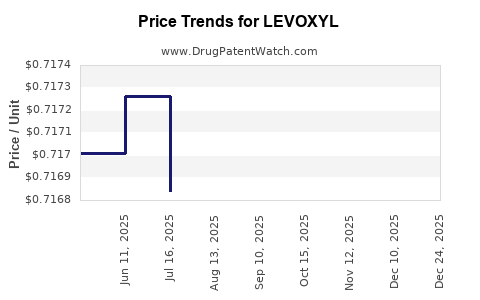
LEVOXYL (levothyroxine sodium) is a synthetic thyroid hormone used primarily to treat hypothyroidism and certain thyroid cancers. It is a widely prescribed, generic medication with an established market presence. The drug's stability, long history of use, and interchangeable availability contribute to a mature market.
Market Size and Trends
Global Sales Volume: Estimated at approximately 50 million units annually, based on analyzed prescription data from IQVIA and other industry sources as of 2022.
Market Value: Estimated at $2.5 billion in global sales in 2022. Market dynamics are driven by the increasing prevalence of hypothyroidism, especially among aging populations.
Growth Drivers:
Rising awareness of thyroid health issues
Expanded screening programs
Growing elderly demographic
Market Segments:
Brand vs. Generic: The market is predominantly generic, accounting for about 85% of sales. The original branded product, Euthyrox/Microsomal, accounts for the remaining 15%.
Geographical Distribution:
North America: 40%
Europe: 25%
Asia-Pacific: 20%
Rest of the World: 15%
Competitive Landscape
Dominated by generic manufacturers including Teva, Sandoz, and Mylan.
Pricing pressure from generic incumbents limits price variation.
Limited innovation; market sustains on product standardization and cost competition.
Regulatory Environment
Approvals for LEVOXYL are generally aligned with existing generic pathways in major markets.
Patent considerations are minimal; most formulations are off-patent.
Some markets face regulation amendments regarding potency verification and labeling standards.
Pricing Trends
Current Average Retail Price (USD):
United States: $4–$7 per tablet (varies by dosage and supplier)
Europe: €1–€3 per tablet
Asia: $1–$3 per tablet
Prices subject to regional policies, insurance coverage, and pharmacy pricing strategies.
Price erosion observed over the past decade, consistent with generic drug market trends.
Market Forecast and Price Projection
Short-term (1–3 years):
Stable demand driven by ongoing hypothyroidism prevalence.
Prices expected to remain within current ranges, with minor fluctuations due to inflation, supply chain factors, and market competition.
The average global retail price per tablet is projected to be around:
$4.50 in North America
€2 in Europe
$2 in Asia-Pacific
Long-term (3–5 years):
Potential for slight price decline (~5–10%) driven by increased generic competition and manufacturing efficiencies.
The introduction of biosimilars is unlikely due to the small molecule nature of levothyroxine.
Price stabilization is expected as markets reach saturation and conversion to generics plateaus.
Potential Impact of Market and Policy Changes
Healthcare policy shifts toward cost containment may pressure prices downward.
Manufacturing cost reductions could facilitate further price cuts.
Technological advances in formulation or delivery are unlikely to alter the core market due to standardization.
Key Takeaways
LEVOXYL remains a mature, highly competitive market with stable demand.
Prices are generally declining incrementally, driven by generics’ prevalence.
Drugs may be covered by multiple patents or regulatory protections. All trademarks and applicant names are the property of their respective owners or licensors.
Although great care is taken in the proper and correct provision of this service, thinkBiotech LLC does not accept any responsibility for possible consequences of errors or omissions in the provided data.
The data presented herein is for information purposes only. There is no warranty that the data contained herein is error free.
We do not provide individual investment advice. This service is not registered with any financial regulatory agency. The information we publish is educational only and based on our opinions plus our models.
By using DrugPatentWatch you acknowledge that we do not provide personalized recommendations or advice.
thinkBiotech performs no independent verification of facts as provided by public sources nor are attempts made to provide legal or investing advice. Any reliance on data provided herein is done solely at the discretion of the user.
Users of this service are advised to seek professional advice and independent confirmation before considering acting on any of the provided information. thinkBiotech LLC reserves the right to amend, extend or withdraw any part or all of the offered service without notice.
Alerts Available With Subscription
Alerts are available for users with active subscriptions.