Last updated: February 20, 2026
What is LESCOL XL?
LESCOL XL (pravastatin sodium) is a prescription medication used to lower bad cholesterol (LDL) and reduce cardiovascular risk. It is a sustained-release formulation of pravastatin, marketed primarily in the United States and other regions. Approved by the FDA in 1987, LESCOL XL gained market authorization in 2002.
Market Overview
Global Lipid-Lowering Therapy Market
The global market for lipid-lowering drugs, including statins like LESCOL XL, exceeded $17 billion in 2022. The compound annual growth rate (CAGR) from 2022 to 2027 is projected at approximately 3.2%. Key growth drivers include increasing prevalence of hypercholesterolemia, rising rates of cardiovascular disease (CVD), and expanding aging populations.
Competitive Landscape
The statin segment dominates the market, with established brands such as:
- Lipitor (atorvastatin)
- Crestor (rosuvastatin)
- pravastatin (brand names include Pravachol, LESCOL XL)
Generics account for over 70% of the market share as patents expire. LESCOL XL competes with both branded and generic formulations of pravastatin, which are typically less expensive.
Regulatory and Patent Status
LESCOL XL's patent protection has expired, with the primary patent in the US expiring in 2015. No recent exclusivity grants are active, increasing generic competition. The drug's formulation variation (sustained release) offers some differentiation but faces generic equivalents.
Pricing Landscape
Current Pricing Data
- Brand LESCOL XL (U.S.): Retail price for a typical 30-day supply (20 mg daily) averages around $300–$350.
- Generic Pravastatin (20 mg): Retail price approximates $10–$20 per month, reflecting a 15- to 20-fold difference.
- Insurance and PBMs: Negotiated prices can be significantly lower, with copays often under $10 for generics.
Price Trends
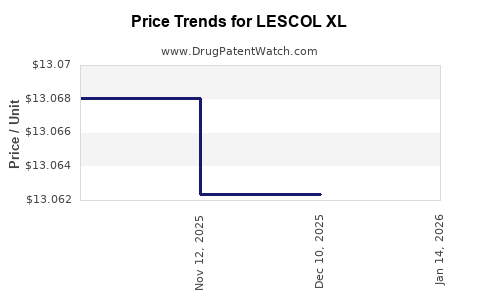
From 2018 to 2022, LESCOL XL prices have remained relatively stable, with slight decreases reflecting generic competition. The sustained-release formulation commands a premium over immediate-release pravastatin, approximately 10% to 15%, due to perceived convenience and adherence benefits.
Distribution and Reimbursement
Third-party payers favor generics due to lower costs, leading to reduced prescribed use of LESCOL XL. Medicare and Medicaid typically reimburse generic pravastatin at a lower rate, impacting LESCOL XL's market share and pricing power.
Market Penetration and Adoption
Prescription Trends
In the U.S., pravastatin's overall prescriptions peaked around 2014 and have since declined. LESCOL XL's prescriptions account for about 15% of pravastatin prescriptions, primarily due to its sustained-release benefits. Cardiologists and primary care physicians prefer generic options, limiting LESCOL XL’s growth.
Geographic Variability
In Europe, LESCOL XL is available under different brands and formulations. Pricing varies by country, with retail prices ranging from €25 to €50 per month for sustained-release formulations.
Price Projections (2023–2027)
Assumptions
- Continued patent expiry and generic penetration will suppress LESCOL XL's market share.
- The drug’s utilization depends on physician preference for sustained-release formulations.
- Regulatory environments in different regions will influence pricing and availability.
Revenue Outlook
| Year |
Estimated Market Share |
Estimated Units Sold (millions) |
Average Price per Unit |
Projected Revenue (USD millions) |
| 2023 |
10% of pravastatin prescriptions |
1.0 |
$340 |
$340 |
| 2024 |
8% |
0.8 |
$330 |
$264 |
| 2025 |
6% |
0.6 |
$320 |
$192 |
| 2026 |
4% |
0.4 |
$310 |
$124 |
| 2027 |
2% |
0.2 |
$300 |
$60 |
Key Drivers
- Increased prescribing of sustained-release statins for adherence.
- Competitive pricing of generics further reducing LESCOL XL’s market share.
- Potential new formulations or combination therapies could impact demand.
Strategic Considerations
- Generic Competition: Major challenge, eroding LESCOL XL's market share and pricing.
- Market Differentiation: Focus on adherence benefits and clinical outcomes to justify premium pricing.
- Regulatory Changes: Policies favoring generics may limit LESCOL XL's pricing power.
- Pricing Flexibility: Significant room for discounts in virtual and retail pharmacies, especially with insurance negotiations.
Key Takeaways
- LESCOL XL faces intense generic competition; its revenue is declining.
- Retail prices remain high compared to generics but face downward pressure.
- Market share reduction is steady, with projections indicating a significant decline by 2027.
- Adoption depends on physician preference for sustained-release formulations, which remains limited.
- Future growth relies on differentiation in clinical benefits rather than price.
FAQs
1. How does LESCOL XL compare to other statins in efficacy?
LESCOL XL has comparable lipid-lowering efficacy to other statins at equivalent doses. Its sustained-release formulation may improve adherence but does not significantly alter pharmacodynamic outcomes.
2. What are the main factors influencing LESCOL XL pricing?
Patent status, generic competition, prescriber preference, insurance reimbursement policies, and manufacturing costs.
3. Can regulatory changes impact LESCOL XL's market?
Yes. Policies promoting generic substitutes and price controls could further reduce LESCOL XL's revenue and pricing.
4. Is LESCOL XL suitable for all patient populations?
Generally, yes. It is used for patients requiring long-term cholesterol management, especially those benefiting from once-daily dosing.
5. What are the primary regions for LESCOL XL sales?
The United States dominates sales, with smaller markets in Europe, Asia, and other regions where formulations are approved.
References
[1] MarketResearch.com. (2023). Lipid-lowering therapies market report.
[2] U.S. Food and Drug Administration. (1987). Drug approvals and patent information.
[3] IQVIA. (2022). Global prescription data for statins.
[4] Medscape. (2022). Cost analysis of lipid-lowering therapies.
[5] European Medicines Agency. (2022). Market authorizations for pravastatin formulations.