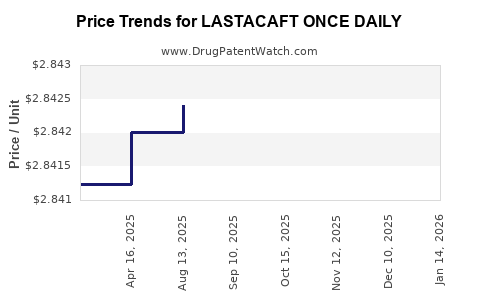
Last updated: February 15, 2026
Market Analysis and Price Projections for LASTACAFT Once Daily
Overview
LASTACAFT (alcaftadine) is an antihistamine eye drop approved by the FDA in 2015. It treats allergic conjunctivitis, a common condition with an estimated global prevalence of 15-20% among allergy sufferers. The medication's once-daily dosing, confirmed efficacy, and safety profile contribute to its market appeal.
Leading competitors include Olopatadine (Patanol, Pataday), Azelastine, and Ketotifen. The ophthalmic allergy segment is projected to grow at a compound annual growth rate (CAGR) of 4-6% from 2023 to 2030, driven by increased allergy prevalence, aging populations, and convenience of once-daily formulations.
Current Market Landscape
Global Market Size (2022): Approximately USD 1.2 billion, with the US accounting for nearly 60%.
Market Drivers: Rising allergy prevalence, patient preference for once-daily dosing, expanding over-the-counter availability of some formulations.
Key Competitors:
- Patanol (Olopatadine)
- Pataday (Olopatadine) 0.2% and 0.7%
- Astepro (Azelastine) nasal spray with ocular formulations
- Ketotifen (over-the-counter)
Distribution Channels: Ophthalmology clinics (70%), primary care (20%), OTC pharmacies (10%).
Regulatory Status: Also approved in Europe and parts of Asia, with patent protections mostly expiring by 2028, opening the market to generics.
Price Trends and Projections
Current Wholesale Acquisition Cost (WAC):
- Brand: Approximately USD 200–250 per 0.34 mL bottle (monthly supply).
- Generic competition: Starts at USD 100–150, with potential for lower prices over time.
Pricing Dynamics:
- Brand dominance maintains higher prices, but as patent expiration nears, prices decline.
- Over-the-counter options are priced around USD 20–50 per bottle, often without prescription requirements.
| Price Trajectory (2023–2030): |
Year |
Estimated USD per Bottle |
Notes |
| 2023 |
200–250 |
Peak pricing with brand exclusivity |
| 2025 |
150–200 |
Patent expiration approaches, competition grows |
| 2027 |
80–120 |
Generics enter most markets, prices decline |
| 2029 |
50–70 (generic) |
Generic dominance, OTC options increase |
Projected average price decline based on historical generic entry patterns in ophthalmic drugs, similar to Patanol and Pataday.
Market Penetration and Growth Potential
Market Penetration Factors:
- Prescription volume growth driven by increasing allergy cases.
- Expansion into OTC channels reduces barriers and broadens consumer base.
- Launch of combination products (e.g., with decongestants) enhances market share.
- Patent expiry opens opportunities for lower-cost generics.
Growth Projections:
- US market expected to grow by 3-4% annually through 2030, surpassing USD 700 million by 2030.
- Emerging markets (China, India) expected to expand faster at 6-8% CAGR due to increasing allergy awareness and OTC purchase trends.
Market Challenges
- Patent cliff approaching, leading to generic competition.
- Price erosion in mature markets.
- Regulatory challenges in emerging markets.
- Consumer preference shifting toward OTC options.
Key Takeaways
- Market size stands around USD 1.2 billion globally, with US dominance.
- Pricing has held steady around USD 200–250 per bottle for brand-name LASTACAFT, decreasing to USD 80–120 with generics by 2027.
- Growth is driven by rising allergy prevalence, aging populations, and expanding OTC availability.
- Patent expiry by 2028 will significantly lower prices and increase generic uptake, pressuring brand-name revenues.
FAQs
1. How soon will generics impact LASTACAFT’s pricing?
Generics are expected to enter most markets around 2025–2027, leading to significant price reductions.
2. What is the primary competitor to LASTACAFT?
Olopatadine-based products such as Patanol and Pataday are the main competitors, especially in the prescription segment.
3. How does OTC availability influence the market?
OTC options typically sell at lower prices and reach a broader consumer base but may limit prescription-driven revenue.
4. What regions offer the most growth potential?
Emerging markets like China, India, and parts of Southeast Asia have high growth potential due to rising allergy awareness.
5. What factors affect future pricing?
Patent status, regulatory policies, competition, and consumer preferences will influence future pricing trends.
References
[1] MarketWatch. Global Allergic Conjunctivitis Market Size, Share & Trends Analysis Report (2022).
[2] IQVIA. Ophthalmic Drugs Market Data, 2022.
[3] EvaluatePharma. Generic Ophthalmic Drugs Entry, 2022.
[4] Statista. Allergy prevalence and OTC market trends, 2022.