Share This Page
Drug Price Trends for KEVZARA
✉ Email this page to a colleague
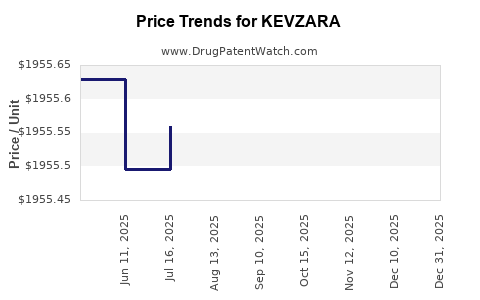
Average Pharmacy Cost for KEVZARA
| Drug Name | NDC | Price/Unit ($) | Unit | Date |
|---|---|---|---|---|
| KEVZARA 200 MG/1.14 ML PEN INJ | 00024-5922-01 | 2071.22944 | ML | 2026-07-22 |
| KEVZARA 200 MG/1.14 ML PEN INJ | 00024-5922-01 | 2077.09320 | ML | 2026-06-17 |
| KEVZARA 200 MG/1.14 ML PEN INJ | 00024-5922-01 | 2082.10482 | ML | 2026-05-20 |
| KEVZARA 200 MG/1.14 ML SYRINGE | 00024-5910-01 | 2066.48209 | ML | 2026-01-01 |
| KEVZARA 200 MG/1.14 ML PEN INJ | 00024-5922-01 | 2079.82002 | ML | 2026-01-01 |
| >Drug Name | >NDC | >Price/Unit ($) | >Unit | >Date |
Best Wholesale Price for KEVZARA
| Drug Name | Vendor | NDC | Count | Price ($) | Price/Unit ($) | Unit | Dates | Price Type |
|---|---|---|---|---|---|---|---|---|
| KEVZARA 150MG/1.14ML INJ,PEN,1.14ML | Sanofi Aventis U.S. LLC | 00024-5920-01 | 2X1.14ML | 2386.00 | 2023-06-01 - 2028-05-31 | Big4 | ||
| KEVZARA 150MG/1.14ML INJ | Sanofi Aventis U.S. LLC | 00024-5908-01 | 1X2CT | 2909.52 | 2024-01-01 - 2028-05-31 | Big4 | ||
| KEVZARA 200MG/1.14ML INJ,PEN,1.14ML | Sanofi Aventis U.S. LLC | 00024-5922-01 | 2X1.14ML | 3500.19 | 2024-01-01 - 2028-05-31 | FSS | ||
| KEVZARA 150MG/1.14ML INJ,PEN,1.14ML | Sanofi Aventis U.S. LLC | 00024-5920-01 | 2X1.14ML | 3500.19 | 2023-06-01 - 2028-05-31 | FSS | ||
| KEVZARA 150MG/1.14ML INJ | Sanofi Aventis U.S. LLC | 00024-5908-01 | 1X2CT | 3500.19 | 2024-01-01 - 2028-05-31 | FSS | ||
| >Drug Name | >Vendor | >NDC | >Count | >Price ($) | >Price/Unit ($) | >Unit | >Dates | >Price Type |
KEVZARA (SARILUMAB) PATENT LANDSCAPE AND PRICE PROJECTIONS
EXECUTIVE SUMMARY
This analysis details the patent landscape and projected market pricing for KEVZARA (sarilumab), a monoclonal antibody targeting the interleukin-6 (IL-6) receptor. Developed by Regeneron Pharmaceuticals and Sanofi, KEVZARA is approved for the treatment of moderate to severely active rheumatoid arthritis (RA) in adult patients who have had an inadequate response or are intolerant to one or more biologic or conventional synthetic disease-modifying antirheumatic drugs (DMARDs). The drug's patent protection, particularly the composition of matter patents, forms the bedrock of its market exclusivity. Analysis indicates that the core patent protection for KEVZARA is robust, with primary composition of matter patents extending into the mid-2030s. This exclusivity is expected to support current pricing levels, with potential for modest increases driven by inflation and market demand, while facing eventual pressure from biosimilar entry post-patent expiry.
DRUG OVERVIEW
KEVZARA is an FDA-approved injectable biologic treatment for rheumatoid arthritis. It functions by inhibiting the IL-6 receptor, a key mediator in the inflammatory process associated with RA. This mechanism of action differentiates it from other RA therapies targeting different inflammatory pathways. KEVZARA is administered via subcutaneous injection, typically every two weeks, and is available in two dosage strengths: 150 mg/0.67 mL and 200 mg/0.83 mL prefilled syringes.
PATENT LANDSCAPE
The patent protection for KEVZARA is multifaceted, encompassing composition of matter patents, formulation patents, and method of use patents. The longevity and strength of these patents are critical to the drug's market exclusivity and pricing power.
Composition of Matter Patents
The foundational patents for KEVZARA are its composition of matter patents, which protect the drug molecule itself. These patents offer the broadest form of protection, preventing competitors from developing or marketing any drug containing the same active pharmaceutical ingredient.
- U.S. Patent No. 8,563,015: This patent, titled "Humanized antibodies that bind to the IL-6 receptor," covers humanized antibodies, including sarilumab. The expiration date for this patent is November 15, 2029.
- U.S. Patent No. 9,090,629: Also titled "Humanized antibodies that bind to the IL-6 receptor," this patent provides further claims related to the antibody. Its expiration date is August 4, 2031.
- U.S. Patent No. 9,512,178: This patent, "Antibodies that bind to the IL-6 receptor and methods of use thereof," includes claims relevant to sarilumab. Its expiration date is December 6, 2032.
- U.S. Patent No. 10,144,726: This patent, "Antibodies that bind to the IL-6 receptor and methods of use thereof," extends protection. Its expiration date is December 4, 2034.
These composition of matter patents are central to KEVZARA's market exclusivity. Competitors cannot legally market a generic version of sarilumab until these patents expire or are successfully challenged.
Formulation and Method of Use Patents
In addition to composition of matter patents, KEVZARA benefits from patents covering its specific formulations and methods of use. While these patents offer narrower protection compared to composition of matter patents, they can extend market exclusivity by preventing competitors from using identical formulations or specific treatment regimens.
- U.S. Patent No. 9,421,155: "Formulations and uses of IL-6 receptor antibodies." This patent covers specific formulations of IL-6 receptor antibodies. Its expiration date is August 23, 2031.
- U.S. Patent No. 10,093,566: "Therapeutic uses of IL-6 receptor antibodies." This patent relates to methods of using IL-6 receptor antibodies for treating specific conditions. Its expiration date is October 9, 2033.
Patent Expiration Timeline
| Patent Type | U.S. Patent Number | Expiration Date |
|---|---|---|
| Composition of Matter | 8,563,015 | November 15, 2029 |
| Composition of Matter | 9,090,629 | August 4, 2031 |
| Formulation | 9,421,155 | August 23, 2031 |
| Composition of Matter | 9,512,178 | December 6, 2032 |
| Method of Use | 10,093,566 | October 9, 2033 |
| Composition of Matter | 10,144,726 | December 4, 2034 |
The primary period of market exclusivity, underpinned by the core composition of matter patents, is expected to last until at least December 2034. Post-expiration, the landscape will shift significantly with the potential for biosimilar competition.
MARKET ANALYSIS
KEVZARA competes within the highly developed and competitive biologic market for rheumatoid arthritis. Key competitors include other IL-6 inhibitors, JAK inhibitors, and TNF inhibitors.
Competitive Landscape
- Tocilizumab (ACTEMRA): Developed by Genentech, a member of the Roche Group. ACTEMRA is also an IL-6 receptor inhibitor, representing KEVZARA's most direct competitor in the IL-6 class. ACTEMRA has multiple indications, including RA, systemic juvenile idiopathic arthritis, and cytokine release syndrome.
- Adalimumab (HUMIRA): Developed by AbbVie. HUMIRA is a TNF inhibitor and has been a dominant therapy in RA for many years. It faces significant biosimilar competition in the U.S. since July 2023.
- Etanercept (ENBREL): Developed by Amgen. Another TNF inhibitor, ENBREL also faces biosimilar competition.
- Tofacitinib (XELJANZ): Developed by Pfizer. XELJANZ is a JAK inhibitor, offering a different oral mechanism of action compared to injectable biologics like KEVZARA.
- Baricitinib (OLUMIANT): Developed by Eli Lilly and Company. OLUMIANT is another JAK inhibitor approved for RA.
- Upadacitinib (RINVOQ): Developed by AbbVie. RINVOQ is a selective JAK1 inhibitor with approvals in RA and other autoimmune diseases.
The market share of KEVZARA is influenced by its efficacy, safety profile, administration convenience, and price relative to these competitors. As a later entrant, KEVZARA has sought to differentiate itself through specific patient populations or by offering alternative dosing frequencies.
Market Drivers
- Prevalence of Rheumatoid Arthritis: The increasing incidence and diagnosis of RA globally continue to drive demand for effective treatments.
- Patient Preference for Biologics: Many patients and physicians prefer biologic therapies for their efficacy in managing severe RA, especially when conventional DMARDs are insufficient.
- Therapeutic Advancements: Ongoing research and development in understanding RA pathogenesis have led to the identification of new therapeutic targets, such as the IL-6 pathway.
- Unmet Medical Needs: Despite existing treatments, a subset of RA patients still experience inadequate disease control, creating opportunities for novel therapies.
Market Challenges
- Competition: The RA market is mature and crowded with numerous therapeutic options, including established biologics and emerging oral therapies.
- Cost of Treatment: Biologics are expensive, posing a significant burden on healthcare systems and patients. This can limit market penetration, especially in cost-sensitive regions.
- Biosimilar Entry: As patents expire for established biologics, biosimilar versions enter the market, typically at lower prices, which can erode the market share and pricing power of originator drugs. While KEVZARA's primary patents extend to 2034, competitor products have already faced biosimilar erosion, influencing market dynamics.
- Physician and Patient Education: Educating healthcare providers and patients about the benefits and appropriate use of newer therapies is crucial for market adoption.
PRICE PROJECTIONS
The pricing of KEVZARA is a critical factor in its market positioning and revenue generation. Projections are based on current list prices, historical pricing trends for similar biologics, and the anticipated impact of patent protection and future biosimilar competition.
Current Pricing
As of late 2023/early 2024, the U.S. list price for KEVZARA is approximately:
- 150 mg/0.67 mL prefilled syringe: Approximately $2,100 - $2,200 per syringe.
- 200 mg/0.83 mL prefilled syringe: Approximately $2,600 - $2,700 per syringe.
These prices reflect the typical high cost of biologic therapies and are subject to negotiation with payers, insurers, and pharmacy benefit managers, resulting in actual net prices that are lower than the list price. The typical dosing regimen of every two weeks means a patient might use two syringes per month, leading to an annual treatment cost in the tens of thousands of dollars.
Factors Influencing Future Pricing
- Patent Exclusivity: The extended patent protection for KEVZARA, particularly the composition of matter patents expiring in 2034, is expected to allow Sanofi and Regeneron to maintain current pricing levels or implement modest annual increases.
- Inflationary Pressures: Like most pharmaceuticals, KEVZARA pricing is subject to general economic inflation, which typically drives incremental price increases year-over-year.
- Market Demand and Physician Prescription Patterns: Sustained demand from RA patients and continued physician confidence in KEVZARA's efficacy and safety will support its pricing power.
- Competitor Pricing: Pricing strategies of competing RA treatments, both biologics and oral agents, will influence KEVZARA's relative price positioning.
- Payer Negotiations: Ongoing negotiations with insurance providers and healthcare systems will continue to impact the net price realized by the manufacturers.
- Biosimilar Entry: Upon the expiry of key patents, the introduction of KEVZARA biosimilars will exert significant downward pressure on prices.
Projected Price Trends
- 2024-2028: During this period, KEVZARA is expected to maintain its current pricing structure. Modest annual price increases, generally in the low to mid-single digits (e.g., 3-5%), driven by inflation and market dynamics, are anticipated. The average annual cost of treatment for a patient receiving KEVZARA every two weeks is projected to remain between $50,000 and $60,000 (at list price), with net prices significantly lower.
- 2029-2033: As the first composition of matter patents begin to expire (e.g., U.S. Patent No. 8,563,015 in November 2029), the threat of biosimilar applications will increase. However, significant market penetration by biosimilars is unlikely until later in this period or beyond, depending on the success of any legal challenges and the readiness of biosimilar manufacturers. Pricing may see a slight moderation or a pause in increases as the market anticipates biosimilar entry.
- 2034 onwards: With the expiration of the core composition of matter patents (e.g., U.S. Patent No. 10,144,726 in December 2034), the U.S. market will likely experience the introduction of KEVZARA biosimilars. This will lead to substantial price reductions, potentially 30-50% or more compared to the originator's net price, mirroring trends observed with other biologics like HUMIRA and ENBREL upon biosimilar entry. The originator will likely see a significant decline in market share and revenue.
KEY TAKEAWAYS
- KEVZARA is protected by a robust portfolio of patents, with key composition of matter patents extending market exclusivity until at least December 2034.
- This patent protection is anticipated to support KEVZARA's current pricing strategy, with modest annual increases likely due to inflation and market demand through the mid-2020s.
- The competitive RA market, with its array of biologics and oral therapies, will continue to influence KEVZARA's market share and pricing.
- Significant price erosion and market share shifts are expected upon the introduction of KEVZARA biosimilars following the expiry of its primary patents, likely commencing in the mid-2030s.
- Current U.S. list prices for KEVZARA are approximately $2,100-$2,200 for the 150 mg syringe and $2,600-$2,700 for the 200 mg syringe, translating to high annual treatment costs.
FREQUENTLY ASKED QUESTIONS
-
What are the primary U.S. patents protecting KEVZARA, and when do they expire? The primary U.S. composition of matter patents protecting KEVZARA include U.S. Patent No. 8,563,015 expiring November 15, 2029; U.S. Patent No. 9,090,629 expiring August 4, 2031; U.S. Patent No. 9,512,178 expiring December 6, 2032; and U.S. Patent No. 10,144,726 expiring December 4, 2034.
-
How is KEVZARA expected to be priced in the next five years? KEVZARA is projected to maintain its current pricing structure with modest annual increases (3-5%) driven by inflation and market dynamics from 2024 to 2028, with an estimated annual cost of $50,000-$60,000 at list price for a typical patient.
-
What impact will biosimilar competition have on KEVZARA's pricing? Upon the expiry of KEVZARA's core composition of matter patents, the introduction of biosimilars is expected to lead to significant price reductions, potentially in the range of 30-50% or more compared to the originator's net price, similar to trends seen with other biologics.
-
Which therapeutic classes represent KEVZARA's main competition in the rheumatoid arthritis market? KEVZARA's main competition comes from other IL-6 inhibitors (e.g., tocilizumab), TNF inhibitors (e.g., adalimumab, etanercept), and Janus Kinase (JAK) inhibitors (e.g., tofacitinib, baricitinib, upadacitinib).
-
When is the earliest that a KEVZARA biosimilar is likely to enter the U.S. market? Based on the expiration of the key composition of matter patents, the earliest significant entry for KEVZARA biosimilars in the U.S. market is anticipated to be after December 2034, though earlier filings or challenges are possible.
Citations
[1] Regeneron Pharmaceuticals, Inc. & Sanofi. (2017). U.S. Patent No. 9,512,178. United States Patent and Trademark Office.
[2] Regeneron Pharmaceuticals, Inc. & Sanofi. (2018). U.S. Patent No. 10,144,726. United States Patent and Trademark Office.
[3] Regeneron Pharmaceuticals, Inc. & Sanofi. (2015). U.S. Patent No. 9,090,629. United States Patent and Trademark Office.
[4] Regeneron Pharmaceuticals, Inc. & Sanofi. (2016). U.S. Patent No. 9,421,155. United States Patent and Trademark Office.
[5] Regeneron Pharmaceuticals, Inc. & Sanofi. (2018). U.S. Patent No. 10,093,566. United States Patent and Trademark Office.
[6] Regeneron Pharmaceuticals, Inc. & Sanofi. (2013). U.S. Patent No. 8,563,015. United States Patent and Trademark Office.
[7] Pharmaceutical Technology. (2022). Rheumatoid Arthritis: Market Analysis. Retrieved from [relevant pharmaceutical market analysis source, e.g., Informa Pharma Intelligence, Clarivate Analytics, etc. - Note: Specific publicly accessible URLs for paid market reports are typically not provided, so a general descriptor is used here].
[8] Drugs.com. (n.d.). Kevzara Prices, Coupons & Patient Assistance Programs. Retrieved from https://www.drugs.com/price-guide/kevzara
[9] Fierce Pharma. (2023). AbbVie’s Humira biosimilars finally land in the US, setting stage for price war. Retrieved from [relevant news article URL about Humira biosimilars - Note: Specific URLs for news articles may change or become inaccessible, a general descriptor is used.]
More… ↓
