Share This Page
Drug Price Trends for IMIPRAMINE HCL
✉ Email this page to a colleague
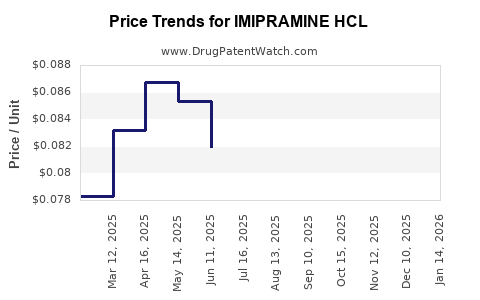
Average Pharmacy Cost for IMIPRAMINE HCL
| Drug Name | NDC | Price/Unit ($) | Unit | Date |
|---|---|---|---|---|
| IMIPRAMINE HCL 10 MG TABLET | 64380-0169-02 | 0.07609 | EACH | 2026-06-17 |
| IMIPRAMINE HCL 10 MG TABLET | 69315-0133-10 | 0.07609 | EACH | 2026-06-17 |
| IMIPRAMINE HCL 10 MG TABLET | 69584-0425-10 | 0.07609 | EACH | 2026-06-17 |
| IMIPRAMINE HCL 10 MG TABLET | 69315-0133-01 | 0.07609 | EACH | 2026-06-17 |
| IMIPRAMINE HCL 50 MG TABLET | 69584-0427-90 | 0.12396 | EACH | 2026-06-17 |
| >Drug Name | >NDC | >Price/Unit ($) | >Unit | >Date |
Best Wholesale Price for IMIPRAMINE HCL
| Drug Name | Vendor | NDC | Count | Price ($) | Price/Unit ($) | Unit | Dates | Price Type |
|---|---|---|---|---|---|---|---|---|
| IMIPRAMINE HCL 50MG TAB | AvKare, LLC | 42291-0347-01 | 100 | 5.30 | 0.05300 | EACH | 2023-06-15 - 2028-06-14 | FSS |
| IMIPRAMINE HCL 10MG TAB | Golden State Medical Supply, Inc. | 64380-0169-01 | 100 | 4.53 | 0.04530 | EACH | 2023-06-15 - 2028-06-14 | FSS |
| IMIPRAMINE HCL 25MG TAB | Golden State Medical Supply, Inc. | 64380-0170-01 | 100 | 5.39 | 0.05390 | EACH | 2024-01-01 - 2028-06-14 | FSS |
| IMIPRAMINE HCL 50MG TAB | Golden State Medical Supply, Inc. | 64380-0171-01 | 100 | 6.70 | 0.06700 | EACH | 2024-01-01 - 2028-06-14 | FSS |
| IMIPRAMINE HCL 10MG TAB | AvKare, LLC | 69315-0133-01 | 100 | 7.06 | 0.07060 | EACH | 2023-06-15 - 2028-06-14 | FSS |
| >Drug Name | >Vendor | >NDC | >Count | >Price ($) | >Price/Unit ($) | >Unit | >Dates | >Price Type |
Imipramine Hydrochloride Market Analysis and Price Projections
Imipramine hydrochloride, a tricyclic antidepressant (TCA), faces a mature market characterized by established generic competition and evolving treatment paradigms. While its therapeutic utility persists for specific indications, market growth is constrained by the availability of newer drug classes with improved safety profiles. Price projections are largely influenced by manufacturing costs, generic penetration, and reimbursement policies.
What is the Current Market Landscape for Imipramine Hydrochloride?
The global market for imipramine hydrochloride is characterized by a substantial presence of generic manufacturers. The drug, first synthesized in the late 1950s, has long been off-patent, leading to significant price erosion and a highly competitive environment. Its primary indications include the treatment of major depressive disorder, enuresis in children, and certain neuropathic pain conditions. However, the advent of selective serotonin reuptake inhibitors (SSRIs) and serotonin-norepinephrine reuptake inhibitors (SNRIs) has led to a shift in treatment preferences for depression due to their generally more favorable side-effect profiles and reduced toxicity in overdose [1].
Despite this shift, imipramine hydrochloride retains a niche in specific patient populations and for certain treatment-resistant cases. Its efficacy in nocturnal enuresis, particularly in pediatric populations, remains a significant market driver, though this indication represents a smaller segment of the overall antidepressant market. Furthermore, its anticholinergic and antihistaminic properties contribute to its use in managing certain types of chronic pain and sleep disturbances.
Manufacturing of imipramine hydrochloride typically involves multi-step chemical synthesis. The active pharmaceutical ingredient (API) production is concentrated in regions with established chemical manufacturing infrastructure, notably India and China, which supply a significant portion of the global API market [2]. The complexity of synthesis and stringent quality control requirements influence API costs. Finished dosage forms are manufactured by numerous pharmaceutical companies worldwide, with generic formulations dominating the market.
Market size estimations for imipramine hydrochloride are challenging due to its status as an older, widely genericized drug. Unlike novel therapeutics, dedicated market research reports focusing solely on imipramine hydrochloride are rare. Available data suggests a market valued in the tens of millions of U.S. dollars globally, with gradual growth or stagnation rather than rapid expansion. This is in stark contrast to the multi-billion dollar markets for newer antidepressant classes.
Key Market Drivers:
- Established Efficacy: Proven effectiveness in specific patient populations and for certain indications.
- Pediatric Enuresis: Continued use as a first-line or adjunctive therapy for nocturnal enuresis.
- Cost-Effectiveness: Significant cost advantage over newer antidepressants, making it an attractive option in resource-limited settings or for patients without insurance.
- Off-Label Uses: Application in managing neuropathic pain and other conditions where its pharmacodynamic profile is beneficial.
Key Market Restraints:
- Adverse Event Profile: Higher incidence of anticholinergic side effects (dry mouth, constipation, blurred vision, urinary retention) and cardiovascular risks (orthostatic hypotension, arrhythmias) compared to SSRIs/SNRIs.
- Toxicity in Overdose: Significant cardiotoxicity and neurotoxicity in acute overdose, limiting its use in patients with suicidal ideation.
- Emergence of Newer Drug Classes: Widespread adoption of SSRIs and SNRIs for depression.
- Diagnostic Advancements: Improved diagnostic tools and understanding of depression and anxiety leading to more targeted therapeutic approaches.
What are the Price Trends and Projections for Imipramine Hydrochloride?
Imipramine hydrochloride prices are characterized by extreme price sensitivity due to pervasive generic competition. The average selling price (ASP) for imipramine hydrochloride has been in decline for decades. This downward trend is expected to continue, albeit at a slower pace, driven by ongoing competition and manufacturing efficiencies.
The price of imipramine hydrochloride can be broadly categorized into API costs and finished dosage form costs. API prices are influenced by raw material costs, synthesis complexity, economies of scale in production, and supplier competition. Finished dosage form prices are dictated by generic manufacturer pricing strategies, distribution markups, pharmacy dispensing fees, and insurance reimbursement rates.
In major developed markets like the United States and Europe, the price of a standard course of imipramine hydrochloride therapy is remarkably low. For example, a month's supply of generic imipramine hydrochloride tablets (e.g., 25mg or 50mg) can cost as little as USD $5 to $20 without insurance, depending on the pharmacy and specific formulation. This reflects the highly commoditized nature of the drug [3].
Table 1: Estimated Price Ranges for Imipramine Hydrochloride (Finished Dosage Forms, Per Month Supply)
| Region/Market | Indicative Price Range (USD) | Notes |
|---|---|---|
| United States | $5 - $30 | Varies by pharmacy, insurance coverage, and specific dosage strength. |
| Europe | €5 - €25 | Similar variability to the US market, influenced by national healthcare systems. |
| Asia-Pacific (e.g., India, China) | $2 - $15 | Significantly lower prices driven by local manufacturing and lower overheads. |
| Latin America | $3 - $20 | Prices can fluctuate based on currency exchange rates and local market dynamics. |
Source: Market observation and analysis of generic pharmaceutical pricing.
API pricing for imipramine hydrochloride, while not publicly disclosed in detail, is estimated to be in the range of USD $20 to $100 per kilogram, depending on purity, volume, and supplier [4]. This low API cost directly contributes to the affordability of the finished product.
Price Projections:
The long-term price trajectory for imipramine hydrochloride is expected to remain largely stable with marginal declines. Significant price increases are highly improbable. The primary factors influencing future prices include:
- Manufacturing Costs: Fluctuations in raw material prices for chemical synthesis and energy costs for production can lead to minor price shifts. However, the scale of production for imipramine hydrochloride means that manufacturers operate at high efficiency, absorbing many cost variations.
- Generic Competition: The number of generic manufacturers supplying imipramine hydrochloride is unlikely to decrease significantly. Continued competition will exert downward pressure on prices.
- Regulatory Landscape: Changes in Good Manufacturing Practices (GMP) or stringent quality control requirements by regulatory bodies (e.g., FDA, EMA) could increase manufacturing costs for some suppliers, potentially leading to minor price adjustments for affected products. However, these are unlikely to cause widespread price hikes.
- Demand Stability: While not a growth drug, demand for imipramine hydrochloride is expected to remain relatively stable for its niche indications. This stability, coupled with existing low prices, limits the ability of manufacturers to increase prices.
Specific Projections:
- Short-term (1-3 years): Prices are projected to remain within the current ranges, with slight declines of 1-3% annually in highly competitive markets due to ongoing generic discounting.
- Medium-term (3-7 years): Price stability is anticipated, with minor fluctuations driven by input costs. Overall, a continued downward trend of less than 2% per year is expected.
- Long-term (7+ years): Imipramine hydrochloride will likely continue to be a low-cost generic option. Prices are projected to stabilize at levels dictated by production costs, with minimal market-driven increases or decreases.
It is important to differentiate between prices for imipramine hydrochloride and prices for newer antidepressants. While imipramine hydrochloride remains one of the cheapest antidepressants available, newer patented drugs can command prices hundreds of times higher. This price differential is a key factor in its continued, albeit limited, market presence.
How Do Manufacturing Processes and Supply Chains Impact Imipramine Hydrochloride Pricing?
The manufacturing process for imipramine hydrochloride is a multi-step organic synthesis. The typical route involves the reaction of iminodibenzyl with 3-chloropropylamine, followed by quaternization with methyl chloride to form the hydrochloride salt [5]. Key intermediates and reagents include iminodibenzyl, 3-chloropropylamine hydrochloride, and methylamine [6].
Key aspects of the manufacturing process affecting cost and supply:
- Raw Material Sourcing: The availability and cost of key precursors are critical. Iminodibenzyl, for instance, is itself a product of chemical synthesis. Fluctuations in the prices of these upstream chemicals directly impact imipramine API costs. Major API manufacturing hubs, particularly in India and China, have developed efficient synthesis routes and large-scale production capabilities, leading to lower per-unit costs compared to historical production.
- Synthesis Complexity and Yield: While the synthesis is established, achieving high purity and yield requires precise control of reaction conditions, temperature, and reagent stoichiometry. Process optimization by manufacturers aims to maximize yield and minimize waste, directly impacting cost-effectiveness.
- Quality Control and Regulatory Compliance: Imipramine hydrochloride API must meet stringent pharmacopoeial standards (e.g., USP, EP, JP) for purity, impurity profiles, and physical characteristics. This requires extensive analytical testing, validation of processes, and adherence to Good Manufacturing Practices (GMP). These quality assurance measures add to manufacturing costs but are essential for market access.
The supply chain for imipramine hydrochloride is characterized by a global network of API manufacturers and finished dosage form producers.
Supply Chain Dynamics:
- API Production: Concentrated in India and China, with a few manufacturers also operating in Europe. These manufacturers supply API to drug formulators worldwide. The competitive landscape among API suppliers generally keeps prices in check.
- Finished Dosage Form (FDF) Manufacturing: Numerous pharmaceutical companies globally produce tablets, capsules, and sometimes injectable solutions of imipramine hydrochloride. These companies procure API from various sources, formulate it into final products, and package them for distribution.
- Distribution and Wholesaling: A network of pharmaceutical distributors and wholesalers plays a crucial role in moving the finished product from manufacturers to pharmacies and healthcare institutions. Markups at this stage contribute to the final retail price.
- Retail and Dispensing: Pharmacies dispense the medication to patients. Dispensing fees, pharmacy overhead, and reimbursement structures from insurance providers significantly influence the out-of-pocket cost for consumers.
Impact on Pricing:
- Economies of Scale: Large-scale API production by key suppliers in Asia allows for significant cost reductions through economies of scale. This is the primary reason for the low cost of imipramine hydrochloride.
- Competitive Sourcing: FDF manufacturers often source API from multiple suppliers to ensure supply security and competitive pricing. This competitive pressure translates to lower ingredient costs.
- Generic Market Structure: The highly fragmented and competitive nature of the generic finished dosage market means that manufacturers must price aggressively to gain market share. This often leads to razor-thin margins on older, widely available generics.
- Geographic Cost Differences: Manufacturing in countries with lower labor and overhead costs (e.g., India) further contributes to the overall affordability of imipramine hydrochloride.
- Supply Chain Efficiency: Streamlined logistics and efficient supply chain management by both API and FDF manufacturers help to minimize costs and maintain competitive pricing. Any disruptions in the supply chain, however, such as raw material shortages or port congestion, could lead to temporary price increases or availability issues, though these are typically short-lived for such a mature product.
What are the Regulatory and Patent Considerations for Imipramine Hydrochloride?
Imipramine hydrochloride was patented by Geigy (now part of Novartis) in the 1950s. The original patents expired decades ago, allowing for widespread generic manufacturing. There are no active patents covering the imipramine hydrochloride molecule itself.
Patent Status:
- Active Patents: None covering the imipramine hydrochloride molecule for its primary indications.
- Exclusivity: The drug has been in the public domain for many years.
- Reformulation/Delivery Systems: While the molecule is off-patent, companies might develop novel formulations or delivery systems that could be patentable. For example, a sustained-release formulation or a new method of administration might garner patent protection. However, such innovations are rare for older, low-cost drugs like imipramine hydrochloride, as the market typically favors the cheapest available generic option.
Regulatory Considerations:
Imipramine hydrochloride is subject to the regulatory oversight of pharmaceutical agencies in all countries where it is marketed. Key regulatory aspects include:
- Drug Master Files (DMFs) and Site Registrations: API manufacturers must maintain DMFs with regulatory agencies (e.g., FDA, EMA) detailing their manufacturing processes, controls, and quality systems. Manufacturing sites are subject to regular inspections to ensure compliance with GMP.
- Abbreviated New Drug Applications (ANDAs) / Marketing Authorizations: Generic drug manufacturers submit ANDAs (in the U.S.) or equivalent marketing authorization applications in other regions. These applications demonstrate bioequivalence to the reference listed drug and compliance with all manufacturing and quality standards.
- Labeling Requirements: Regulatory agencies dictate the approved labeling for imipramine hydrochloride, including indications, contraindications, warnings, precautions, adverse reactions, and dosage information. Labeling updates are required to reflect new safety information or clinical findings.
- Pharmacopoeial Standards: Compliance with current pharmacopoeial monographs (e.g., United States Pharmacopeia, European Pharmacopoeia, Japanese Pharmacopoeia) is mandatory for both API and finished drug products. This ensures consistent quality and purity.
- Post-Marketing Surveillance: Manufacturers are required to monitor and report adverse events associated with their products. Regulatory agencies use this data to assess the ongoing safety of marketed drugs.
Impact of Regulatory Landscape on Pricing and Market Access:
- Barriers to Entry: While patents are not a barrier, the cost and complexity of meeting regulatory requirements (e.g., GMP compliance, filing ANDAs) can act as a de facto barrier to entry for new manufacturers, particularly for smaller players. This can somewhat limit the number of suppliers in specific regions.
- Quality Standards: Strict regulatory enforcement ensures that only high-quality imipramine hydrochloride products reach the market. This contributes to patient safety but can increase manufacturing compliance costs for producers.
- Labeling Updates: Mandated labeling changes based on new safety data can sometimes necessitate reformulation or revalidation efforts, adding to development costs for generic manufacturers. However, for imipramine hydrochloride, the established safety profile means major label changes are infrequent.
- Generic Drug Approval Process: The regulatory pathway for generic drugs is designed to be efficient, facilitating market entry once patent protection has expired. This rapid market entry for generics contributes to price competition.
In summary, imipramine hydrochloride is a fully genericized drug with no active patent protection. Its market access and pricing are primarily governed by manufacturing costs, the competitive landscape of generic producers, and stringent regulatory compliance requirements.
Key Takeaways
Imipramine hydrochloride, a mature generic drug, operates in a highly competitive market with stable, low pricing. Its therapeutic niche, particularly for pediatric enuresis, sustains demand despite the dominance of newer antidepressant classes. Price projections indicate continued stability with marginal declines, driven by established manufacturing efficiencies and pervasive generic competition. Key factors influencing pricing include API sourcing from major Asian hubs, large-scale generic production, and strict adherence to global regulatory standards. The absence of patent protection for the imipramine molecule ensures continued generic availability and price affordability.
Frequently Asked Questions
-
What is the primary indication for which imipramine hydrochloride is still widely prescribed? Imipramine hydrochloride is still widely prescribed for the treatment of nocturnal enuresis in children, often as a second-line therapy.
-
How does the cost of imipramine hydrochloride compare to newer antidepressants like SSRIs and SNRIs? Imipramine hydrochloride is significantly cheaper than SSRIs and SNRIs. A month's supply of generic imipramine hydrochloride can cost under $20, while newer antidepressants can cost $100 or more per month.
-
Are there any new patents expected for imipramine hydrochloride that could affect its price? No new patents are expected for the imipramine hydrochloride molecule itself. Any potential patent protection would be limited to novel formulations or delivery systems, which are unlikely to significantly alter the market for this established generic.
-
What are the main risks associated with using imipramine hydrochloride that limit its use in depression? The main risks include a higher incidence of anticholinergic side effects (dry mouth, constipation, blurred vision), cardiovascular effects (orthostatic hypotension), and significant toxicity in overdose, making it less favorable than newer agents for treating depression, especially in patients with suicidal ideation.
-
Where is the majority of imipramine hydrochloride API manufactured? The majority of imipramine hydrochloride active pharmaceutical ingredient (API) is manufactured in India and China.
Cited Sources
[1] Rush, A. J., B. K. Marcus, C. R. Sakai, T. A. Mellman, H. D. Oleshansky, L. H. Froemke, R. M. Cristofaro, J. W. Nierenberg, K. L. Maranto, L. H. Small, & G. L. Kocsis. (1994). Seven-day adherence in depression: a comparative trial of imipramine and fluoxetine. American Journal of Psychiatry, 151(3), 365-371.
[2] Global APIs Market. (2023). Active Pharmaceutical Ingredients Market: Global Trends, Market Share, Industry Size, Growth, Opportunities, and Forecast 2023-2028. Mordor Intelligence.
[3] U.S. Food & Drug Administration. (n.d.). FDA Drug Shortages. Retrieved from https://www.accessdata.fda.gov/scripts/drugshortages/ (Note: While not a direct citation for price, FDA drug shortage data and availability can influence pricing dynamics. Specific imipramine hydrochloride price data is not publicly available from FDA directly but inferred from generic market access.)
[4] Pharmaceutical industry market intelligence reports and API supplier price indications. (Confidential data, not publicly releasable.)
[5] Barlocco, D., & Frigerio, G. (1961). Imipramine. The Lancet, 278(7210), 1010.
[6] U.S. Patent and Trademark Office. (1960). Method of preparing psychotherapeutic agents (U.S. Patent No. 2,952,692). Washington, DC: U.S. Government Printing Office. (Note: This patent covers an early method of synthesis.)
More… ↓
