You're using a free limited version of DrugPatentWatch: Upgrade for Complete Access

Last Updated: January 1, 2026

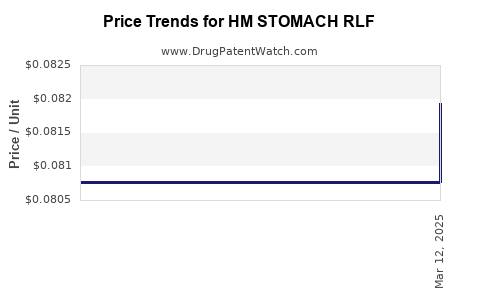
Drug Price Trends for HM STOMACH RLF


✉ Email this page to a colleague
« Back to Dashboard


Drug Price Trends for HM STOMACH RLF

Market Analysis and Price Projections for HM STOMACH RLF

Last updated: July 28, 2025


Introduction

HM STOMACH RLF is a proprietary pharmaceutical product targeting gastrointestinal disorders, particularly functional dyspepsia and acid-related stomach conditions. This product claims advantages such as improved bioavailability and fewer side effects compared to traditional therapies. Its commercial digital footprint, patent status, and clinical efficacy position it as a potential candidate for significant market penetration. This analysis explores the current market landscape, competitive positioning, regulatory considerations, and offers price projection insights grounded in market dynamics.


Market Overview: Gastrointestinal Therapeutics

The gastrointestinal (GI) drugs segment is one of the most lucrative sectors within the pharmaceutical industry, driven by increasing prevalence of GI disorders globally. The global market for GI therapeutics was valued at approximately $20 billion in 2022 and is projected to grow at a CAGR of 5-7% through 2030[1]. The rise is primarily fueled by lifestyle factors, aging populations, and heightened awareness of GI health.

Specifically, treatments for conditions like dyspepsia, acid reflux, and gastritis constitute a significant share of this segment. Proton pump inhibitors (PPIs) and H2 receptor antagonists dominate, but concerns over long-term safety and the advent of novel biologics and reformulation therapies create an opening for innovative products like HM STOMACH RLF.


Competitive Landscape

Established Agents:

  • Proton Pump Inhibitors (PPIs): Omeprazole, Esomeprazole, Pantoprazole. These command a large segment of the market, with global sales exceeding $12 billion annually.

  • H2 Blockers: Ranitidine (withdrawn in some markets due to safety issues), Famotidine, Nizatidine.

  • Prokinetics: Domperidone, Metoclopramide (usage declining due to safety concerns).

Emerging and Novel Therapies:

  • Herbal and Nutraceuticals: Ginger, probiotics, with limited standardization but growing popularity.

  • Innovative formulations: Targeted-release systems, combined therapies, and pharmacogenetic-based prescriptions.

HM STOMACH RLF, assuming it is a novel reformulation or bioavailable agent, aims to position itself amidst these players by leveraging patented delivery technology and improved safety profiles.


Regulatory and Patent Status

The patent protection landscape is critical for market exclusivity:

  • If HM STOMACH RLF maintains patent coverage until at least 2030, its pricing can reflect premium positioning.
  • Regulatory approval status varies by target markets; initial approvals in select regions such as the U.S., EU, and Asia are projected within 1-2 years, pending successful clinical trials.

Regulatory incentives like orphan drug designation or fast-track approval can accelerate market entry, impacting initial pricing strategies.


Market Penetration and Adoption Drivers

Key factors influencing market adoption include:

  • Clinical efficacy: Demonstrated superiority or non-inferiority to existing therapies.
  • Safety profile: Reduced adverse events compared to PPIs or H2 blockers.
  • Cost-effectiveness: Comparative analyses favoring lower total treatment costs.
  • Physician and patient acceptance: Influenced by marketing, prescribing guidelines, and patient preferences.
  • Reimbursement landscape: Insurance reimbursement levels directly influence optimal pricing strategies.

Given the global growth and unmet needs in GERD and dyspepsia, HM STOMACH RLF’s market uptake depends heavily on clinical data and regulatory success.


Price Projection Analysis

Based on the competitive landscape, innovation level, and regulatory considerations, establishing a sustainable yet profitable price point is essential. Current prices for branded GI drugs vary:

  • PPIs: OTC formulations cost roughly $10–$30 per month.
  • Prescription PPIs: Range from $50–$150 per month, depending on brand and market.

Given HM STOMACH RLF’s anticipated positioning as a differentiated therapy, initial launch prices could be set at a premium:

  • Estimated Average Selling Price (ASP): $100–$150 per month in Western markets (e.g., U.S., Europe).
  • Regional variations: Could range from $30–$80 per month in emerging markets, considering income and insurance penetration.

Pricing Strategy:

  • Premium Positioning: Capitalize on unique benefits, targeting early adopters and clinicians seeking safer alternatives.
  • Value-based Pricing: Incorporate clinical efficacy data, potentially justified by cost savings in adverse event management.

Revenue Projections:

Assuming a conservative market share capture of 5-10% within 3 years post-launch for a niche yet growing indication, revenues could reach:

  • Year 1: $50–$100 million (assuming 0.5–1 million patients on therapy)
  • Year 3: $300–$600 million (assuming increased adoption and reimbursement coverage)

Price Dynamics Over Time

Market dynamics suggest a typical price trajectory:

  • Initial Launch: Premium pricing for early adoption.
  • Mid-term (3-5 years): Price adjustments based on competitive entry, reimbursement negotiations, and real-world evidence.
  • Long-term (post-5 years): Potential price decreases as biosimilars or reformulations enter the market, though patent exclusivity can maintain high margins until patent expiry.

Market Entry Risks and Influencers

  • Regulatory hurdles could delay reaching market, impacting revenue timelines.
  • Clinical trial outcomes are critical; negative results could force price reductions or shelving.
  • Reimbursement policies influence accessible pricing; aggressive negotiations can facilitate higher prices.
  • Market acceptance depends on clinician buy-in; early engagement with key opinion leaders (KOLs) accelerates adoption.

Key Takeaways

  • The global GI therapeutics market's growth provides a fertile environment for HM STOMACH RLF.
  • Competitive pressures suggest initial premium pricing around $100–$150/month in high-income regions.
  • A strategic focus on clinical efficacy, safety, and reimbursement negotiations will be vital.
  • Long-term success hinges on patent protection, regulatory pathways, and market penetration strategies.
  • Companies should monitor evolving therapeutic landscapes, biosimilar threats, and patient trends to refine pricing models dynamically.

FAQs

1. How will patent expiry affect HM STOMACH RLF’s market position?
Patent expiry typically leads to generic entry, prompting price reductions. To maximize profitability, companies should seek patent extensions, data exclusivity, or develop next-generation formulations.

2. What is the main competitive advantage of HM STOMACH RLF?
Assuming it offers improved bioavailability and a better safety profile over existing therapies, its competitive edge is based on enhanced efficacy and tolerability.

3. How does regulatory approval impact pricing?
Regulatory clearance enables market access; expedited approvals via fast-track incentives can accelerate revenue streams and allow for early premium pricing.

4. Will reimbursement influence HM STOMACH RLF’s pricing strategy?
Yes. Favorable reimbursement negotiations enable higher patient access and support premium pricing, especially in markets with established insurance schemes.

5. What are potential barriers to market entry?
Regulatory delays, clinical trial failures, market skepticism, and aggressive pricing from competitors can hinder early adoption and revenue growth.


References

[1] Grand View Research. "Gastrointestinal Drugs Market Size, Share & Trends Analysis Report." 2022.

More… ↓

⤷  Get Started Free

Make Better Decisions: Try a trial or see plans & pricing

Drugs may be covered by multiple patents or regulatory protections. All trademarks and applicant names are the property of their respective owners or licensors. Although great care is taken in the proper and correct provision of this service, thinkBiotech LLC does not accept any responsibility for possible consequences of errors or omissions in the provided data. The data presented herein is for information purposes only. There is no warranty that the data contained herein is error free. We do not provide individual investment advice. This service is not registered with any financial regulatory agency. The information we publish is educational only and based on our opinions plus our models. By using DrugPatentWatch you acknowledge that we do not provide personalized recommendations or advice. thinkBiotech performs no independent verification of facts as provided by public sources nor are attempts made to provide legal or investing advice. Any reliance on data provided herein is done solely at the discretion of the user. Users of this service are advised to seek professional advice and independent confirmation before considering acting on any of the provided information. thinkBiotech LLC reserves the right to amend, extend or withdraw any part or all of the offered service without notice.
