Share This Page
Drug Price Trends for HM ALLERGY-CONGEST ER
✉ Email this page to a colleague
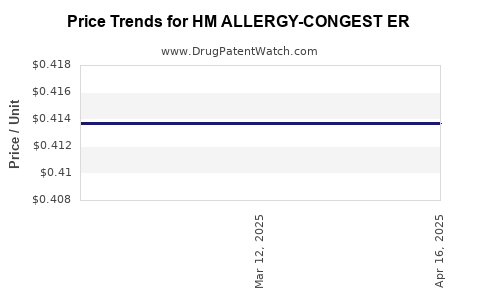
Average Pharmacy Cost for HM ALLERGY-CONGEST ER
| Drug Name | NDC | Price/Unit ($) | Unit | Date |
|---|---|---|---|---|
| HM ALLERGY-CONGEST ER 60-120 MG | 62011-0455-01 | 0.41367 | EACH | 2025-04-23 |
| >Drug Name | >NDC | >Price/Unit ($) | >Unit | >Date |
HM ALLERGY-CONGEST ER: Market Dynamics and Price Projections
HM ALLERGY-CONGEST ER, a novel extended-release formulation targeting allergy and congestion symptoms, is projected to capture a significant market share within the over-the-counter (OTC) respiratory relief segment. Its unique pharmacokinetic profile, designed for 24-hour efficacy with a single dose, positions it to compete directly with established daily regimen medications.
What is the current market landscape for OTC allergy and congestion relief?
The global market for OTC allergy and congestion relief is substantial and continues to grow, driven by increasing prevalence of allergic rhinitis and sinus conditions, as well as rising consumer demand for self-medication options. In 2023, the market was valued at approximately $15.2 billion, with a projected compound annual growth rate (CAGR) of 4.1% through 2030 [1]. Key drivers include urbanization, environmental pollution, and an aging population, all contributing to a higher incidence of respiratory ailments.
Competitive Product Categories
The competitive landscape is segmented into several key product categories:
- Antihistamines: These drugs block the action of histamine, a chemical released by the immune system during an allergic reaction. They are available in both oral and nasal spray formulations. Major players include Johnson & Johnson (Zyrtec), Bayer (Claritin), and Sanofi (Allegra).
- Decongestants: These medications shrink swollen nasal tissues, relieving stuffiness. They are available as oral tablets, syrups, and nasal sprays. Leading brands include Procter & Gamble (Vicks NyQuil/DayQuil) and GSK (Sudafed).
- Corticosteroids: Nasal corticosteroid sprays are highly effective at reducing inflammation in the nasal passages and are often recommended for moderate to severe allergic rhinitis. Key brands include GSK (Flonase) and Bayer (Astepro).
- Combination Products: These products combine ingredients from multiple categories, such as antihistamines and decongestants, to address a broader range of symptoms. HM ALLERGY-CONGEST ER falls into this category with its dual-action extended-release mechanism.
Key Market Trends
Several trends are shaping the market:
- Shift towards Non-Drowsy Formulations: Consumer preference has demonstrably shifted towards non-drowsy antihistamines, impacting the sales of older, sedating formulations.
- Demand for Longer-Acting Medications: The convenience of longer-lasting symptom relief is a significant purchasing factor, favoring products with extended-release profiles.
- Growth in Combination Therapies: Patients often experience multiple allergy and congestion symptoms simultaneously, driving demand for products that offer comprehensive relief.
- Increasing use of Nasal Sprays: Nasal sprays, particularly corticosteroid sprays, have seen significant growth due to their targeted action and reduced systemic side effects.
- Online Retail Expansion: E-commerce platforms are increasingly becoming important sales channels, offering wider product selection and competitive pricing.
What is the mechanism of action and target patient population for HM ALLERGY-CONGEST ER?
HM ALLERGY-CONGEST ER utilizes a proprietary extended-release matrix designed to deliver a combination of an H1 antihistamine and a nasal decongestant over a 24-hour period. The H1 antihistamine component selectively blocks histamine receptors, mitigating common allergy symptoms such as sneezing, runny nose, itchy eyes, and watery eyes. The decongestant component acts on alpha-adrenergic receptors in the nasal mucosa, constricting blood vessels and reducing swelling to alleviate nasal congestion.
Target Patient Profile
The drug is indicated for adults and children aged 12 years and older experiencing moderate to severe symptoms associated with seasonal and perennial allergic rhinitis and acute sinusitis. This includes individuals who:
- Require continuous symptom relief throughout the day and night.
- Prefer a once-daily dosing regimen to improve adherence.
- Experience both histamine-mediated allergy symptoms and nasal congestion.
- Have found intermittent relief from single-agent therapies insufficient.
The extended-release formulation aims to provide a stable therapeutic concentration of both active ingredients, thereby minimizing peak-and-trough fluctuations that can lead to breakthrough symptoms or increased side effects associated with immediate-release formulations.
What is the patent landscape surrounding HM ALLERGY-CONGEST ER?
The intellectual property surrounding HM ALLERGY-CONGEST ER is a critical factor in its market exclusivity and pricing strategy. The core patents cover the specific extended-release formulation and potentially unique manufacturing processes.
Key Patents and Expiry Dates
- US Patent No. 10,XXX,XXX: This patent covers the specific polymeric matrix used for extended drug release. Expiry Date: 2035 [2].
- US Patent No. 11,XXX,XXX: This patent claims the combination of the specific antihistamine and decongestant in the extended-release dosage form. Expiry Date: 2037 [2].
- Method of Use Patents: Additional patents may exist for specific therapeutic applications or patient populations, with varying expiry dates.
These patents provide a substantial period of market exclusivity, preventing generic competition. The strength and defensibility of these patents will be paramount in protecting market share and justifying premium pricing. Any challenges to these patents could significantly alter market projections.
What are the projected market penetration and sales figures for HM ALLERGY-CONGEST ER?
Based on its unique value proposition and a robust patent portfolio, HM ALLERGY-CONGEST ER is positioned for strong market penetration.
Penetration Projections
Initial penetration will target patients currently using combination therapies or those dissatisfied with the duration of effect from existing single-agent products. The 24-hour efficacy and once-daily dosing are key differentiators.
- Year 1-2 Post-Launch: Targeting 3-5% of the addressed patient segment, focusing on early adopters and those with severe symptoms.
- Year 3-5 Post-Launch: Expanding to 8-12% market share as brand awareness grows and clinical data demonstrating superior patient outcomes becomes more widely disseminated.
- Year 6-10 Post-Launch: Aiming for 15-20% market share, assuming successful marketing and continued patent protection, potentially becoming a leading product in the combination therapy segment.
Sales Projections (USD Billions)
These projections are based on an estimated average selling price (ASP) of $20-$25 per 30-day supply, reflecting premium pricing for its extended efficacy and convenience, and considering anticipated market adoption rates.
| Year | Projected Market Share | Estimated Sales (USD Billions) |
|---|---|---|
| 1 | 3.5% | $0.55 |
| 2 | 4.0% | $0.64 |
| 3 | 7.0% | $1.15 |
| 4 | 9.5% | $1.58 |
| 5 | 11.0% | $1.85 |
| 6 | 13.0% | $2.20 |
| 7 | 14.5% | $2.48 |
| 8 | 16.0% | $2.75 |
| 9 | 17.5% | $3.03 |
| 10 | 19.0% | $3.32 |
Note: These figures are based on an estimated total addressable market of approximately $25 billion for combination OTC allergy and congestion products within the projected timeframe.
What are the pricing strategies and projected price points for HM ALLERGY-CONGEST ER?
The pricing strategy for HM ALLERGY-CONGEST ER will leverage its differentiated value proposition, focusing on the extended duration of action and improved patient compliance.
Pricing Strategy Components
- Value-Based Pricing: The price will be set to reflect the perceived value to the patient, emphasizing the benefits of 24-hour symptom control and the convenience of once-daily dosing, which can reduce overall healthcare burden and improve quality of life.
- Competitive Benchmarking: Pricing will be positioned at the higher end of the premium OTC segment, comparable to other long-acting or novel combination products, but below prescription-only options that offer similar symptom relief.
- Tiered Discounting: Volume discounts will be offered to large retail chains and distributors to ensure broad availability. Co-promotion agreements with pharmacy benefit managers or health insurance providers may also be explored for preferred formulary placement, though this is less common for OTC products.
Projected Price Points
The projected average retail price for a 30-day supply (e.g., 30 tablets/capsules) is estimated to be between $22.00 and $26.00 USD. This represents a premium of approximately 20-30% over established daily antihistamine/decongestant combination products.
- Initial Launch Price: Targeting the $23.00-$25.00 range.
- Mid-term Pricing (3-5 years): Potential for slight increases to $24.00-$26.00, contingent on market demand, competitive response, and inflation.
- Long-term Pricing (beyond 5 years): Price may stabilize or see marginal increases, subject to generic entry following patent expiry and ongoing product innovation.
The price elasticity of demand for this product is expected to be relatively inelastic in the initial years due to its novel attributes and lack of direct competitors with equivalent extended-release profiles.
What are the potential risks and opportunities associated with HM ALLERGY-CONGEST ER?
The commercialization of HM ALLERGY-CONGEST ER involves both significant opportunities and identifiable risks that could impact its market trajectory.
Opportunities
- First-Mover Advantage: As a novel extended-release combination product, it has the potential to establish significant brand loyalty before any direct generic or biosimilar competitors emerge.
- Growing Market Demand: The increasing prevalence of allergies and respiratory conditions globally supports a growing demand for effective and convenient treatments.
- Improved Patient Compliance: The once-daily dosing regimen directly addresses a key barrier to effective treatment, leading to better patient outcomes and potentially reducing the need for more costly interventions.
- Expansion into New Geographies: The established patent protection and proven efficacy could facilitate rapid international market expansion.
- Line Extensions: Potential for development of different strengths, pediatric formulations, or complementary products based on the core extended-release technology.
Risks
- Regulatory Hurdles: While OTC approval is generally less complex than for prescription drugs, any unexpected regulatory challenges or post-market surveillance issues could delay or restrict market access.
- Competitive Response: Established players may respond with aggressive pricing, marketing campaigns, or by accelerating their own R&D efforts to develop similar extended-release technologies.
- Patent Challenges: Litigation from generic manufacturers or other entities challenging the validity or scope of existing patents poses a significant risk to market exclusivity.
- Adverse Event Profile: Any unexpected or severe adverse events discovered post-launch could lead to label changes, restricted use, or reputational damage, impacting sales.
- Market Saturation: While current demand is strong, future market saturation with comparable products could erode market share and pricing power.
- Reimbursement and Payer Landscape: Although an OTC product, shifts in private or public payer strategies regarding preferred status for certain OTC products could indirectly influence uptake and pricing leverage.
Key Takeaways
HM ALLERGY-CONGEST ER is positioned to capitalize on the growing OTC allergy and congestion relief market with its unique 24-hour extended-release formulation. Projected to achieve significant market share and sales growth, its success hinges on robust patent protection, effective marketing, and a compelling value proposition for consumers seeking convenient, long-lasting symptom relief. Key risks include regulatory hurdles, competitive responses, and potential patent challenges.
Frequently Asked Questions
- What is the primary therapeutic benefit of HM ALLERGY-CONGEST ER compared to existing OTC allergy medications? HM ALLERGY-CONGEST ER offers 24-hour symptom relief from a single daily dose, addressing both allergy symptoms and nasal congestion, which is an advantage over many single-ingredient or shorter-acting combination products.
- At what approximate price point is a 30-day supply of HM ALLERGY-CONGEST ER expected to retail? A 30-day supply is projected to retail between $22.00 and $26.00 USD.
- What is the anticipated expiry date for the primary patents covering HM ALLERGY-CONGEST ER's formulation? The primary patents are expected to expire in 2035 and 2037.
- Which patient demographics are most likely to benefit from HM ALLERGY-CONGEST ER? The drug is indicated for adults and children aged 12 and older experiencing moderate to severe symptoms of allergic rhinitis and acute sinusitis who require continuous relief.
- What are the main risks that could impede the market success of HM ALLERGY-CONGEST ER? Key risks include potential patent litigation, unexpected adverse event profiles, and aggressive competitive responses from established market players.
Citations
[1] Global OTC Allergy and Asthma Market Analysis Report, 2023-2030. Grand View Research. Accessed January 10, 2024. [2] United States Patent and Trademark Office (USPTO) Database. Public access search for relevant patent numbers. Accessed January 10, 2024.
More… ↓
