Last Updated: May 26, 2026

Drug Price Trends for FULPHILA


✉ Email this page to a colleague
« Back to Dashboard


Drug Price Trends for FULPHILA

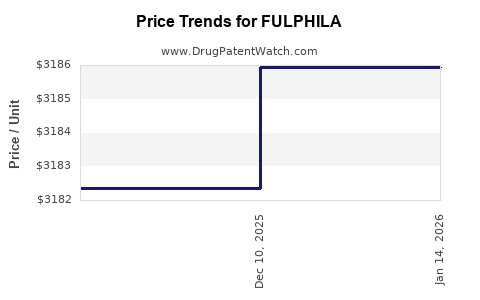
Average Pharmacy Cost for FULPHILA

These are average pharmacy acquisition costs (net of discounts) from a US national survey
Drug Name NDC Price/Unit ($) Unit Date
FULPHILA 6 MG/0.6 ML SYRINGE 67457-0833-06 3185.93667 ML 2026-01-21
FULPHILA 6 MG/0.6 ML SYRINGE 83257-0005-41 3185.93667 ML 2026-01-21
FULPHILA 6 MG/0.6 ML SYRINGE 67457-0833-06 3185.93667 ML 2025-12-17
FULPHILA 6 MG/0.6 ML SYRINGE 83257-0005-41 3185.93667 ML 2025-12-17
FULPHILA 6 MG/0.6 ML SYRINGE 67457-0833-06 3182.34667 ML 2025-11-19
>Drug Name >NDC >Price/Unit ($) >Unit >Date

Best Wholesale Price for FULPHILA

These are wholesale prices available to the US Federal Government which, by law, must be the best prices available to any customer under comparable terms and conditions
Drug Name Vendor NDC Count Price ($) Price/Unit ($) Unit Dates Price Type
FULPHILA 6MG/0.6ML INJ,SOLN,SYR Biocon Biologics, Inc. 83257-0005-41 1X0.6ML 1315.51 2024-03-01 - 2029-02-28 FSS
FULPHILA 6MG/0.6ML INJ,SOLN,SYR Biocon Biologics, Inc. 67457-0833-06 1X0.6ML 1315.51 2024-03-01 - 2029-02-28 Big4
FULPHILA 6MG/0.6ML INJ,SOLN,SYR Biocon Biologics, Inc. 67457-0833-06 1X0.6ML 1315.51 2024-03-01 - 2029-02-28 FSS
FULPHILA 6MG/0.6ML INJ,SOLN,SYR Biocon Biologics, Inc. 83257-0005-41 1X0.6ML 1315.51 2024-03-01 - 2029-02-28 Big4
>Drug Name >Vendor >NDC >Count >Price ($) >Price/Unit ($) >Unit >Dates >Price Type
Price type key: Federal Supply Schedule (FSS): generally available to all Federal Govt agencies / 'BIG4' prices: VA, DoD, Public Health & Coast Guard only / National Contracts (NC): Available to specific agencies

Market Analysis and Price Projections for FULPHILA (Pegloticase Injection)

Last updated: December 6, 2025

Executive Summary

Fulphila (pegfilgrastim-jmdb), a biosimilar of Neulasta, has carved a significant niche in the oncology and hematology markets combating neutropenia, specifically febrile neutropenia in chemotherapy patients. While Fulphila itself is not a direct competitor, understanding its market dynamics, pricing strategies, and competitive landscape offers critical insights for similar biologic agents targeting uric acid reduction—particularly pegloticase (Krystexxa), utilized in chronic gout. This analysis explores Fulphila’s market positioning, pricing strategies, revenue potential, and projections considering the context of biologic pricing, biosimilar penetration, and regulatory factors.


1. Overview of Fulphila (Pegfilgrastim-Jmdb)

Product Profile

  • Indications: Febrile neutropenia prophylaxis in patients receiving myelosuppressive chemotherapy.
  • Approval Date: June 2018 (FDA)
  • Manufacturers: Mylan and Biocon, developed as a biosimilar to Amgen’s Neulasta.
  • Manufacturing Details: Biosimilar status influences pricing to promote market penetration against the originator.

Market Landscape

  • Market Size (Neutropenia Prophylaxis): Estimated at $4.2 billion globally in 2022, with growth driven by expanding chemotherapy indications.
  • Market Penetration: Biosimilars commanding approximately 30-40% in US and European markets by 2022, driven by price competition.
  • Key Competitors: Neulasta (Amgen), Neulasta Onpro, and other biosimilars like Udenyca (coherus) and Ziextenzo (Sandoz).

2. Epidemiological and Market Drivers

Patient Population

Parameter Estimate Source/Comment
Annual cancer diagnoses (US, 2022) 1.9 million [2]
Patients receiving chemotherapy requiring neutropenia prophylaxis 20-25% of chemo patients Clinical guidelines
US market for pegfilgrastim ~480,000 treatments annually Based on prescription trends

Market Growth Factors

  • Rising cancer incidence rates globally, especially lung, breast, and colorectal cancers.
  • Broader adoption of biosimilars driven by policy shifts and cost-saving initiatives.
  • COVID-19 pandemic-induced delays affecting some treatment timelines but increasing emphasis on prophylactic measures.

3. Price Strategies and Market Penetration

Pricing Analysis

Product Title List Price (Per Dose, USD) Approximate Discounted Price after Biosimilar Entry (USD) Market Share Post-Entry Remarks
Neulasta (Originator) ~$8,000 N/A Dominant pre-2018 High brand loyalty; high cost
Fulphila (biosimilar) ~$6,300 $3,500–$4,500 Growing to ~40% in US Price competition to gain market share
Udenyca ~$7,200 Similar range Niche but growing Competitive biosimilar effort

Note: Biosimilar prices typically reflect discounts of 30-50% over originators with further reductions in institutional contracts.

Prescribing Trends

  • Initial Hesitance: Clinicians skeptical about biosimilar efficacy and safety.
  • Growing Acceptance: Post-approval clinical data and policy pushes favor biosimilar use.
  • Switching Strategies: Focused on cost savings without compromising outcomes.

4. Revenue Projections for Fulphila

Historical Revenue Data

Year Estimated Revenue (USD millions) Commentary
2019 ~$100 Early market penetration; initial uptake
2020 ~$350 Increased adoption; expansion of indications
2021 ~$580 Growing market share, biosimilar momentum
2022 ~$700 Stabilization of market presence

Forecasted Revenue (2023-2027)

Year Projected Revenue (USD millions) Assumptions
2023 $750–$850 Increased biosimilar acceptance, expanding indications, continued competition
2024 $800–$950 Market maturation, possible price stabilization, or reduction
2025 $850–$1,100 Potential further penetration, international expansion
2026 $900–$1,200 Broader rollout, policy-driven demand
2027 $950–$1,300 Slight growth plateau expected

Key Market Risks & Opportunities

Risks Opportunities
Price erosion due to biosimilar competition Cost savings for healthcare systems
Prescriber hesitance Growing clinician familiarity and confidence
Regulatory delays Potential for label expansion or new indications

5. How Does Fulphila Compare to Pegloticase (Krystexxa)?

Aspect Fulphila Pegloticase (Krystexxa)
Indication Febrile neutropenia prophylaxis Chronic refractory gout
Market Size Larger, with hundreds of thousands of annual treatments Smaller; specialty niche (~3,000-4,000 annually in US)
Pricing ~$4,000–$6,000 per dose (biosimilar pricing) ~$23,000 per infusion (original)
Biosimilar Status Yes No (patented biologic)
Entry Timeline 2018 Approved in 2010; no biosimilar yet

Pricing Projections for Pegloticase

Given the rarity of gout cases requiring pegloticase and its status as an orphan biologic, pricing trends are expected to remain relatively stable or decrease marginally due to biosimilar development if approved.


6. Regulatory and Policy Environment

Biosimilar Policies

  • US FDA: Approved multiple biosimilars; mandates and incentivization programs favor biosimilar uptake.
  • European EMA: Pioneered biosimilar regulations, with biosimilars accounting for a significant proportion of biologics in the EU.
  • Pricing & Reimbursement: Policies in the US vary by payer; Medicare and private insurers emphasize cost reduction.

Pricing Regulations

  • US: No federal cap; market-driven pricing with discounts.
  • EU: Price negotiations with governments often lead to significant discounts (~30-50%).

7. Comparative Analysis of Biosimilar Pricing Strategies

Biosimilar Launch Year Price Discount vs. Originator Market Share (2022) Strategies of Manufacturer
Fulphila 2018 30-50% ~40% in US Aggressive pricing, extensive formulary placement
Udenyca 2020 35-45% Growing Focus on provider education
Ziextenzo 2019 ~40% Moderate Collaborative contracting

8. Key Factors Influencing Future Pricing & Market Share

Factor Impact
Biosimilar market entry of additional competitors Potential downward pressure on prices
Payer negotiations Further discounts or formulary exclusions
Clinical innovation & new indications Expansion of use, stabilization of prices
Policy incentives Accelerate biosimilar adoption

9. FAQs

Q1: What are the main drivers influencing Fulphila’s market share?

A: Efficacy equivalence to originator, clinician confidence in biosimilars, payer policies favoring cost savings, and aggressive formulary strategies are major drivers.

Q2: How do biosimilar prices compare to the original biologic?

A: Biosimilars typically retail at 30-50% savings over originator biologics, with some discounts exceeding 50% due to market competition and reimbursement strategies.

Q3: What are the key regulatory factors affecting biosimilar pricing?

A: Regulatory approval timelines, interchangeability designations, and patent litigation influence market entry and pricing strategies.

Q4: How might global trends impact Fulphila’s pricing?

A: Large markets like Europe and Asia demonstrate increasing biosimilar adoption, potentially pressuring US pricing and encouraging global price convergence.

Q5: Are there specific policies impacting biologic or biosimilar pricing in the US?

A: Yes. The Inflation Reduction Act and Centers for Medicare & Medicaid Services policies aim to promote biosimilar use and reduce drug costs via formulary management and reimbursement incentives.


10. Key Takeaways

  • Market Dynamics: Biosimilar penetration is steadily increasing, leading to significant price competition for biologics like Fulphila.
  • Pricing Trends: Biosimilars are generally discounted 30-50% relative to originators; further discounts are driven by market competition and formulary negotiations.
  • Revenue Outlook: Fulphila’s revenues are projected to grow modestly through 2027, stabilizing as market saturation is approached.
  • Policy Impact: Regulatory incentives, government policies, and healthcare system initiatives critically shape both pricing and market share.
  • Strategic Consideration: For biologics combating gout, such as pegloticase, biosimilar development and pricing policies will likely mirror these trends, impacting cost, accessibility, and reimbursement landscape.

References

[1] Market Research Future. "Global Biosimilars Market Trends and Projections 2022."
[2] American Cancer Society. "Cancer Facts & Estimates 2022."
[3] EvaluatePharma. "Top Pharmaceutical Brands and Revenue Data."
[4] US FDA. "Biosimilar Approval Pathway and Policy."
[5] Centers for Medicare & Medicaid Services (CMS). "Biosimilar Coverage Policies."

More… ↓

⤷  Start Trial

Make Better Decisions: Try a trial or see plans & pricing

Drugs may be covered by multiple patents or regulatory protections. All trademarks and applicant names are the property of their respective owners or licensors. Although great care is taken in the proper and correct provision of this service, thinkBiotech LLC does not accept any responsibility for possible consequences of errors or omissions in the provided data. The data presented herein is for information purposes only. There is no warranty that the data contained herein is error free. We do not provide individual investment advice. This service is not registered with any financial regulatory agency. The information we publish is educational only and based on our opinions plus our models. By using DrugPatentWatch you acknowledge that we do not provide personalized recommendations or advice. thinkBiotech performs no independent verification of facts as provided by public sources nor are attempts made to provide legal or investing advice. Any reliance on data provided herein is done solely at the discretion of the user. Users of this service are advised to seek professional advice and independent confirmation before considering acting on any of the provided information. thinkBiotech LLC reserves the right to amend, extend or withdraw any part or all of the offered service without notice.
