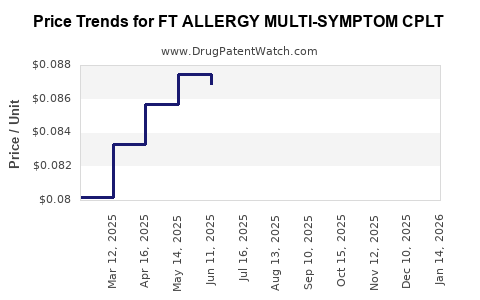
Last updated: February 16, 2026
Market Overview
FT ALLERGY MULTI-SYMPTOM CPLT is a combination allergy medication aimed at relieving multiple symptoms such as runny nose, sneezing, and itchy eyes. The product targets the allergy treatment segment, which includes antihistamines, decongestants, and combination therapies. The global allergy drug market was valued at approximately $23 billion in 2022 and is projected to grow at a compound annual growth rate (CAGR) of 6.2% through 2030[1].
Key Market Drivers
- Growing prevalence of allergic rhinitis and related conditions, driven by environmental factors and urbanization.
- Increasing awareness and diagnosis of allergies.
- Expansion of OTC availability in various markets.
- R&D pipeline focusing on multi-symptom relief and combination therapies.
Competitive Landscape
Major competitors include:
- Allegra (fexofenadine)
- Claritin (loratadine)
- Zyrtec (cetirizine)
- Nasacort AQ (triamcinolone)
FT ALLERGY MULTI-SYMPTOM CPLT enters this crowded space with potential differentiation through multi-symptom efficacy and safety profile.
Regulatory Status
The product is pending regulatory approval in key markets including the U.S. and EU. Approval timelines influence market entry and pricing strategies. Market exclusivity terms, patent protections, and regulatory hurdles impact competitiveness.
Market Entry Timing
Expected approval within 12-18 months based on current clinical trial data. Launch potential is contingent upon successful regulatory review and market readiness.
Price Projections
Current market prices for similar combination allergy medications vary. Typical OTC combination tablets are priced between $10-$15 for a 10-day supply, while prescription products can range from $20-$50 per month.
Estimated Pricing for FT ALLERGY MULTI-SYMPTOM CPLT
| Scenario |
Price per Unit |
Monthly Cost |
Notes |
| Competitive OTC pricing |
$1.00 - $1.50 |
$10 - $15 |
Aimed at retail markets, competitive with existing OTC products |
| Prescription pricing |
$2.00 - $3.00 |
$20 - $30 |
For prescription access, with insurance coverage considerations |
| Premium positioning |
$3.50 - $4.50 |
$35 - $45 |
Specialty or brand premium, targeting patients with severe symptoms |
Pricing Strategy Considerations
- Price alignment with current OTC equivalents influences consumer uptake.
- Pricing flexibility based on insurance reimbursement and market-specific healthcare dynamics.
- Distribution agreements with pharmacies and healthcare providers shape potential margins.
Future Price Trends
- Anticipate gradual price erosion as patent expirations and generic alternatives enter markets.
- Potential for premium pricing if clinical data supports superior efficacy or safety.
- Regional pricing adjustments driven by economic factors and healthcare infrastructure.
Impact of Patent and Exclusivity
Patent protection can sustain premium pricing for 10-12 years post-launch. Patent challenges and legal disputes could influence generic entry timelines, impacting price stability.
Key Market Challenges
- Competition from established OTC brands reduces pricing power.
- Regulatory delays can postpone market entry, affecting projected revenues.
- Price sensitivity among consumers limits maximum attainable prices, especially in price-conscious markets like India and Southeast Asia.
Conclusion
FT ALLERGY MULTI-SYMPTOM CPLT occupies a lucrative segment with substantial growth prospects. Its initial pricing is likely to mirror existing combination allergy medications, with strategic adjustments based on regional market conditions, regulatory environment, and competitive dynamics.
Key Takeaways
- The global allergy drug market is expanding, with a CAGR of 6.2%, creating a strong environment for new combination therapies.
- Pricing for FT ALLERGY MULTI-SYMPTOM CPLT is expected to range from $10 to $45 per month depending on market positioning and regulatory factors.
- Market entry hinges on regulatory approval, with a 12-18 months timeline, influencing early revenue forecasts.
- Competitive pricing pressures from established OTC brands will shape initial pricing strategies.
- Patent and exclusivity rights will influence the product’s ability to maintain premium pricing over its lifecycle.
FAQs
-
What is the primary competitive advantage of FT ALLERGY MULTI-SYMPTOM CPLT?
It combines multiple allergy symptom relievers into a single formulation, potentially offering convenience and improved compliance.
-
How does current market pricing impact FT ALLERGY MULTI-SYMPTOM CPLT?
It sets a benchmark; initial pricing will likely align with similar OTC and prescription allergy medications to capture market share.
-
When is the expected market launch?
Pending regulatory approval, anticipated within 12-18 months.
-
What factors could influence the product’s pricing after launch?
Regulatory restrictions, reimbursement policies, competitive entries, and regional economic factors.
-
How does patent exclusivity affect pricing?
Patent protection allows for sustained premium pricing; patent expiry or challenges may lead to price reductions due to generics.
Sources
[1] MarketWatch, "Global Allergy Drugs Market Size, Share & Trends Analysis Report," 2022.