Last updated: February 13, 2026
Market Overview of Fluoxetine
Fluoxetine, marketed primarily as Prozac, is a selective serotonin reuptake inhibitor (SSRI) approved in 1987 for depression, obsessive-compulsive disorder (OCD), bulimia nervosa, and panic disorder. It remains a prominent antidepressant, with global sales reaching approximately $700 million in 2022, according to IQVIA data. The drug's market share has declined over the past decade due to generic competition but retains a significant presence, especially in North America and Europe.
Patent and Regulatory Status
The original patent for Prozac expired in the United States in 2001, opening the market for generic formulations. As of 2023, multiple manufacturers produce generic fluoxetine, leading to price erosion and increased accessibility. Some formulations, including specific extended-release versions, may still be under patent or exclusivity in certain regions, but overall, the market is largely generic-driven.
Competitive Landscape
Generic manufacturers dominate the fluoxetine market, with Pfizer’s original patent expired over two decades ago. Other key players include Teva, Mylan, Sandoz, and Sun Pharma. Several branded products and formulations continue to exist, including:
- Fluoxetine hydrochloride capsules.
- Extended-release tablets (though less common).
- Combination products for specific indications.
Despite generic competition, clinical familiarity and existing prescribing habits sustain steady demand.
Market Drivers
- Global Burden of Depression: Globally, over 280 million people suffer from depression, creating ongoing demand for antidepressants, including fluoxetine.
- Off-Label Uses: Fluoxetine is prescribed for various off-label indications, such as premature ejaculation and body dysmorphic disorder.
- Generic Cost-Effectiveness: Price sensitivity among healthcare providers and insurers favors cost-effective generic formulations.
- Treatment Guidelines: National and international guidelines endorse SSRIs as first-line therapy for depression, maintaining consistent prescribing levels.
Market Challenges
- Availability of Newer Agents: Drugs like sertraline, escitalopram, and newer antidepressants (e.g., vortioxetine) offer improved side-effect profiles or efficacy.
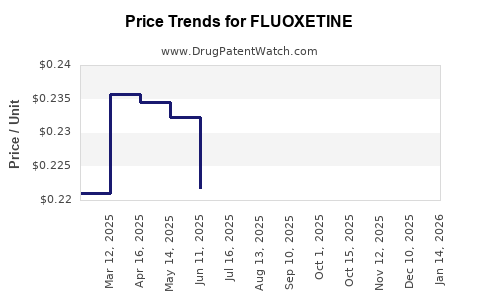
- Generic Price Pressures: Market saturation by generics has caused average tablet prices to decline significantly since patent expiry.
- Regulatory Variability: Variations in approval and reimbursement policies across regions impact market growth.
Price Projections
Current Pricing Landscape (2023)
| Region |
Approximate Price per 30-day Supply* |
Notes |
| United States |
$3 - $7 |
Generic tablets; highly competitive |
| European Union |
€2 – €6 |
Similar to US; some regional pricing disparities |
| Emerging Markets |
$0.50 – $2 |
Lower prices due to manufacturing and market access |
*Price varies based on formulation, dosage, manufacturer, and insurance coverage.
Future Price Trends (Next 5 Years)
- Global Prices: Expected to decline marginally due to continued generic competition, with a compound annual reduction rate (CARR) of 2-3%.
- Premium Formulations: Extended-release versions or combination products may maintain a premium up to 20% over standard formulations.
- Market Consolidation: Larger generics firms may exert pricing power, slightly stabilizing prices in certain regions despite overall downward trends.
Sales Forecast
| Year |
Global Sales ($ millions) |
Growth Rate |
Comments |
| 2023 |
700 |
– |
Baseline |
| 2025 |
650 - 700 |
Slight decline |
Due to market saturation and newer drugs |
| 2030 |
600 - 650 |
Further decline |
Main drivers are generic price erosion |
Investment and R&D Outlook
Despite the mature status, ongoing research explores:
- Fixed-dose combinations.
- Novel formulations for improved adherence.
- Biomarker-driven personalized dosing.
Large pharma companies tend to focus on newer antidepressants. Small and medium firms may leverage off-patent status for biosimilars or improved formulations.
Regional Market Potential
- North America: Mature, with stable demand; price pressures persist.
- Europe: Similar to North America, driven by prescription volume.
- Asia-Pacific: Growing, with increased mental health awareness and expanding healthcare infrastructure; prices remain lower.
- Latin America/Africa: Market penetration is increasing, primarily through generics, with low pricing.
Key Takeaways
- Fluoxetine remains a highly prescribed SSRI with a sizeable global market, despite patent expiration.
- Prices are expected to continue declining, driven by global generics competition.
- Market growth is limited; volume stabilization or slight decline likely over next five years.
- New formulations and combination therapies present niche opportunities, but widespread innovation is limited.
- Emerging markets offer potential for volume growth despite low pricing.
FAQs
1. Will patent protections re-emerge for fluoxetine?
No, fluoxetine’s original patents have expired globally. Minor patents on specific formulations or combinations may exist but are unlikely to influence the core market.
2. How does the price of fluoxetine compare to other SSRIs?
Generic fluoxetine is generally cheaper than off-patent drugs like sertraline and paroxetine, owing to market saturation and widespread manufacturing.
3. Are there branded fluoxetine products still on the market?
Yes, some branded versions exist, mainly in regions with limited generic penetration, offering marginal price premiums.
4. What impact do regulatory policies have on fluoxetine pricing?
Regulatory reimbursement policies influence pricing; tougher reimbursement criteria or national drug formulary restrictions can suppress prices further.
5. Could biosimilars or new formulations revive market growth?
Biosimilars are unlikely, as fluoxetine is a small-molecule drug. Focus remains on new formulations or delivery systems for niche markets.
Sources:
[1] IQVIA, 2023. Global Market Data.
[2] FDA, 2023. Food and Drug Administration Drug Approvals.
[3] EFPIA, 2022. European Pharmaceutical Market Reports.
[4] IMS Health, 2022. Prescription Trends and Market Share Analyses