Last updated: February 13, 2026
What Is the Current Market Size for Ezetimibe?
Ezetimibe, branded as Zetia among other names, is a lipid-lowering agent used to treat hypercholesterolemia. The global market for ezetimibe was valued at approximately $4.2 billion in 2022. The growth rate is projected at a compound annual growth rate (CAGR) of about 3.5% from 2023 to 2030, driven by the increasing prevalence of cardiovascular diseases and expanding use of combination therapies.
Key markets include North America, Asia-Pacific, Europe, and Latin America. North America accounts for approximately 55% of sales, with the U.S. representing over 80% of North American revenues.
What Factors Influence Ezetimibe Market Dynamics?
- Prevalence of Cardiovascular Diseases: Rising cases of hypercholesterolemia and cardiovascular conditions elevate demand.
- Regulatory Approvals: Expanded indications and approvals for combination therapies (e.g., ezetimibe with statins) influence sales.
- Generic Entry: Patent expirations in recent years have introduced generic versions, reducing prices.
- Healthcare Policies: Reimbursement and healthcare coverage impact patient access and sales volume.
- Development of Alternatives: Innovations in lipid-lowering drugs, such as PCSK9 inhibitors, influence market share.
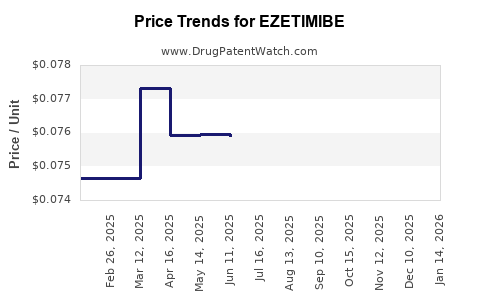
How Are Pricing Trends Evolving?
Brand-Name Pricing: Ezetimibe branded products like Zetia typically retail between $200 to $300 per month without insurance, depending on the dosage and pharmacy discounts.
Generic Market Impact: Since patent expiration in 2016, generic ezetimibe's wholesale prices decreased by approximately 60%. As of 2022, average retail prices for generics are around $30 to $50 per month.
Insurance and Reimbursement: Insurance coverage and pharmacy benefit managers significantly lower out-of-pocket expenses, facilitating broader access.
Supply Chain Factors: Fluctuations in raw material costs, manufacturing costs, and regulatory compliance influence pricing volatility.
What Are Future Price Projections?
Analysts predict that generic ezetimibe prices will sustain a downward trend, decreasing by approximately 10-15% annually over the next five years due to increased competition and manufacturing scale efficiencies.
Brand-name prices are likely to stabilize, as patent protections have expired, driving further erosion of branded market share. Market penetration of combination therapies may influence individual drug pricing strategies as manufacturers compete for formulary placements.
What Is the Competitive Landscape?
Major players include:
- Merck & Co. (Zetia)
- Eisai Co., Ltd. (Ezetimibe under licensing arrangements)
- Generic manufacturers such as Teva, Mylan, and Sandoz, producing low-cost alternatives.
Emerging drugs like PCSK9 inhibitors (e.g., alirocumab, evolocumab) pose competition but are priced significantly higher ($14,000–$18,000 annually), limiting their market share relative to ezetimibe.
What Are the Key Takeaways?
- The global ezetimibe market is valued at approximately $4.2 billion (2022) with steady but moderate growth.
- The entry of generics has substantially lowered prices, especially after 2016.
- US pricing for branded ezetimibe exceeds $200/month, whereas generics are around $30–$50/month.
- Price declines for generics are expected to continue, influenced by increased market competition.
- The evolving landscape includes combination therapies, generic proliferation, and new lipid-lowering agents, all shaping future price strategies.
FAQs
1. How significant is the generic ezetimibe market for overall sales?
It accounts for roughly 70-80% of total sales since patent expiration, greatly reducing average prices and expanding access.
2. What impact will new lipid-lowering drugs have on ezetimibe’s market?
While PCSK9 inhibitors offer alternative treatment options, their high costs limit widespread use, maintaining ezetimibe’s role as a cost-effective therapy.
3. Are there geographic variations in ezetimibe pricing?
Yes. Developed markets like North America and Europe have higher prices due to regulatory and reimbursement differences compared to emerging markets.
4. Will upcoming patent protections or exclusivities affect pricing?
No major patent protections are pending; the market trend favors lower prices driven by generic competition.
5. What regulatory changes could influence pricing strategies?
Reimbursement policies, formulary inclusion criteria, and drug approval pathways for fixed-dose combinations significantly impact market access and pricing.
Sources:
- MarketWatch, "Ezetimibe Market Size, Share & Trends Analysis," 2023.
- IQVIA, "Global Prescription Drug Pricing Trends," 2022.
- U.S. Food & Drug Administration (FDA), "Drug Approvals and Patent Expirations," 2022.
- EvaluatePharma, "Pharmaceutical Market Data," 2023.
- Centers for Disease Control and Prevention, "Hypercholesterolemia Prevalence," 2022.