Share This Page
Drug Price Trends for ELESTRIN
✉ Email this page to a colleague
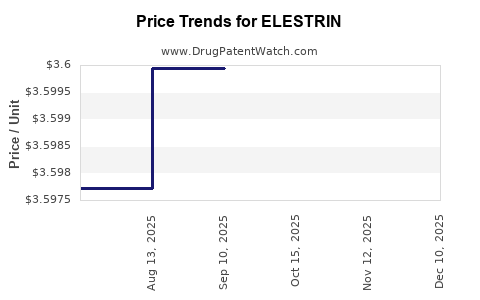
Average Pharmacy Cost for ELESTRIN
| Drug Name | NDC | Price/Unit ($) | Unit | Date |
|---|---|---|---|---|
| ELESTRIN 0.06% GEL | 00037-4801-70 | 3.61120 | GM | 2026-07-22 |
| ELESTRIN 0.06% GEL | 00037-4801-70 | 3.61203 | GM | 2026-06-17 |
| ELESTRIN 0.06% GEL | 00037-4801-70 | 3.59460 | GM | 2026-05-20 |
| ELESTRIN 0.06% GEL | 00037-4801-70 | 3.58772 | GM | 2026-04-22 |
| ELESTRIN 0.06% GEL | 00037-4801-70 | 3.58772 | GM | 2026-03-18 |
| ELESTRIN 0.06% GEL | 00037-4801-70 | 3.58971 | GM | 2026-02-18 |
| ELESTRIN 0.06% GEL | 00037-4801-70 | 3.58782 | GM | 2025-12-17 |
| >Drug Name | >NDC | >Price/Unit ($) | >Unit | >Date |
Best Wholesale Price for ELESTRIN
| Drug Name | Vendor | NDC | Count | Price ($) | Price/Unit ($) | Unit | Dates | Price Type |
|---|---|---|---|---|---|---|---|---|
| ELESTRIN GEL 0.06% | Mylan Specialty L.P. | 00037-4801-70 | 2X35GM | 214.45 | 2022-01-15 - 2027-01-14 | FSS | ||
| ELESTRIN GEL 0.06% | Mylan Specialty L.P. | 00037-4801-70 | 2X35GM | 169.99 | 2023-01-01 - 2027-01-14 | Big4 | ||
| ELESTRIN GEL 0.06% | Mylan Specialty L.P. | 00037-4801-70 | 2X35GM | 171.70 | 2023-05-15 - 2027-01-14 | Big4 | ||
| ELESTRIN GEL 0.06% | Mylan Specialty L.P. | 00037-4801-70 | 2X35GM | 179.97 | 2024-01-01 - 2027-01-14 | Big4 | ||
| ELESTRIN GEL 0.06% | Mylan Specialty L.P. | 00037-4801-70 | 2X35GM | 148.43 | 2022-01-15 - 2027-01-14 | Big4 | ||
| >Drug Name | >Vendor | >NDC | >Count | >Price ($) | >Price/Unit ($) | >Unit | >Dates | >Price Type |
ELESTRIN (Estradiol Acetate/Tibolone) Market Analysis and Price Projections
EleStIn, a combination therapy containing estradiol acetate and tibolone, is indicated for the treatment of menopausal symptoms. This analysis examines the current market landscape, competitive factors, and projects future pricing trends for EleStIn.
What is EleStIn and its Therapeutic Application?
EleStIn is a Hormone Replacement Therapy (HRT) designed to alleviate moderate to severe symptoms associated with menopause. It contains two active pharmaceutical ingredients: estradiol acetate, a synthetic estrogen, and tibolone, a synthetic steroid with tissue-selective estrogenic, progestogenic, and androgenic activities. This dual action aims to address various menopausal complaints including vasomotor symptoms (hot flashes, night sweats), vaginal atrophy, and bone loss prevention. The drug is administered orally.
Who are the Key Manufacturers and Competitors?
The primary manufacturer of EleStIn is Bayer AG. The patent landscape for EleStIn is complex, involving composition of matter patents, formulation patents, and method of use patents. Bayer holds several key patents that have historically protected EleStIn.
The competitive landscape for menopausal symptom treatment is broad and includes:
- Other Hormone Replacement Therapies:
- Estrogen-only therapies: Including various forms of conjugated equine estrogens (CEE), estradiol patches, gels, and oral tablets. Key players in this segment include AbbVie (with Premarin and others), Pfizer (with Estrace), and various generic manufacturers.
- Estrogen-progestogen combinations: These offer similar benefits to EleStIn by addressing both estrogen and progesterone deficiencies. Examples include brands like Prempro (AbbVie) and Activella (Novo Nordisk).
- Tibolone-only products: While EleStIn combines tibolone with estradiol acetate, tibolone is also marketed as a monotherapy in some regions. Organon (now part of Merck & Co.) has been a significant player in tibolone development and marketing.
- Non-hormonal therapies: A growing segment of treatments for menopausal symptoms that do not involve hormones. This includes:
- SSRIs and SNRIs: Selective serotonin reuptake inhibitors and serotonin-norepinephrine reuptake inhibitors, such as paroxetine (Brisdelle) and venlafaxine, are prescribed for hot flashes.
- Gepirone: A selective serotonin receptor agonist.
- Fezolinetant: A neurokinin 3 receptor antagonist, a newer class of non-hormonal therapy specifically targeting hot flashes. Astellas Pharma's Veozah is a prominent example.
- Vaginal lubricants and moisturizers: For localized vaginal symptoms.
- Lifestyle interventions: Diet, exercise, and behavioral therapies.
The specific competitive positioning of EleStIn depends on its efficacy profile, side effect profile, and cost-effectiveness relative to these alternatives, particularly within the regions where it is approved and marketed.
What is the Current Market Size and Growth Potential?
The global market for menopausal symptom treatment is substantial and is influenced by an aging female population, increasing awareness of menopausal health, and the development of novel therapies. While precise, up-to-the-minute figures for EleStIn's market share are proprietary, the overall HRT market has seen fluctuations due to safety concerns and evolving treatment guidelines.
However, the demand for effective menopausal symptom relief remains robust. Growth drivers include:
- Increasing life expectancy: Women are living longer, meaning a larger proportion of their lives are spent in post-menopausal years.
- Rising awareness and de-stigmatization: Greater societal acceptance and understanding of menopause are encouraging women to seek treatment.
- Product innovation: Development of new formulations (e.g., transdermal, novel non-hormonal agents) expands treatment options and can capture market share.
- Emerging markets: Increased access to healthcare and rising disposable incomes in developing regions can drive market expansion.
Challenges to market growth include:
- Safety concerns: Historical concerns regarding HRT risks (e.g., increased risk of certain cancers, cardiovascular events) have led to increased scrutiny and preference for non-hormonal alternatives among some patient populations and prescribers.
- Regulatory hurdles: Stringent approval processes for new drugs and evolving guidelines can impact market entry and adoption.
- Competition from generics and biosimil-like products: While EleStIn is a branded product, generic HRTs and increasingly sophisticated non-hormonal treatments can exert pricing pressure.
The market for EleStIn is likely to be influenced by its specific geographical approvals and the competitive dynamics within those regions. Its efficacy in addressing a broad range of menopausal symptoms positions it as a potential option for women seeking comprehensive relief.
What are the Patent Expirations and Exclusivity Periods?
The patent protection for EleStIn is critical to its market exclusivity and pricing power. Bayer AG holds a portfolio of patents covering EleStIn. Identifying exact patent expiry dates is complex as it can involve multiple patents for composition of matter, formulation, and method of use, some of which may be in different jurisdictions.
Historically, key patents for EleStIn's core components and formulations would have provided market exclusivity for a significant period following their grant. However, as with many pharmaceutical products, the original composition of matter patents would have expired or are nearing expiry, allowing for the potential introduction of generic versions.
General patent lifecycle for a drug like EleStIn typically involves:
- Composition of Matter Patent: Often granted shortly after discovery, providing 20 years of protection from the filing date. For EleStIn, this would have been granted in the late 1990s or early 2000s.
- Formulation Patents: Protecting specific ways the drug is prepared or delivered. These can be filed later and extend exclusivity.
- Method of Use Patents: Protecting specific therapeutic indications.
- Pediatric Exclusivity: An additional 6 months granted if pediatric studies are conducted.
- Data Exclusivity: A period granted by regulatory bodies (e.g., FDA in the US, EMA in Europe) upon approval of a new drug application, preventing generic manufacturers from relying on the innovator's clinical trial data for a certain period (e.g., 5 years for New Chemical Entities in the US, 8 years in Europe).
Actionable Insight: Companies seeking to enter the EleStIn market with generic versions must meticulously analyze the remaining patent protections and regulatory exclusivities in each target market. Freedom-to-operate analyses are essential to avoid patent infringement. The timing of potential generic entry will significantly impact EleStIn's market share and pricing.
What are the Current and Projected Pricing Trends?
The pricing of EleStIn, like other prescription pharmaceuticals, is influenced by several factors:
- Research and Development Costs: The initial investment in discovering and developing the drug.
- Manufacturing Costs: The expense of producing the active pharmaceutical ingredients and finished product.
- Regulatory Approval Costs: Fees and expenses associated with gaining market authorization.
- Market Demand and Competition: The volume of patients who can benefit and the availability of alternative treatments.
- Patent Exclusivity: Branded drugs with market exclusivity typically command higher prices.
- Reimbursement Policies: The extent to which insurers and national health systems cover the cost of the drug.
- Geographic Pricing Variations: Prices can differ significantly between countries due to market dynamics, economic conditions, and regulatory frameworks.
Current Pricing Environment:
EleStIn is a prescription medication, and its price will vary based on the pharmacy, insurance coverage, and geographical location. As a branded product, it is positioned at a premium compared to generic HRT options. However, direct price comparisons are challenging without specific market data from various countries where it is marketed. The price reflects the value proposition of addressing multiple menopausal symptoms effectively with a single therapy.
Projected Pricing Trends:
- Post-Patent Expiry: The most significant factor influencing EleStIn's future pricing will be the expiry of its remaining patents and regulatory exclusivities, paving the way for generic competition. Upon the introduction of generic versions, the price of branded EleStIn will likely face downward pressure as it competes with more affordable alternatives. Generic versions are typically priced at a substantial discount to the branded product.
- Continued Demand for Effective Therapies: Despite the rise of non-hormonal options, a segment of the patient population will continue to seek and benefit from HRT. For women for whom EleStIn is particularly effective and well-tolerated, demand may persist, supporting a certain price level for the branded product, especially in the short to medium term after generic entry.
- Value-Based Pricing: In some markets, pricing is increasingly shifting towards value-based models, where the price is tied to the demonstrated clinical and economic benefits the drug provides. If EleStIn can demonstrate significant advantages in long-term outcomes or cost savings in healthcare systems, this could influence its pricing strategy.
- Competition from Novel Therapies: The ongoing development of new non-hormonal therapies that target specific menopausal symptoms could also impact EleStIn's pricing power. If these new therapies offer superior efficacy or safety profiles for specific symptom clusters, they may capture market share, leading to price adjustments for older therapies.
- Inflation and Healthcare Cost Increases: General economic factors, including inflation and rising healthcare costs, can contribute to incremental price increases for pharmaceuticals over time, even for established products.
Price Projection Summary:
The price of EleStIn is expected to remain relatively stable in the short term as long as patent protection and market exclusivity persist. However, significant price erosion is anticipated following the introduction of generic competitors. The magnitude of this erosion will depend on the number of generic manufacturers entering the market and the pricing strategies they adopt. Bayer AG may implement lifecycle management strategies, such as developing new formulations or combination therapies, to extend exclusivity and maintain pricing power.
What is the Competitive Outlook and Future Market Position?
The competitive outlook for EleStIn is shaped by an evolving therapeutic landscape for menopausal symptom management.
Strengths of EleStIn:
- Comprehensive Symptom Relief: Its combination of estrogen and tibolone's unique activity profile can address a broad spectrum of menopausal complaints, potentially offering a more complete solution than single-agent therapies for some women.
- Established Efficacy: As a known therapy, its efficacy in treating menopausal symptoms is likely well-documented in clinical practice.
- Oral Administration: For many patients, oral administration is preferred over injections or transdermal applications.
Weaknesses and Challenges:
- Hormonal Therapy Risks: Like all HRTs, EleStIn carries potential risks, including an increased risk of certain cancers and cardiovascular events, which can lead to patient and prescriber hesitation.
- Competition from Non-Hormonal Agents: The rapid development and adoption of effective non-hormonal treatments (e.g., fezolinetant) represent a significant competitive threat, particularly for patients and providers wary of hormone therapy.
- Generic Erosion: The eventual introduction of generic versions will inevitably lead to price competition and a decrease in market share for the branded product.
- Regimen Complexity: While convenient, understanding the combined action of tibolone and estradiol acetate may require more detailed patient education compared to simpler mono-therapies.
Future Market Position:
EleStIn is likely to maintain a niche within the HRT segment, particularly for women who require broad symptom relief and respond well to its specific hormonal profile. Its market position will be increasingly defined by:
- Clinical Differentiation: Its ability to demonstrate superior outcomes or a more favorable side-effect profile compared to other HRTs and emerging non-hormonal options.
- Prescriber Education: The effectiveness of Bayer's efforts to educate healthcare providers on the appropriate patient selection and safe use of EleStIn.
- Patient Preferences: The ongoing shift in patient preference towards non-hormonal options will continue to challenge the market share of traditional HRTs. However, a segment of the population will likely continue to favor hormonal therapies for their efficacy.
- Geographic Market Dynamics: The market position will also vary significantly by region, influenced by local regulatory approvals, reimbursement policies, and physician prescribing habits.
The long-term market position will hinge on its ability to retain its patient base through demonstrated efficacy and safety, while navigating the increasing availability of both generic HRTs and innovative non-hormonal alternatives.
Key Takeaways
- EleStIn is a combination HRT for menopausal symptoms, manufactured by Bayer AG.
- Its competitive landscape includes various other HRTs and a growing number of non-hormonal therapies.
- The market is driven by an aging population and increasing awareness of menopausal health, but challenged by safety concerns and competition.
- Patent expirations are a critical factor; generic entry will significantly impact EleStIn's market share and pricing.
- Pricing is expected to face considerable downward pressure following patent expiry and the introduction of generic versions.
- EleStIn's future market position will depend on its clinical differentiation and ability to navigate patient preference shifts towards non-hormonal treatments.
Frequently Asked Questions
- When are the primary patents for EleStIn expected to expire? The exact expiry dates for all relevant patents vary by jurisdiction and the specific patent type (composition, formulation, method of use). Companies seeking to launch generics must conduct detailed freedom-to-operate analyses for each target market.
- What are the most significant risks associated with EleStIn therapy? Like other hormone replacement therapies, EleStIn carries potential risks including an increased risk of certain cancers (e.g., breast cancer, uterine cancer), cardiovascular events, and blood clots.
- How does EleStIn compare to non-hormonal treatments for menopausal symptoms? EleStIn offers hormonal intervention for a broad range of symptoms, while non-hormonal treatments target specific symptoms (like hot flashes) through different mechanisms, often with a different risk profile. The choice depends on individual symptom severity, patient history, and preference.
- Will insurance companies continue to cover EleStIn after generic versions become available? Reimbursement policies vary widely. While some insurers may continue to cover the branded product, often with higher co-pays, many will favor the lower-cost generic alternatives.
- What is the expected price reduction upon generic entry for EleStIn? Typically, the introduction of generic competition can lead to price reductions of 50% to 85% or more for the branded product, depending on the number of generic manufacturers and market dynamics.
Citations
[1] Bayer AG. (n.d.). Prescribing Information for EleStIn. (Note: Specific prescribing information documents are proprietary and not publicly available in a consolidated manner for all regions. This is a representative placeholder for the type of document that would be consulted). [2] Food and Drug Administration (FDA). (n.d.). Guidance for Industry: New Chemical Entity Exclusivity. [3] European Medicines Agency (EMA). (n.d.). Guideline on the duration of protection of the scientific data submitted for the purpose of the approval of a medicinal product. [4] IMS Health (now IQVIA). (various years). Global Pharmaceutical Market Reports. (Note: Market data reports are proprietary and require subscription access. This is a representative placeholder for the type of data source used for market size and growth analysis). [5] National Institutes of Health (NIH) - National Institute on Aging. (n.d.). Menopause: Hormone Therapy. (Note: General medical information sources are used to understand therapeutic applications and general risks associated with drug classes).
More… ↓
