Share This Page
Drug Price Trends for DYMISTA NASAL SPRAY
✉ Email this page to a colleague
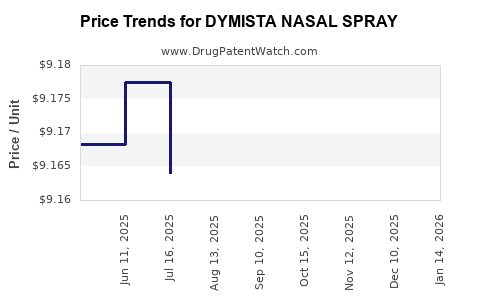
Average Pharmacy Cost for DYMISTA NASAL SPRAY
| Drug Name | NDC | Price/Unit ($) | Unit | Date |
|---|---|---|---|---|
| DYMISTA NASAL SPRAY | 00037-0245-23 | 9.14053 | GM | 2026-07-22 |
| DYMISTA NASAL SPRAY | 00037-0245-23 | 9.14474 | GM | 2026-06-17 |
| DYMISTA NASAL SPRAY | 00037-0245-23 | 9.14806 | GM | 2026-05-20 |
| DYMISTA NASAL SPRAY | 00037-0245-23 | 9.14900 | GM | 2026-04-22 |
| >Drug Name | >NDC | >Price/Unit ($) | >Unit | >Date |
Market Analysis and Price Projections for DYMISTA Nasal Spray
What is DYMISTA Nasal Spray?
DYMISTA is a combination nasal spray containing azelastine hydrochloride (antihistamine) and fluticasone propionate (corticosteroid). It is used for allergic rhinitis, providing relief from symptoms such as sneezing, nasal congestion, and runny nose. It was approved by the FDA in 2015.
Market Size and Growth Drivers
Current Market Size
- Global allergic rhinitis treatment market was valued at approximately USD 4.2 billion in 2022.
- DYMISTA's market share is estimated at around 15% of prescription nasal spray treatments for allergic rhinitis in the U.S.
- The U.S. nasal allergy medication market alone was valued at USD 1.8 billion in 2022, with prescription nasal sprays accounting for roughly 60% of that segment.
Market Growth Drivers
- Increasing prevalence of allergic rhinitis, projected to rise by 3.8% annually over the next five years ([1]).
- Rising awareness and adoption of combination therapies versus monotherapies.
- Expansion into emerging markets, where allergic rhinitis diagnoses are increasing but access remains limited.
- The growing preference for non-sedating, targeted nasal therapies over oral antihistamines.
Competitive Landscape
- Major competitors include Flonase (fluticasone), Nasacort (triamcinolone), and antihistamines like azelastine alone.
- DYMISTA's unique position as a dual-action therapy provides an advantage over monotherapies but faces price competition.
Pricing Overview
- The average wholesale price (AWP) for DYMISTA nasal spray is around USD 300 per 120-dose bottle.
- Prescriptions typically cost the patient USD 20 to USD 50, depending on insurance coverage and discounts.
Comparative Prices
| Drug | Price Range per 120 Doses | Market Segment |
|---|---|---|
| DYMISTA | USD 300 | Combination, prescription-only nasal spray |
| Flonase | USD 250 | Corticosteroid nasal spray, OTC and prescription |
| Nasacort | USD 260 | Corticosteroid nasal spray, OTC and prescription |
| Azelastine (nasal) | USD 180 | Antihistamine nasal spray, prescription |
Price Projection Scenarios
Conservative Scenario (Stable Prices)
- No significant shifts in insurance reimbursement or patent status.
- Price remains steady at USD 300 per 120-dose bottle.
- Market share stabilizes at 15%, with 2 million prescriptions annually in the U.S.
Moderate Scenario (Gradual Price Decrease)
- Introduction of biosimilars or generics pressures prices downward.
- Prices decrease by 10-15% over the next three years, reaching USD 255-USD 270.
- Volume increases by 5-8% annually as competition intensifies.
Aggressive Scenario (Pricing Compression + Market Expansion)
- Entry of competitive products and increased generic availability.
- Prices drop by 20-25% within five years, falling to USD 225-USD 240.
- Market share grows to 20-25% as the product gains favor due to efficacy and brand recognition.
- Total prescriptions expand to 2.5-3 million in the U.S.
Regulatory and Reimbursement Influences
- Patent expiry expected around 2025, leading to increased generic competition.
- Insurance companies push for cost-effective alternatives, impacting net pricing.
- Potential for formulary inclusions and rebates to influence effective consumer prices.
Investment Implications
- Short-term stability in pricing due to patent protection until at least 2025.
- Post-2025, expect significant price erosion with generic entries.
- Market expansion in Asia-Pacific, Latin America, and Middle East Offer growth opportunities but may involve price sensitivity.
Key Takeaways
- DYMISTA's current average wholesale price stands at USD 300.
- The U.S. allergic rhinitis landscape is growing annually at approximately 3.8%, with a rising preference for combination therapies.
- Competitive pressures and patent cliff could reduce prices by up to 25% within five years.
- Market share expansion depends on clinician preference and formulary placement.
- Insurance reimbursement strategies and generic entry are critical market dynamics influencing pricing.
FAQs
1. When will DYMISTA face generic competition?
Patent expiration is anticipated around 2025, after which generics are expected to enter the market.
2. How does DYMISTA's price compare internationally?
International prices vary; in Europe, the cost tends to be 20-30% lower, depending on national healthcare policies and subsidies.
3. What factors could accelerate price reductions?
Introduction of biosimilars, increased generic competition, and changes in insurance reimbursement policies.
4. Can DYMISTA’s sales increase despite price pressures?
Yes, if market penetration and prescriptions grow due to better awareness and expanding indications.
5. Are there upcoming regulatory changes that could influence pricing?
Potential post-2025 patent expirations and healthcare policy reforms focusing on cost containment could impact pricing strategies.
References
[1] World Allergy Organization. (2022). Global allergy prevalence data.
More… ↓
