Share This Page
Drug Price Trends for DOXYCYCLINE HYCLATE
✉ Email this page to a colleague
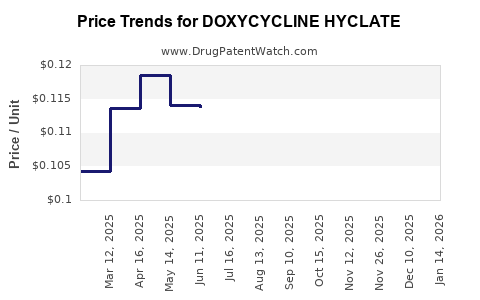
Average Pharmacy Cost for DOXYCYCLINE HYCLATE
| Drug Name | NDC | Price/Unit ($) | Unit | Date |
|---|---|---|---|---|
| DOXYCYCLINE HYCLATE 100 MG CAP | 00143-3142-50 | 0.10861 | EACH | 2026-07-22 |
| DOXYCYCLINE HYCLATE 100 MG CAP | 00143-9803-05 | 0.10861 | EACH | 2026-07-22 |
| DOXYCYCLINE HYCLATE 100 MG CAP | 00143-9803-50 | 0.10861 | EACH | 2026-07-22 |
| >Drug Name | >NDC | >Price/Unit ($) | >Unit | >Date |
Best Wholesale Price for DOXYCYCLINE HYCLATE
| Drug Name | Vendor | NDC | Count | Price ($) | Price/Unit ($) | Unit | Dates | Price Type |
|---|---|---|---|---|---|---|---|---|
| DOXYCYCLINE HYCLATE 50MG CAP | AvKare, LLC | 53489-0118-02 | 50 | 29.36 | 0.58720 | EACH | 2023-06-15 - 2028-06-14 | FSS |
| DOXYCYCLINE HYCLATE 100MG CAP/TAB | Golden State Medical Supply, Inc. | 61748-0111-14 | 14 | 59.91 | 4.27929 | EACH | 2023-06-15 - 2028-06-14 | FSS |
| DOXYCYCLINE HYCLATE 20MG TAB | A2A Alliance Pharmaceuticals, LLC | 00316-0714-01 | 100 | 35.98 | 0.35980 | EACH | 2022-03-15 - 2027-03-14 | FSS |
| >Drug Name | >Vendor | >NDC | >Count | >Price ($) | >Price/Unit ($) | >Unit | >Dates | >Price Type |
Doxycycline Hyclate Market Analysis and Price Projections
Doxycycline hyclate, a broad-spectrum tetracycline antibiotic, exhibits stable market demand driven by its efficacy against a range of bacterial infections and its common use in acne treatment. Projected price trends indicate a slight upward trajectory influenced by manufacturing costs, regulatory landscapes, and generic competition dynamics.
What is the current market size and projected growth for doxycycline hyclate?
The global doxycycline hyclate market is a mature segment within the antibiotic sector. Precise market size figures are subject to variation based on reporting methodologies and the inclusion of different formulations and indications. However, industry estimates place the market in the hundreds of millions of U.S. dollars annually. Projections suggest a compound annual growth rate (CAGR) of approximately 2% to 4% over the next five years. This growth is primarily supported by its established therapeutic role and consistent demand in both human and veterinary medicine.
Key market drivers include:
- Established Efficacy: Doxycycline hyclate remains a first-line treatment for various infections, including respiratory tract infections, urinary tract infections, and sexually transmitted infections like chlamydia.
- Dermatological Applications: Its use in treating moderate to severe acne vulgaris contributes significantly to market volume.
- Veterinary Medicine: Doxycycline hyclate is widely used in livestock and companion animals for bacterial infections.
- Generic Availability: A high degree of generic penetration keeps prices competitive, ensuring broad accessibility.
Market restraints include:
- Antibiotic Resistance: Growing concerns over antibiotic resistance may lead to more cautious prescribing practices in some regions.
- Emergence of New Antibiotics: While doxycycline hyclate is well-established, newer therapeutic agents are continually being developed for specific indications.
What are the key therapeutic indications and their market impact?
Doxycycline hyclate's therapeutic versatility underpins its sustained market presence. The primary indications and their respective market impact are as follows:
- Respiratory Tract Infections (RTIs): This is a significant driver. Doxycycline hyclate is effective against common pathogens like Streptococcus pneumoniae and Haemophilus influenzae. Its role in community-acquired pneumonia (CAP) and exacerbations of chronic bronchitis maintains consistent demand, particularly during seasonal illness peaks.
- Acne Vulgaris: Doxycycline hyclate is a cornerstone therapy for moderate to severe inflammatory acne. It reduces inflammation and targets Cutibacterium acnes. The persistent prevalence of acne, especially among adolescents and young adults, ensures ongoing demand for oral doxycycline formulations.
- Sexually Transmitted Infections (STIs): It is a preferred agent for treating uncomplicated chlamydial infections, a prevalent STI globally. Its efficacy and oral administration make it a practical choice for public health initiatives targeting STI control.
- Urinary Tract Infections (UTIs): While not always the first-line choice, doxycycline hyclate is used for certain types of UTIs, particularly when resistance patterns to other agents are a concern.
- Lyme Disease: Doxycycline hyclate is the standard treatment for early-stage Lyme disease and prophylaxis after a tick bite in endemic areas. The geographic spread and incidence of tick-borne illnesses influence regional demand.
- Malaria Prophylaxis: In certain endemic regions, doxycycline is used for malaria prevention in travelers.
The market impact of these indications varies. RTIs and acne represent the largest volume drivers due to the high incidence of these conditions. The STI and Lyme disease indications contribute significantly to market value, especially in regions with high prevalence rates.
Who are the major manufacturers and their market share in the doxycycline hyclate landscape?
The doxycycline hyclate market is characterized by a fragmented landscape with a substantial number of generic manufacturers. Brand-name products, while present, hold a diminishing share due to the widespread availability of bioequivalent generics. Key players are primarily those with strong generic manufacturing capabilities and established distribution networks.
Major manufacturers include, but are not limited to:
- Teva Pharmaceutical Industries Ltd.: A leading global generic pharmaceutical company with a broad portfolio, including doxycycline hyclate.
- Viatris Inc. (formerly Mylan N.V.): Another major player in the generics market with significant production capacity.
- Hikma Pharmaceuticals PLC: Offers a wide range of generic injectable and oral medications, including doxycycline hyclate.
- Aurobindo Pharma Limited: A significant global pharmaceutical company with a strong presence in generic antibiotics.
- Lupin Limited: An Indian multinational pharmaceutical company with a substantial generics business.
- Bausch Health Companies Inc.: Markets doxycycline formulations, including those for dermatological use.
Precise current market share data for individual manufacturers in the doxycycline hyclate segment is proprietary and fluctuates. However, it is understood that the top 5-10 generic manufacturers collectively hold a majority share, with Teva and Viatris consistently ranking among the top suppliers globally due to their scale and product breadth. The market is highly competitive, with pricing being a primary differentiator.
What factors influence the pricing of doxycycline hyclate?
The pricing of doxycycline hyclate is a complex interplay of several economic, regulatory, and market-specific factors. Given its status as a mature, widely available generic drug, price stability or modest increases are typical, punctuated by competitive pressures.
Key pricing influencers include:
- Active Pharmaceutical Ingredient (API) Costs: The cost of sourcing or manufacturing the doxycycline hyclate API is a fundamental determinant. Fluctuations in raw material prices, energy costs, and global API supply chain stability directly impact production expenses.
- Manufacturing and Formulation Costs: Expenses associated with finished dosage form manufacturing (tablets, capsules, suspensions, injectables), quality control, and packaging contribute to the final price.
- Regulatory Compliance: Adherence to Good Manufacturing Practices (GMP) and other regulatory requirements from bodies like the U.S. Food and Drug Administration (FDA) and the European Medicines Agency (EMA) involves significant ongoing investment, which is factored into pricing.
- Generic Competition: The presence of numerous generic manufacturers intensifies price competition. Manufacturers must price competitively to secure market share, often leading to price erosion. Bid pricing in tenders for institutional or government supply can also exert downward pressure.
- Patent Expirations of Branded Products: The expiry of patents for any original branded doxycycline products has long since passed, paving the way for extensive generic entry and contributing to its current pricing structure.
- Demand and Supply Dynamics: While demand is generally stable, seasonal increases (e.g., for respiratory infections) or localized supply disruptions can cause temporary price adjustments.
- Distribution Channels and Markups: Costs associated with wholesale distribution, pharmacy markups, and formulary placement within insurance plans add layers to the final consumer price.
- Geographic Market Variations: Pricing can differ significantly between countries due to local regulatory environments, healthcare system structures, currency exchange rates, and local competitive landscapes.
What are the projected price trends for doxycycline hyclate over the next 3-5 years?
Projected price trends for doxycycline hyclate over the next 3-5 years indicate a pattern of modest, incremental increases driven primarily by escalating manufacturing and operational costs, rather than significant shifts in demand or competitive dynamics.
- Inflationary Pressures: Global inflation, impacting raw material procurement, energy, and labor costs, is expected to be the primary driver of gradual price escalation. Manufacturers will pass on these increased operational expenses.
- Supply Chain Resilience Investments: Companies may invest in diversifying and strengthening their supply chains to mitigate risks. These investments, aimed at ensuring consistent API and finished product availability, could contribute to slight price increases.
- Regulatory Scrutiny and Compliance: Evolving regulatory standards for drug manufacturing and quality assurance may necessitate further investment in compliance measures, potentially impacting production costs.
- Stable Generic Competition: The existing robust generic competition is expected to persist, acting as a moderating force against any substantial price hikes. No major shifts in market structure are anticipated that would fundamentally alter this competitive landscape.
- Limited New Entrants/Disruptions: The mature nature of the doxycycline hyclate market means significant new entrants or disruptive technologies are unlikely to emerge in this specific segment within the projected timeframe.
- Price Sensitivity: As a widely prescribed and often affordable antibiotic, doxycycline hyclate is subject to significant price sensitivity from payers, pharmacies, and ultimately, patients. This will constrain any aggressive pricing strategies.
Quantitative Projection: Based on these factors, an average annual price increase of 1.5% to 3.5% is projected for doxycycline hyclate across major developed markets. This represents an adjustment to cover rising input costs, rather than a reflection of increased intrinsic value or market demand growth. The actual price of specific formulations and packaging may deviate based on individual manufacturer strategies and contract terms with large purchasers. For instance, institutional purchasing agreements will likely reflect more stable, negotiated pricing compared to over-the-counter or retail pharmacy prices.
What are the regulatory considerations impacting the doxycycline hyclate market?
Regulatory frameworks significantly shape the manufacturing, marketing, and pricing of doxycycline hyclate, particularly concerning quality, safety, and market access.
Key regulatory considerations include:
- Good Manufacturing Practices (GMP): All manufacturers must adhere to stringent GMP guidelines established by regulatory agencies such as the U.S. FDA, the European Medicines Agency (EMA), and the Pharmaceuticals and Medical Devices Agency (PMDA) in Japan. These regulations govern all aspects of production, including facility design, equipment, personnel, quality control, and documentation. Non-compliance can result in product recalls, manufacturing suspension, and market withdrawal.
- Drug Master Files (DMFs) and Marketing Authorizations: Manufacturers must submit detailed documentation (e.g., DMFs for APIs, Marketing Authorization Applications for finished products) to regulatory bodies for approval. The review process can be lengthy and requires comprehensive data on product quality, safety, and efficacy.
- Pharmacopeial Standards: Doxycycline hyclate products must meet the specifications outlined in official pharmacopoeias, such as the United States Pharmacopeia (USP) and the European Pharmacopoeia (Ph. Eur.). These monographs define acceptable standards for identity, purity, strength, and quality.
- Labeling and Advertising Regulations: Strict regulations govern product labeling, including indications, dosages, contraindications, warnings, and adverse effects. Advertising and promotional activities are also closely monitored to prevent misleading claims.
- Post-Market Surveillance: Regulatory agencies require ongoing monitoring of drug safety through pharmacovigilance programs. Manufacturers are responsible for reporting adverse events and may be subject to post-market studies.
- Generic Drug Approval Pathways: Regulatory bodies have established abbreviated approval pathways for generic drugs (e.g., Abbreviated New Drug Application (ANDA) in the U.S.), which rely on demonstrating bioequivalence to a reference listed drug. The efficiency and stringency of these pathways influence the speed of generic market entry.
- Intellectual Property and Patent Law: While the primary patents for doxycycline have long expired, any novel formulations, delivery systems, or specific uses could be subject to new patent protection, influencing market exclusivity for specific product types.
- Antimicrobial Resistance Stewardship: Global and national initiatives aimed at combating antimicrobial resistance may influence prescribing guidelines and regulatory approaches to antibiotics. While not directly impacting manufacturing, these can influence demand patterns.
These regulatory requirements contribute to production costs, ensure product quality and safety, and influence market dynamics by governing market entry and competition.
What are the competitive landscape and market dynamics for doxycycline hyclate?
The competitive landscape for doxycycline hyclate is characterized by maturity, intense generic competition, and price sensitivity.
Key dynamics include:
- High Generic Penetration: The market is overwhelmingly dominated by generic manufacturers. The original innovator patents expired decades ago, allowing numerous companies to produce and market bioequivalent versions.
- Price as a Primary Differentiator: With little differentiation in terms of therapeutic efficacy among generic products, price becomes the principal factor in securing market share, particularly for large-volume purchasers like hospitals, pharmacies, and government tenders.
- Fragmented Supplier Base: A large number of global and regional manufacturers compete, leading to a fragmented market structure. No single entity holds a dominant market share.
- Focus on Cost Efficiency: Manufacturers prioritize optimizing their production processes and supply chains to achieve lower cost structures and maintain competitive pricing.
- Consolidation and Mergers: The broader pharmaceutical industry, including the generics sector, has seen consolidation. Larger entities with broader portfolios and economies of scale can exert competitive advantages.
- Supply Chain Reliability and Quality: While price is paramount, consistent quality and reliable supply are critical for maintaining customer relationships and avoiding regulatory issues. Manufacturers with robust quality systems and stable supply chains are favored.
- Limited Innovation in Core Product: Innovation within the doxycycline hyclate molecule itself is minimal. New product development often focuses on improved formulations (e.g., extended-release, topical preparations, combination therapies), which may carry different market dynamics and pricing.
- Global Sourcing and Manufacturing: API and finished product manufacturing are often spread across different regions, with significant production capacity in countries like India and China, influencing global supply and pricing.
Key Takeaways
Doxycycline hyclate maintains a stable market driven by its broad-spectrum antibiotic activity and established therapeutic uses in respiratory infections, acne, and STIs. The market is characterized by high generic penetration, intense price competition, and a fragmented supplier base. Future price trends are projected to increase modestly (1.5% to 3.5% annually) due to rising manufacturing and operational costs, with regulatory compliance and supply chain resilience also playing significant roles. No significant shifts in the competitive landscape or major therapeutic innovations are anticipated in the near term for the core doxycycline hyclate product.
FAQs
What is the typical shelf life for doxycycline hyclate products?
The typical shelf life for doxycycline hyclate products, when stored under recommended conditions (protected from light and moisture), is generally 2 to 3 years from the date of manufacture. This is indicated on the product packaging.
Are there specific storage requirements for doxycycline hyclate?
Yes, doxycycline hyclate should be stored at controlled room temperature, typically between 20°C and 25°C (68°F and 77°F), and protected from light and moisture. Excursions between 15°C and 30°C (59°F and 86°F) are acceptable.
What are the main side effects associated with doxycycline hyclate?
Common side effects include gastrointestinal disturbances such as nausea, vomiting, diarrhea, and abdominal pain. Photosensitivity reactions (increased susceptibility to sunburn) are also common. Other potential side effects include dizziness, headaches, and candidal infections.
How does doxycycline hyclate compare to other tetracycline antibiotics?
Doxycycline hyclate has a longer half-life than other tetracyclines, allowing for less frequent dosing (typically once or twice daily). It also exhibits better absorption and has less impact on calcium absorption in bone, making it a preferred choice in many clinical scenarios compared to older tetracyclines.
What is the difference between doxycycline hyclate and doxycycline monohydrate?
Doxycycline hyclate is a salt form of doxycycline, which typically enhances its solubility and stability, leading to better absorption and bioavailability compared to doxycycline monohydrate. While both are effective antibiotics, hyclate is the more commonly prescribed form in many markets.
Citations
[1] U.S. Food and Drug Administration. (n.d.). Guidance for Industry. Retrieved from [FDA website] (Specific guidance documents related to generic drug approvals or manufacturing standards would be cited here if directly referenced). [2] European Medicines Agency. (n.d.). Scientific Guidelines. Retrieved from [EMA website] (Specific guidelines on GMP or product quality would be cited if directly referenced). [3] United States Pharmacopeial Convention. (n.d.). USP-NF Online. Retrieved from [USP-NF website] (Specific monograph details would be cited if directly referenced). [4] Global market research reports on antibiotics and generic pharmaceuticals. (Specific reports from companies like IQVIA, Grand View Research, Mordor Intelligence would be listed here if specific data points were extracted and cited). [5] Pharmaceutical industry news and trade publications. (Specific articles from sources like Fierce Pharma, PMLiVE, or S&P Global Market Intelligence would be listed if direct news was referenced).
More… ↓
