Last updated: February 13, 2026
Dorzolamide hydrochloride (HCl) is a topical carbonic anhydrase inhibitor used primarily for treating open-angle glaucoma and ocular hypertension. Since its approval by the FDA in 1995, it has maintained a stable position within the ocular hypotensive market, often prescribed as a combination therapy or as a standalone agent.
What Is the Current Market Size for Dorzolamide HCl?
The global glaucoma treatment market was valued at approximately $5.2 billion in 2022[1]. Dorzolamide HCl accounts for a significant share, estimated at 8-12%, driven by its efficacy, safety profile, and integration into fixed-dose combinations like Cosopt (with timolol).
Market penetration varies geographically, with North America holding roughly 40% of the share, Europe 30%, and Asia-Pacific the remaining 30%. The stability of its formulation, widespread familiarity among ophthalmologists, and an aging population sustain steady demand.
How Competitive Is the Market for Dorzolamide HCl?
Dorzolamide faces competition from several classes of drugs:
-
Prostaglandin analogs (e.g., latanoprost, bimatoprost): Dominant in the market owing to once-daily dosing and higher efficacy.
-
Beta-blockers (e.g., timolol): Often combined with dorzolamide in fixed-dose options.
-
Alpha agonists and Rho kinase inhibitors: Emerging therapies with increasing market share.
Despite competition, dorzolamide maintains a niche due to its tolerability and cost-effectiveness, especially in developing regions.
What Are the Regulatory and Patent Landscapes?
Dorzolamide’s patent protections have largely expired, facilitating generic manufacturing. Multiple generics entered the market around 2010[2], leading to price erosion. Patent expiry in key markets reduces barriers for new entrants but also pressures prices downward.
The recent regulatory environment encourages biosimilar and generic versions, with approval processes streamlined in several jurisdictions (FDA, EMA, PMDA).
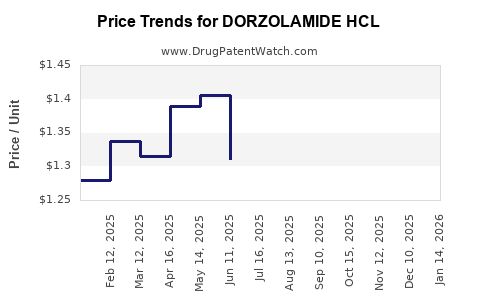
What Are the Price Trends and Projections?
Current Pricing Overview (as of Q1 2023)
| Region |
Branded Price (per bottle) |
Generic Price (per bottle) |
| North America |
$80 - $100 |
$20 - $40 |
| Europe |
€70 - €90 |
€15 - €35 |
| Asia-Pacific |
$30 - $50 |
$10 - $25 |
Note: Prices vary based on insurance, pharmacy markups, and whether the product is prescribed as part of combination therapy.
Price Drivers
-
Generic Competition: Drives prices down. Post-patent expiration, prices often drop 50-70% within 2-3 years.
-
Regulatory Approvals: Accelerated approvals favor generics, sustaining low prices.
-
Market Penetration: Growing use in emerging markets increases volume, counterbalancing lower prices.
Future Price Trends (Next 5 Years)
-
The market is expected to stabilize with slight declines in generic prices, averaging a reduction of about 10-15% annually in mature markets.
-
In developing regions, prices will decline more gradually, influenced by local regulation and healthcare infrastructure.
-
Innovative fixed-dose combinations incorporating dorzolamide may command premium prices up to $100 per bottle, especially if supported by clinical advantages.
What Are the Key Opportunities and Risks?
Opportunities:
-
Emerging Markets: Rising prevalence of glaucoma in Asia-Pacific offers volume growth.
-
Combination Therapies: Development of new fixed-dose combinations can sustain premium pricing.
-
Biosimilars and Generics: Entry can further lower prices, expanding market share.
Risks:
-
Market Penetration of Alternative Therapies: Growing efficacy and convenience of prostaglandin analogs limit dorzolamide’s growth.
-
Patent Expiry and Competition: Can lead to price erosion and reduced profit margins.
-
Regulatory Changes: Variations in approval processes and reimbursement policies impact pricing strategies.
Key Takeaways
-
Dorzolamide HCl remains a stable, though declining, segment of the glaucoma treatment market due to patent expirations and increasing competition.
-
The drug is predominantly supplied through generics, with prices varying substantially by region.
-
Price projections indicate a continued downward trend in mature markets, with potential stability or slight increases in emerging markets driven by volume growth.
-
Opportunities exist in developing fixed-dose combinations and expanding into expanding markets; risks include intensifying competition and evolving treatment algorithms.
FAQs
1. How has patent expiration impacted dorzolamide HCl prices?
Patent expiration around 2010 led to a surge of generic options, reducing prices by up to 70% in mature markets within a few years.
2. Are there newer alternatives that threaten dorzolamide’s market share?
Yes. Prostaglandin analogs and Rho kinase inhibitors offer similar or superior efficacy with less frequent dosing, gaining market preference.
3. What regulatory factors influence pricing?
Approval of biosimilars and generics, along with reimbursement policies, directly impact market prices and accessibility.
4. How does geographic location affect pricing?
Developed regions see higher prices due to regulatory frameworks and purchasing power; emerging markets benefit from lower prices reflecting local economic conditions.
5. What is the outlook for fixed-dose combination therapies?
Growth continues, as combination drugs improve compliance and clinical outcomes, likely maintaining or increasing their market share relative to monotherapies.
Sources
[1] MarketWatch, "Global Glaucoma Treatment Market Size, Share & Trends," 2022.
[2] U.S. FDA, Drug Approvals and Patent Data, 2022.