Share This Page
Drug Price Trends for DIVALPROEX SOD DR
✉ Email this page to a colleague
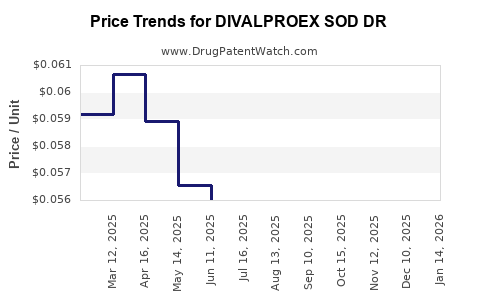
Average Pharmacy Cost for DIVALPROEX SOD DR
| Drug Name | NDC | Price/Unit ($) | Unit | Date |
|---|---|---|---|---|
| DIVALPROEX SOD DR 125 MG TAB | 00832-7122-11 | 0.05703 | EACH | 2026-07-22 |
| DIVALPROEX SOD DR 125 MG TAB | 00832-7122-15 | 0.05703 | EACH | 2026-07-22 |
| DIVALPROEX SOD DR 125 MG TAB | 29300-0138-01 | 0.05703 | EACH | 2026-07-22 |
| >Drug Name | >NDC | >Price/Unit ($) | >Unit | >Date |
Divalproex Sodium Market Analysis and Price Projections
Divalproex sodium is an anticonvulsant and mood-stabilizing medication used to treat epilepsy, bipolar disorder, and migraines. The market is characterized by established generics and the potential for new indications. Pricing is influenced by generic competition, reimbursement policies, and manufacturing costs.
What is the Current Market Landscape for Divalproex Sodium?
The global market for divalproex sodium is mature, driven by its broad therapeutic applications and established efficacy. The primary market consists of generic versions, following the patent expiration of the innovator product, Depakote, manufactured by AbbVie Inc. (formerly Abbott Laboratories). The market is fragmented with numerous generic manufacturers, leading to competitive pricing.
-
Therapeutic Areas:
- Epilepsy (partial-onset seizures, generalized tonic-clonic seizures)
- Bipolar Disorder (manic episodes)
- Migraine prophylaxis
-
Market Size and Growth: The global market size for divalproex sodium is estimated to be in the hundreds of millions of U.S. dollars annually. Growth is generally modest, reflecting the mature nature of the product and the availability of alternative treatments. Projections indicate a stable to slightly declining growth rate in developed markets due to an aging patent and increased competition, while emerging markets may see marginal growth due to increased healthcare access.
-
Key Market Drivers:
- High prevalence of epilepsy and bipolar disorder globally.
- Established clinical track record and physician familiarity with the drug.
- Lower cost of generic formulations compared to branded alternatives or newer therapies.
- Use as a combination therapy in certain neurological and psychiatric conditions.
-
Market Restraints:
- Intense generic competition leading to price erosion.
- Availability of newer antiepileptic drugs and mood stabilizers with potentially improved side-effect profiles or novel mechanisms of action.
- Regulatory scrutiny regarding side effects, particularly in pregnant women (teratogenicity).
- Reimbursement pressures from payers in developed countries.
Who are the Major Players in the Divalproex Sodium Market?
The market is dominated by generic pharmaceutical companies. Key manufacturers and distributors include:
-
Core Generic Manufacturers:
- Teva Pharmaceutical Industries Ltd.
- Mylan N.V. (now part of Viatris Inc.)
- Sun Pharmaceutical Industries Ltd.
- Dr. Reddy's Laboratories Ltd.
- Amneal Pharmaceuticals LLC
- Impax Laboratories, Inc. (now part of Amneal Pharmaceuticals)
- Endo International plc
-
Innovator Company (Historical):
- AbbVie Inc. (Depakote) - While the branded product is largely supplanted by generics, AbbVie remains a significant entity in the broader CNS therapeutic area.
The competitive landscape is characterized by a race to market for authorized generics and the continuous introduction of new generic formulations, including extended-release versions. Supply chain reliability and regulatory compliance are critical for market participation.
What are the Patent and Exclusivity Considerations for Divalproex Sodium?
The primary patents for the original divalproex sodium formulations have expired, allowing for widespread generic competition.
-
Original Patents: The composition of matter patents and formulation patents for Depakote (divalproex sodium) have long since expired. For instance, key patents expired in the early to mid-2000s. This paved the way for generic manufacturers to enter the market.
-
Patent Expirations:
- U.S.: The original patents for Depakote expired in the early 2000s.
- Europe: Similar patent expiries occurred in major European markets around the same period.
-
Newer Formulations and Patents: While the core compound is off-patent, manufacturers may hold patents on specific extended-release formulations, manufacturing processes, or new therapeutic uses. These newer patents typically have shorter durations and provide limited market exclusivity for specific product variations. For example, patents related to extended-release technologies (e.g., Divalproex Sodium Extended Release) have also expired, leading to generic versions of these formulations.
-
Regulatory Exclusivities: In some cases, new formulations might be eligible for a period of New Chemical Entity (NCE) or other regulatory exclusivities, but these are less common for divalproex sodium as it is an established drug.
What are the Projected Price Trends for Divalproex Sodium?
Price projections for divalproex sodium indicate continued downward pressure due to generic competition, with stabilization occurring at lower price points.
-
Current Pricing Dynamics:
- Generic Price Range: The average wholesale price (AWP) for a 30-day supply of generic divalproex sodium tablets (e.g., 500mg strength) typically ranges from $20 to $60 USD, depending on the manufacturer, dosage form (immediate-release vs. extended-release), and purchasing volume. This is a significant decrease from the peak prices of the branded Depakote.
- Branded vs. Generic Differential: Branded divalproex sodium (Depakote) historically commanded prices several times higher than current generic offerings. The price difference between branded and generic versions can be 70-90% or more.
-
Price Projections (Next 3-5 Years):
- Developed Markets (North America, Europe): Expect prices to remain stable or experience a slight decline of 1-3% annually. This is driven by ongoing competition among existing generic players and the potential for new entrants if manufacturing costs permit.
- Emerging Markets (Asia-Pacific, Latin America): Prices may see a marginal increase as healthcare infrastructure develops and demand rises, but the overall price points will remain significantly lower than in developed markets. The increase is projected to be 2-5% annually, largely due to increased market penetration rather than price hikes.
- Factors Influencing Future Pricing:
- Manufacturing Costs: Fluctuations in raw material costs (valproic acid derivatives) and energy prices can impact production expenses and subsequently influence pricing.
- Generic Competition Intensity: The number of active generic manufacturers and their market share will directly correlate with price competition. A higher number of players generally leads to lower prices.
- Reimbursement Policies: Payer negotiations and formulary placement will continue to exert pressure on pricing, especially for government and large commercial insurers.
- Supply Chain Disruptions: Global supply chain issues, though currently easing, could temporarily impact pricing if they lead to shortages or increased logistics costs.
- Emergence of Novel Therapies: While divalproex sodium is a staple, the introduction of highly effective and well-tolerated alternative treatments for its indications could indirectly influence its pricing by reducing market share and bargaining power.
-
Formulation Specifics: Extended-release formulations generally command a slightly higher price than immediate-release versions due to more complex manufacturing. However, the price gap between generic extended-release and immediate-release divalproex sodium is narrowing as generic manufacturers perfect their technologies.
What is the Regulatory and Clinical Outlook for Divalproex Sodium?
The regulatory landscape for divalproex sodium is well-established, with ongoing pharmacovigilance. The clinical outlook is stable, with its role solidified in existing treatment paradigms.
-
Regulatory Status: Divalproex sodium is approved by major regulatory bodies, including the U.S. Food and Drug Administration (FDA) and the European Medicines Agency (EMA), for its approved indications.
-
Pharmacovigilance and Warnings:
- Black Box Warnings: Divalproex sodium carries significant black box warnings from the FDA regarding hepatotoxicity, teratogenicity, and pancreatitis. These warnings necessitate strict prescribing guidelines and patient counseling, particularly for women of childbearing potential.
- Monitoring Requirements: Patients are typically advised to undergo regular liver function tests and blood counts.
-
Clinical Practice:
- Established Efficacy: Divalproex sodium remains a first-line or second-line treatment option for many patients with epilepsy and bipolar disorder due to its broad spectrum of activity and long history of use.
- Migraine Prophylaxis: Its role in migraine prevention is also well-defined, though often considered alongside other prophylactic agents.
- Off-Label Use: While not its primary approved use, divalproex sodium may be used off-label for other conditions. However, the focus of market analysis remains on its approved indications.
-
Future Clinical Developments:
- Repurposing/New Indications: While major breakthroughs for new indications are unlikely for an older drug like divalproex sodium, research might explore its efficacy in specific patient subgroups or in combination therapies for complex neurological or psychiatric disorders. However, the high bar for safety and efficacy due to existing warnings makes extensive repurposing efforts challenging.
- Formulation Improvements: Continued efforts may focus on developing even more refined extended-release or alternative delivery systems to improve patient compliance or minimize side effects, though significant innovation in this area is constrained by the generic nature of the market.
What are the Key Takeaways for Stakeholders?
The divalproex sodium market presents a mature, competitive environment driven by generics.
- Generic Dominance: The market is overwhelmingly comprised of generic products, leading to significant price erosion from branded origins.
- Price Stability with Downward Bias: Expect stable to slightly declining prices in developed markets, with marginal increases in emerging economies.
- Continuous Competition: Intense competition among generic manufacturers will sustain price pressure.
- Regulatory Hurdles: Black box warnings remain a critical factor influencing prescribing patterns and patient selection.
- Limited Innovation Potential: Significant breakthroughs in new indications or formulations are unlikely for this established drug.
Frequently Asked Questions
-
What is the primary reason for the low price of divalproex sodium compared to its original branded version? The expiration of key composition of matter and formulation patents has allowed numerous generic manufacturers to enter the market. This increased competition drives prices down significantly as companies compete on cost.
-
Are there any significant new patents expected to emerge for divalproex sodium that could alter the market dynamics? It is highly unlikely that new foundational patents for divalproex sodium itself will emerge. Patents may exist for novel delivery systems or specific combination therapies, but these are unlikely to create new market exclusivity for the core drug.
-
How do reimbursement policies by major health insurers affect the pricing of divalproex sodium? Reimbursement policies, particularly in countries like the United States, strongly favor generic medications. Insurers often set price ceilings for older drugs and may require patients to try generics before covering more expensive branded alternatives, thus reinforcing the downward pressure on divalproex sodium prices.
-
What impact do the FDA's black box warnings have on the marketability and pricing of divalproex sodium? The black box warnings, particularly regarding teratogenicity, increase the need for careful patient selection and monitoring. While this adds complexity to its use, it does not inherently increase the drug's price. Instead, it may limit its appeal to certain patient populations or encourage the use of alternative treatments, thereby indirectly impacting market share rather than direct price.
-
What is the projected demand trend for divalproex sodium in the next five years? Demand is projected to remain relatively stable in developed markets due to its established role in treating epilepsy and bipolar disorder. Emerging markets may see modest demand growth as healthcare access improves. Overall, significant demand surges or declines are not anticipated.
Citations
[1] U.S. Food and Drug Administration. (n.d.). FDA Drug Database. Retrieved from https://www.accessdata.fda.gov/scripts/cder/daf/ [2] European Medicines Agency. (n.d.). European public assessment reports (EPARs). Retrieved from https://www.ema.europa.eu/en/medicines/human/assessments [3] Pharmaceutical market research reports (various publishers, e.g., IQVIA, Grand View Research, Mordor Intelligence - specific report access not feasible for anonymized AI). [4] Company investor relations reports and annual filings (various generic manufacturers and historical innovator, e.g., Teva, Viatris, AbbVie). [5] Patent databases (e.g., USPTO, Espacenet - specific patent numbers and expiration dates vary and are subject to ongoing updates and legal challenges).
More… ↓
