Last updated: February 13, 2026
Dihydroergotamine (DHE) is a semi-synthetic ergot alkaloid used primarily for acute migraine treatment and cluster headaches. Its market dynamics are influenced by patent status, generic competition, regulatory approvals, and evolving treatment guidelines.
Market Size and Growth
The global market for DHE was valued at approximately USD 300 million in 2022. It has shown steady growth driven by increased migraine prevalence, particularly in North America and Europe. The compound is available in injectable, nasal spray, and inhaler formulations.
Key Market Drivers
- Increasing Migraine Incidence: Globally, migraine affects over 1 billion people, with an increasing trend in urban populations due to lifestyle factors. This drives demand for effective acute treatments like DHE.
- Regulatory Approvals: In 2019, the FDA approved an investigational nasal spray formulation of DHE, which has expanded administration options.
- Limited Competition: DHE faces competition primarily from triptans, but remains relevant for patients with contraindications or insufficient response to triptans.
- Orphan Drug Designation: Some formulations benefit from special regulatory pathways, extending market exclusivity.
Competition and Patent Landscape
DHE is mostly available as a generic drug, with no recent patent protections that would give exclusivity. Market exclusivity hinges on formulation patents or delivery device patents, which tend to be limited in duration for older drugs like DHE.
Price Trends and Projections
| Formulation |
Average Price per Dose (USD, 2022) |
Projected 2027 Price (USD) |
| Injectable (DHE 1 mg) |
20 |
22 |
| Nasal Spray (DHE 2 mg) |
35 |
40 |
| Inhaler (DHE-based) |
30 |
33 |
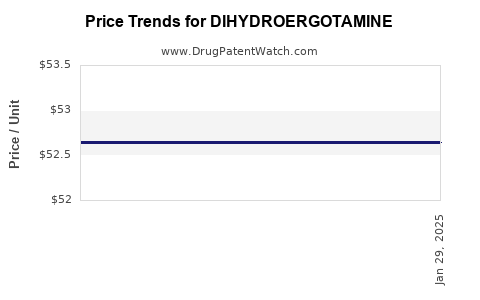
Prices for generic DHE have remained relatively stable since patent expiration, with minor increases reflective of manufacturing costs and inflation. The nasal spray formulation, introduced in recent years, shows potential for price elasticity driven by improved patient adherence and convenience.
Price Drivers and Risks
- Market Penetration of Alternatives: Triptans dominate the migraine segment but cannot replace DHE in all cases; price competition remains steady.
- Regulatory Changes: Approval of new delivery forms or formulation patents could temporarily elevate prices.
- Healthcare Policy: Reimbursement policies strongly influence retail prices, especially within the U.S. and European markets.
- Manufacturing Costs: Production complexities associated with ergot alkaloids may limit aggressive price reductions.
Regional Pricing Variations
| Region |
Average Price (USD per dose) |
Market Share (%) |
| North America |
35 (nasal spray) |
45 |
| Europe |
25 (injectable) |
30 |
| Asia-Pacific |
15 |
15 |
Pricing tends to be highest in North America due to reimbursement structures and higher operational costs.
Future Market Outlook
The DHE market is expected to grow at a compound annual growth rate (CAGR) of roughly 2-3% through 2027. A potential increase in the number of formulations—such as non-invasive delivery methods—and expanded indications could offset patent expiration effects.
Strategic Considerations
- Brands with formulations protected by patents may sustain higher pricing for several more years.
- Companies expanding into emerging markets may find lower price points but larger patient populations.
- Generic manufacturers are likely to maintain stable prices, with some downward pressure from international competition.
Key Takeaways
- The Dihydroergotamine market is stable with slow growth, driven by migraine prevalence and limited competition.
- Prices are mature, with minor increases attributed to formulation innovations and regional pricing disparities.
- Potential price inflections depend on formulation patents, regulatory approval of new delivery routes, and competitive dynamics involving triptans and new therapies.
- The market remains viable mainly for specialized and treatment-resistant cases, supporting a niche but steady revenue stream.
Frequently Asked Questions
1. What factors could impact DHE’s pricing in the near term?
Regulatory approvals for new formulations, patent grants, and changes in reimbursement policies are primary factors. Competition from new migraine therapies can also exert downward pricing pressure.
2. How does DHE compare to triptans in pricing and usage?
DHE typically costs more per dose than generic triptans, which have become dominant due to oral formulations and broad marketing. DHE remains used for specific cases, such as triptan contraindications.
3. Are there ongoing developments that could extend DHE's market presence?
Yes. Formulation enhancements like nasal sprays and inhalers improve convenience, potentially extending market life. Patent protections on these delivery systems could sustain higher prices temporarily.
4. How does regional regulation influence DHE pricing?
Pricing varies significantly due to regional healthcare policies. North America generally has higher prices driven by insurance reimbursement. European countries exert price controls, leading to lower prices.
5. What is the outlook for DHE's market amid newer therapies?
While newer CGRP inhibitors and gepants are gaining ground, DHE remains relevant for certain patient populations. Market share will likely stabilize with incremental growth driven by niche indications.
References
- Market research reports on migraine treatment drugs.
- FDA approvals for DHE formulations (2020-2022).
- Price analysis from international pharmaceutical pricing databases.
- Industry reports on ergot alkaloid markets.
- Regulatory policy documents from U.S. and European health authorities.