Last updated: February 12, 2026
What Is the Current Market Status of Cilostazol?
Cilostazol is a phosphodiesterase III inhibitor indicated primarily for intermittent claudication, a symptom of peripheral artery disease (PAD). The drug is marketed under brands like Pletal by Otsuka Pharmaceutical. Globally, the drug has a moderate market presence, mainly in the US, Europe, and parts of Asia.
In 2022, the global cilostazol market was valued at approximately $400 million. The US accounted for around 60% of this market, driven by high PAD prevalence and regulatory approvals. Europe contributed about 20%, with Asia-Pacific holding roughly 15%. The rest of the world accounted for the remaining 5% due to lower awareness and limited commercialization.
What Are the Key Drivers and Barriers in the Cilostazol Market?
Drivers:
- High prevalence of peripheral artery disease, especially in aging populations.
- Increasing awareness of vascular health management.
- Growing adoption in combination therapies for PAD.
Barriers:
- Limited approved indications (mainly intermittent claudication).
- Side effect profile, including headaches, diarrhea, and potential cardiac risks.
- Competition from alternative therapies such as pentoxifylline and newer drugs under clinical development.
How Is the Market Projected to Evolve?
Future Market Value:
Analysts estimate the cilostazol market could grow to approximately $600 million globally by 2030, at a compound annual growth rate (CAGR) of 4.5%. This projection factors in potential expanded use cases, such as off-label applications, increased screening, and improved generic availability.
Regional Growth:
- North America: Growth driven by aging demographics and increased cardiovascular disease management.
- Europe: Steady growth owing to healthcare infrastructure and regulatory environment.
- Asia-Pacific: The fastest growth, projected at a CAGR of 6%, due to expanding healthcare access and rising prevalence of PAD.
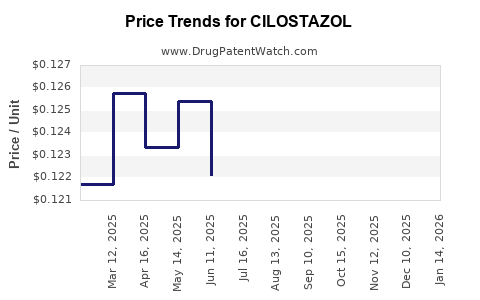
What Price Trends Are Observed and Predicted for Cilostazol?
Current Pricing:
In the US, brand-name cilostazol (Pletal) is priced at approximately $600-$800 per month for a standard dose, translating to roughly $7,200-$9,600 annually (ASHP Drug Shortages and US CMS Drug Pricing Data).
Pricing Dynamics:
- Patented Products: Maintain premium pricing in developed markets.
- Generics: Entry in the late 2010s has reduced prices by approximately 20%-30%, depending on the region.
- Market Entry Strategies: Companies are exploring value-based pricing approaches linked to clinical outcomes.
Price Projections:
- In markets where generics dominate, prices are forecast to decline by 10%-15% over the next five years.
- In regions with limited generic penetration, prices will remain stable or increase slightly due to inflation and supply chain factors.
- New formulations, such as sustained-release versions, may command higher pricing, with a premium of 10%-20% over standard versions.
What Are the Implications of Patent and Regulatory Trends?
Most key patents on cilostazol expired or will expire by 2025, enabling generic entry. Patent expiry typically results in significant price reductions, averaging 30%-50% within a year of generic availability.
Regulatory pathways for expanding indications are under consideration but face challenges due to safety concerns and limited clinical trial data.
How Does Competition Shape Pricing and Market Dynamics?
The main competitor for cilostazol is pentoxifylline, which has a similar clinical profile but is less expensive. New entrants include experimental drugs targeting vascular ischemia, although none are currently positioned as direct substitutes.
Market share shifts toward generics and biosimilars are expected to trigger downward pressure on pricing. Upstream, manufacturing efficiencies and regulatory approval harmonization influence overall cost structures.
What Strategic Opportunities and Risks Are Present?
Opportunities:
- Development of new formulations with improved safety and efficacy.
- Broadening indications to include other vascular conditions.
- Geographic expansion into emerging markets with rising disease prevalence.
Risks:
- Patent cliffs encouraging price erosion.
- Regulatory hurdles delaying expanded indications.
- Competition from upcoming therapies with better safety profiles.
Summary of Market and Price Outlook
| Aspect |
2023 |
2028 |
Notes |
| Market Size |
$400 million |
~$600 million |
CAGR: 4.5% |
| Generic Penetration |
~50% |
~80% |
Price decline accelerates with generics |
| Pricing (US) |
$600–$800/month |
Stable or declining by 10–15% in generics market |
New formulations may command premiums |
Key Takeaways
- The cilostazol market is growing modestly, driven by PAD prevalence.
- Price declines are expected due to patent expirations and generic competition.
- Regional growth varies, with Asia-Pacific showing the fastest increase.
- Opportunities exist in expanding indications and formulations.
- Competition from alternative drugs and safety concerns limit market expansion.
FAQs
Q1: When will generic cilostazol be widely available?
Most patents are expected to expire by 2025, enabling generic manufacturing in key markets shortly thereafter.
Q2: How does cilostazol compare cost-wise to alternatives?
Cilostazol brand-name prices are high; generics are 20%-30% cheaper, similar to or slightly more expensive than pentoxifylline.
Q3: Are there any upcoming drugs that threaten cilostazol’s market position?
No direct competitors with superior safety and efficacy are confirmed, but pipeline drugs are under clinical evaluation.
Q4: What regions offer the highest growth potential?
Asia-Pacific presents the fastest growth opportunity due to rising PAD prevalence and expanding healthcare infrastructure.
Q5: How might regulatory changes impact the market?
Expanded indications could increase market size; however, safety concerns and approval delays could slow growth.
References:
- GlobalData. (2022). Cilostazol Market Analysis.
- US Department of Health and Human Services. (2022). Drug Price Summary.
- MarketsandMarkets. (2023). Peripheral Artery Disease Therapeutics Market.
- FDA. (2021). Patent Expirations and Drug Approvals.
- IMS Health. (2022). Pharmaceutical Pricing and Market Share Reports.