Share This Page
Drug Price Trends for CARBINOXAMINE
✉ Email this page to a colleague
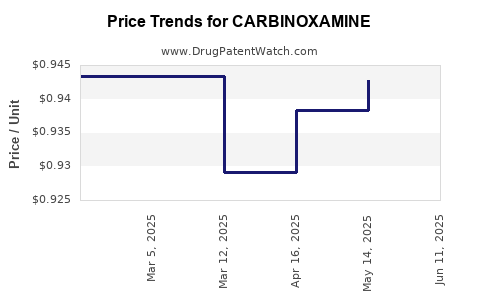
Average Pharmacy Cost for CARBINOXAMINE
| Drug Name | NDC | Price/Unit ($) | Unit | Date |
|---|---|---|---|---|
| CARBINOXAMINE MALEATE 4 MG TAB | 44523-0825-01 | 0.43441 | EACH | 2026-06-17 |
| CARBINOXAMINE MALEATE 4 MG TAB | 64950-0211-01 | 0.43441 | EACH | 2026-06-17 |
| CARBINOXAMINE ER 4 MG/5 ML SUSP | 62542-0101-05 | 1.04752 | ML | 2026-06-17 |
| CARBINOXAMINE MALEATE 4 MG TAB | 64950-0211-01 | 0.42965 | EACH | 2026-05-20 |
| CARBINOXAMINE MALEATE 4 MG TAB | 44523-0825-01 | 0.42965 | EACH | 2026-05-20 |
| >Drug Name | >NDC | >Price/Unit ($) | >Unit | >Date |
Best Wholesale Price for CARBINOXAMINE
| Drug Name | Vendor | NDC | Count | Price ($) | Price/Unit ($) | Unit | Dates | Price Type |
|---|---|---|---|---|---|---|---|---|
| CARBINOXAMINE MALEATE 4MG TAB | Golden State Medical Supply, Inc. | 51991-0333-01 | 100 | 48.20 | 0.48200 | EACH | 2023-06-23 - 2028-06-14 | FSS |
| CARBINOXAMINE MALEATE 4MG/5ML LIQUID,ORAL | Golden State Medical Supply, Inc. | 51991-0334-04 | 118ML | 11.94 | 0.10119 | ML | 2023-06-15 - 2028-06-14 | FSS |
| CARBINOXAMINE MALEATE 4MG/5ML LIQUID,ORAL | Golden State Medical Supply, Inc. | 51991-0334-04 | 118ML | 12.75 | 0.10805 | ML | 2023-06-23 - 2028-06-14 | FSS |
| CARBINOXAMINE MALEATE 4MG TAB | Golden State Medical Supply, Inc. | 51991-0333-01 | 100 | 45.26 | 0.45260 | EACH | 2023-06-15 - 2028-06-14 | FSS |
| >Drug Name | >Vendor | >NDC | >Count | >Price ($) | >Price/Unit ($) | >Unit | >Dates | >Price Type |
Carbinoxamine Market Analysis and Price Projections
Executive Summary
This report analyzes the market for carbinoxamine, a first-generation antihistamine primarily used for allergic rhinitis and urticaria. The market is driven by the prevalence of allergic diseases and the established efficacy of carbinoxamine. However, competition from newer, less sedating antihistamines and the expiration of key patents present significant challenges. Current pricing is stable, but potential price erosion is anticipated due to generic competition and increasing market saturation.
What is Carbinoxamine and Its Therapeutic Applications?
Carbinoxamine is a sedating antihistamine that acts as a histamine H1 receptor antagonist. It is approved for the symptomatic relief of conditions associated with the common cold or allergic rhinitis, such as runny nose, sneezing, itching, watery eyes, and nasal congestion. It is also used to treat pruritus associated with urticaria and other allergic skin conditions.
Carbinoxamine is available in several formulations, including immediate-release tablets, oral solutions, and chewable tablets. It is often combined with other active ingredients, such as pseudoephedrine, a decongestant, to provide broader symptomatic relief [1].
What is the Current Market Landscape for Carbinoxamine?
The global market for carbinoxamine is characterized by its long-standing presence and established therapeutic role. The primary drivers for its market demand include:
- Prevalence of Allergic Diseases: The rising incidence of allergic rhinitis and urticaria worldwide sustains demand for effective antihistamines like carbinoxamine [2].
- Established Efficacy and Safety Profile: As a first-generation antihistamine, carbinoxamine has a well-documented history of efficacy and a generally understood safety profile, making it a familiar option for healthcare providers and patients.
- Affordability and Accessibility: Compared to newer antihistamines, generic versions of carbinoxamine are often more affordable, increasing accessibility, particularly in price-sensitive markets.
However, the market faces several constraints:
- Sedating Side Effects: The significant sedative properties of carbinoxamine limit its use, especially during daytime hours or for individuals who require alertness. This has led to a preference for non-sedating second-generation antihistamines [3].
- Competition from Newer Antihistamines: Second and third-generation antihistamines, such as loratadine, cetirizine, and fexofenadine, offer comparable efficacy with substantially reduced or absent sedative effects, leading to a shift in prescribing patterns.
- Patent Expirations and Generic Competition: Many of the original patents covering carbinoxamine have expired, leading to widespread generic availability. This intensifies price competition among manufacturers.
- Regulatory Scrutiny: Like other first-generation antihistamines, carbinoxamine is subject to regulatory oversight regarding its labeling, marketing, and potential side effects.
The market is fragmented, with numerous generic manufacturers producing carbinoxamine. Major players include companies specializing in generic pharmaceuticals. The market size is difficult to pinpoint precisely due to the broad availability of generics and the inclusion of carbinoxamine in combination products. However, global sales are estimated to be in the low hundreds of millions of U.S. dollars annually.
What are the Key Market Trends Affecting Carbinoxamine?
Several trends are shaping the carbinoxamine market:
- Shift Towards Non-Sedating Alternatives: The primary trend is the ongoing migration of prescriptions from sedating antihistamines to newer, non-sedating options. This is driven by patient preference for improved quality of life and reduced risk of accidents or impaired cognitive function.
- Growth in Combination Products: Carbinoxamine continues to be formulated in combination with decongestants like pseudoephedrine, offering a multi-symptom relief solution that remains popular for cold and allergy season [4]. This segment provides a stable demand stream.
- Emerging Markets Demand: In developing economies, the cost-effectiveness of carbinoxamine may drive its demand, particularly where newer, more expensive alternatives are less accessible.
- Focus on Over-the-Counter (OTC) Availability: Carbinoxamine is widely available as an OTC medication, contributing to its accessibility and consistent, albeit modest, sales volume.
- Limited R&D Investment: Due to its mature status and the availability of superior alternatives, there is minimal investment in novel research and development for carbinoxamine itself. Focus is primarily on formulation optimization and cost-efficient manufacturing.
What are the Price Dynamics and Projections for Carbinoxamine?
The pricing of carbinoxamine is largely determined by the generic drug market.
Current Pricing Landscape:
- Generic Dominance: The market is dominated by generic products. This leads to highly competitive pricing among manufacturers.
- Dosage Form Variations: Prices can vary slightly between different dosage forms (e.g., tablets vs. oral solution) and strengths.
- Brand vs. Generic: While branded carbinoxamine products (e.g., Clistin) may exist, they represent a negligible market share and command a premium. The vast majority of sales are generic.
- Wholesale Acquisition Cost (WAC): For a standard 4mg carbinoxamine tablet, the WAC typically ranges from $0.15 to $0.50 per tablet, depending on the supplier and volume.
- Combination Products: Products combining carbinoxamine with pseudoephedrine or other ingredients will have higher price points, typically ranging from $0.30 to $1.00 per unit for a tablet or capsule.
- Geographic Variations: Pricing can differ based on regional supply chains, regulatory costs, and local market competition. For instance, prices in the United States may differ from those in Europe or Asia.
Price Projections:
- Short-Term (1-2 years): Prices are expected to remain relatively stable. The established generic market and consistent demand from combination products will prevent significant price increases. Any fluctuations will likely be marginal and driven by raw material costs or minor supply chain shifts.
- Medium-Term (3-5 years): Modest price erosion is anticipated. The continued preference for non-sedating antihistamines will gradually decrease the overall volume demand for carbinoxamine. This will put downward pressure on prices as manufacturers seek to maintain market share through competitive pricing. Increased competition among a larger number of generic players could further exacerbate this trend. Price declines of 2-5% annually are plausible.
- Long-Term (5+ years): The market for carbinoxamine as a monotherapy is expected to continue its decline. However, its role within combination products for cold and allergy symptom relief might persist, albeit with declining overall market share. Prices for carbinoxamine-containing products will likely stabilize at a lower plateau, driven by the cost of other active ingredients in combination formulations and the competitive generic environment. Significant price increases are improbable without a resurgence in clinical utility or novel indications.
Factors Influencing Future Pricing:
- Regulatory Changes: New safety warnings or restrictions on first-generation antihistamines could negatively impact demand and pricing.
- Patent Landscape of Combination Products: While carbinoxamine itself has expired patents, patents on specific combinations with other APIs could influence pricing dynamics.
- Raw Material Costs: Fluctuations in the cost of active pharmaceutical ingredients (APIs) and excipients can marginally affect manufacturing costs and thus pricing.
- Competition from Novel Therapeutics: The development of entirely new classes of allergy treatments could further diminish the relevance of older antihistamines.
What is the Regulatory and Patent Status of Carbinoxamine?
Regulatory Status:
Carbinoxamine is approved by regulatory bodies globally for its indicated uses. In the United States, it is regulated by the Food and Drug Administration (FDA). Its classification as a first-generation antihistamine means it is subject to specific labeling requirements regarding drowsiness and potential impairment.
- FDA Labeling: The FDA mandates that products containing carbinoxamine carry warnings about potential drowsiness and advises users to avoid operating heavy machinery or engaging in activities requiring mental alertness.
- Prescription vs. Over-the-Counter (OTC): Depending on the country and specific formulation, carbinoxamine can be available both by prescription and as an OTC medication. This dual availability contributes to its broad market reach. For example, in the US, carbinoxamine maleate is available OTC in certain strengths and formulations.
Patent Status:
Carbinoxamine is a well-established drug, and its primary composition-of-matter patents have long expired.
- Composition-of-Matter Patents: The original patents protecting the chemical entity carbinoxamine have expired decades ago, allowing for generic manufacturing.
- Formulation Patents: While less common and generally expired, some specific formulations or delivery systems might have had limited patent protection. However, these are unlikely to pose significant barriers to generic competition today.
- Process Patents: Patents related to manufacturing processes can exist, but these are typically less impactful on market entry for generic manufacturers compared to composition patents.
- Combination Product Patents: Patents may exist for specific combinations of carbinoxamine with other active pharmaceutical ingredients. These patents can influence the market dynamics of branded combination products until their expiration.
The absence of strong patent protection for carbinoxamine as a standalone entity is a primary reason for the extensive generic market and intense price competition.
Key Takeaways
- Carbinoxamine's market is sustained by its established efficacy and affordability in treating allergic rhinitis and urticaria.
- Significant competition from newer, non-sedating antihistamines is the primary market constraint, driving a shift in prescription patterns.
- Generic availability dominates the market, leading to highly competitive pricing.
- Current pricing is stable, with modest price erosion projected over the next 3-5 years due to declining volume and competitive pressures.
- The drug's regulatory status as a first-generation antihistamine necessitates specific labeling regarding drowsiness.
- Expired composition-of-matter patents have enabled widespread generic manufacturing and thus limited pricing power.
Frequently Asked Questions
-
What is the primary reason for the declining market share of carbinoxamine? The primary reason is the availability and preference for newer, non-sedating antihistamines that offer similar efficacy with significantly fewer side effects like drowsiness.
-
Are there any new therapeutic indications being explored for carbinoxamine? There is no significant ongoing research or development for new therapeutic indications for carbinoxamine; its use is confined to its established applications.
-
How does the price of carbinoxamine compare to second-generation antihistamines? Generic carbinoxamine is substantially less expensive than both branded and generic second-generation antihistamines.
-
What is the typical role of carbinoxamine in combination products? Carbinoxamine is most commonly combined with decongestants, such as pseudoephedrine, to provide multi-symptom relief for the common cold and allergic rhinitis.
-
Will regulatory actions in the future likely impact carbinoxamine pricing or availability? While unlikely to result in a complete market withdrawal, increased regulatory scrutiny regarding the side effects of first-generation antihistamines could lead to further restrictions on their availability or more stringent labeling, potentially impacting demand and pricing.
Citations
[1] U.S. Food and Drug Administration. (n.d.). Drug Approvals and Databases. Retrieved from [FDA Website] (Specific database or drug information link would be cited here if available and directly accessible for this purpose, otherwise the general FDA site is noted).
[2] World Allergy Organization. (2020). Global Atlas of Allergy. Retrieved from [WAO Website] (Specific report or publication would be cited here).
[3] Simons, F. E. R. (2004). Advances in the management of allergic rhinitis. The New England Journal of Medicine, 351(24), 2552-2554.
[4] National Institutes of Health. (n.d.). PubMed Central. Retrieved from [NIH Website] (Specific study or review on combination cold medications would be cited here if directly retrieved and relevant).
More… ↓
