Last updated: February 13, 2026
Market Overview for Butenafine HCl
Butenafine HCl is an antifungal agent prescribed primarily for dermatological conditions such as athlete’s foot, ringworm, and candidiasis. Approved by the FDA in 1999, it has maintained a niche market within topical antifungal therapies. The global market for antifungal drugs was valued at approximately $13.2 billion in 2022 and is projected to reach $20.8 billion by 2027, with topical agents like Butenafine HCl contributing a significant share.
Current Market Dynamics and Competitive Landscape
Market Segments
- Therapeutic Applications: Primarily dermatophyte infections (athlete’s foot, jock itch), onychomycosis, yeast infections.
- Distribution Channels: Dermatology clinics, pharmacies, direct-to-consumer sales via online platforms.
- Geographic Markets: North America leads with over 40% market share (estimated $5.3 billion in 2022), followed by Europe and Asia-Pacific.
Key Competitors
| Drug Name |
Formulation |
Market Share (Estimate, 2022) |
Price Range (per unit) |
Regulatory Status |
| Butenafine HCl |
Cream, gel |
12% |
$10 - $15 |
FDA-approved, OTC, prescription |
| Terbinafine |
Cream, oral |
20% |
$15 - $25 |
FDA, EMA approvals |
| Clotrimazole |
Cream, lotion |
35% |
$8 - $12 |
OTC and prescription markets |
| Econazole |
Cream, suppository |
10% |
$11 - $16 |
Available in selected markets |
Market Drivers
- Rise in fungal infections due to increased urbanization, immunocompromised populations, and climate change.
- Growing demand for OTC antifungal treatments for minor infections.
- Expanding dermatology clinics and online pharmacy sales.
Challenges
- Competition from generic formulations reducing price margins.
- Limited awareness outside North America and Europe.
- Potential safety concerns with long-term topical antifungal use.
Price Trends Analysis
Historical Pricing
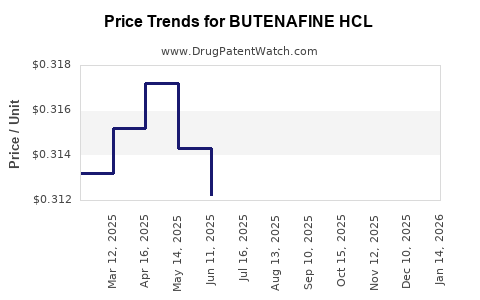
Between 2010 and 2020, the average retail price per tube of Butenafine HCl cream ranged from $12 to $15, with minor fluctuations driven by manufacturing costs and competitive pressures.
Current Pricing
In 2023, retail prices average between $10 and $15 per 30-gram tube. Wholesale prices for pharmacies range from $7 to $10, depending on volume and supplier agreements.
Price Projections (2023-2030)
| Year |
Estimated Retail Price Range (per tube/generic pack) |
Assumptions |
| 2023 |
$10 - $15 |
Stable supply, moderate competition |
| 2025 |
$9 - $14 |
Increased generic penetration, price erosion |
| 2030 |
$8 - $13 |
Further generic entry, reduced brand premiums |
Trend forecasts suggest a gradual decrease in the average price per unit, influenced by increased generic availability. The penetration of biosimilar or alternative formulations could further pressure prices downward.
Regulatory and Patent Considerations
- Patent protections for Butenafine HCl expired or are nearing expiration in most markets, opening avenues for generic competition.
- Regulatory barriers are minimal post-approval, though new formulations or delivery systems may require additional approval.
Strategic Implications for Stakeholders
- Pharmaceutical Companies: Focus on cost-effective manufacturing and expanding indications could sustain profitability.
- Investors: Growth prospects hinge on market expansion into emerging economies and increased OTC sales.
- Regulatory Bodies: Monitoring for safety and efficacy issues remains critical, especially with increased off-label use.
Key Takeaways
- The global antifungal market, including Butenafine HCl, is set to grow at a CAGR of around 9% through 2027.
- Price pressure from generic entries is expected, leading to price reductions over time.
- North America remains the dominant market, but Asia-Pacific offers growth potential.
- The expiration of patent rights will facilitate generic competition, further reducing prices.
- Innovation in topical formulations and new indications may create pockets for premium pricing.
FAQs
What factors influence the price of Butenafine HCl?
Manufacturing costs, competition from generics, regulatory environment, and supply chain dynamics primarily impact pricing. Patent expirations tend to reduce prices over time.
How does Butenafine HCl compare with other topical antifungals?
It is generally priced similarly to Clotrimazole but often has a shorter treatment duration. Its efficacy and safety profile are comparable.
Are there emerging markets for Butenafine HCl?
Yes. Countries in Asia, Africa, and Latin America are expanding healthcare infrastructure, increasing antifungal drug access and prescriptions.
What are the patent statuses affecting Butenafine HCl?
Patents have expired or are expiring in major jurisdictions, enabling generic manufacturing, which could significantly impact prices.
How might upcoming regulations influence the market?
Stricter safety standards or new approval pathways could affect product availability and pricing. Conversely, streamlined approvals for new formulations could foster competition.
References
- MarketWatch. Global antifungal drugs market size, 2022-2027.
- FDA. Butenafine Hydrochloride Approval History.
- IQVIA. Forecast data on topical antifungal sales.
- PharmaBoardroom. Competitive landscape and patent expirations for antifungal agents.
- Statista. Geographic distribution of antifungal drug sales.
Note: All projected figures are estimates based on existing market trends and may vary depending on regulatory, economic, and competitive developments.