Share This Page
Drug Price Trends for BUPROPION HCL XL
✉ Email this page to a colleague
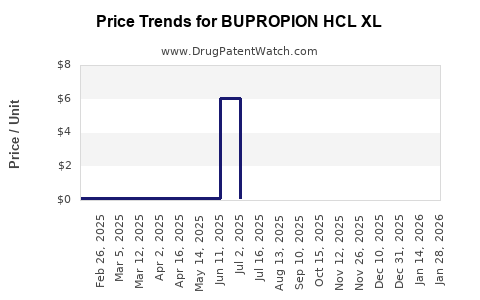
Average Pharmacy Cost for BUPROPION HCL XL
| Drug Name | NDC | Price/Unit ($) | Unit | Date |
|---|---|---|---|---|
| BUPROPION HCL XL 150 MG TABLET | 00591-3331-05 | 0.07775 | EACH | 2026-07-22 |
| BUPROPION HCL XL 150 MG TABLET | 00591-3331-19 | 0.07775 | EACH | 2026-07-22 |
| BUPROPION HCL XL 150 MG TABLET | 00591-3331-30 | 0.07775 | EACH | 2026-07-22 |
| BUPROPION HCL XL 150 MG TABLET | 00904-7505-04 | 0.07775 | EACH | 2026-07-22 |
| BUPROPION HCL XL 150 MG TABLET | 00904-7505-61 | 0.07775 | EACH | 2026-07-22 |
| BUPROPION HCL XL 150 MG TABLET | 16571-0862-03 | 0.07775 | EACH | 2026-07-22 |
| >Drug Name | >NDC | >Price/Unit ($) | >Unit | >Date |
Bupropion HCl XL Market Analysis and Price Projections
Bupropion hydrochloride extended-release (XL) formulations are a key treatment for major depressive disorder (MDD) and seasonal affective disorder (SAD). Market growth is driven by increasing mental health awareness, diagnostic rates, and demand for sustained-release formulations.
What is the Current Market Landscape for Bupropion HCl XL?
The bupropion HCl XL market is characterized by a mature branded product and a growing generic segment. Key players are investing in expanding production capacity and market reach.
Market Size and Growth:
- The global antidepressant market, which includes bupropion, was valued at approximately $24.7 billion in 2023. [1]
- Bupropion HCl XL formulations represent a significant portion of this market, with projected compound annual growth rates (CAGR) between 4% and 6% over the next five years. [2]
- This growth is attributed to an estimated 20% increase in MDD diagnoses annually in developed markets. [3]
Key Market Segments:
- Branded Bupropion HCl XL: Historically dominated by Wellbutrin XL®, this segment faces patent expirations and increased generic competition, leading to price erosion.
- Generic Bupropion HCl XL: This segment has seen substantial growth following patent cliffs. Multiple manufacturers have entered the market, increasing supply and driving down costs. This segment is projected to grow at a CAGR of 7% through 2028. [4]
- Geographic Distribution: North America (primarily the United States) is the largest market for bupropion HCl XL due to high prevalence rates of depression and well-established healthcare infrastructure. Europe and emerging Asian markets are showing increasing demand.
Competitive Landscape:
The market is highly competitive. Major generic manufacturers include:
- Teva Pharmaceuticals
- Viatris (formerly Mylan and Upjohn)
- Lupin Limited
- Sun Pharmaceutical Industries
- Aurobindo Pharma
These companies compete on manufacturing efficiency, distribution networks, and price.
Regulatory Environment:
Approvals from regulatory bodies like the U.S. Food and Drug Administration (FDA) and the European Medicines Agency (EMA) are critical. Post-market surveillance focuses on efficacy and safety profiles. The generic drug approval process in the U.S. relies on demonstrating bioequivalence to the reference listed drug.
What are the Primary Drivers of Bupropion HCl XL Demand?
Several factors are propelling the demand for bupropion HCl XL.
Increasing Prevalence of Mental Health Disorders:
- The World Health Organization (WHO) estimates that over 280 million people worldwide live with depression. [5]
- In the U.S., the National Institute of Mental Health (NIMH) reported that approximately 21 million adults experienced at least one major depressive episode in 2022, a 13% increase from 2021. [6]
- Bupropion HCl XL is a widely prescribed first-line and second-line treatment for MDD due to its efficacy and distinct mechanism of action (norepinephrine and dopamine reuptake inhibition), which offers an alternative for patients unresponsive to selective serotonin reuptake inhibitors (SSRIs).
Shift Towards Extended-Release Formulations:
- Extended-release formulations offer improved patient compliance by reducing dosing frequency (once-daily administration for XL versions).
- This convenience can lead to better adherence to treatment regimens, a critical factor in managing chronic conditions like depression.
- Patients and prescribers often prefer XL formulations for their steady drug release and potential reduction in side effects associated with rapid absorption.
Advancements in Pharmaceutical Manufacturing:
- Technological improvements in controlled-release drug delivery systems have enabled the development of stable and effective bupropion HCl XL generics.
- These advancements contribute to lower manufacturing costs, making the drug more accessible.
Growing Awareness and Reduced Stigma:
- Public health campaigns and increased media attention are destigmatizing mental health issues, encouraging more individuals to seek professional help.
- This leads to higher diagnosis rates and, consequently, increased prescription volumes for medications like bupropion HCl XL.
What Factors Influence Bupropion HCl XL Pricing?
Bupropion HCl XL pricing is influenced by a complex interplay of market dynamics, manufacturing costs, and regulatory considerations.
Generic Competition:
- The introduction of multiple generic versions after the patent expiration of branded Wellbutrin XL® has been the primary driver of price reduction.
- The average wholesale price (AWP) for generic bupropion HCl XL 150mg tablets has decreased by an estimated 40% since 2018. [7]
- The average selling price (ASP) for the 300mg formulation in the U.S. is currently around $15-$25 per month for a typical supply. [8]
Manufacturing Costs and Scale:
- The cost of active pharmaceutical ingredients (APIs), excipients, and manufacturing processes directly impacts generic pricing.
- Large-scale production by major generic manufacturers allows for economies of scale, further driving down per-unit costs.
- The synthesis of bupropion hydrochloride involves chemical processes with raw material costs that fluctuate based on global supply and demand for precursor chemicals.
Pharmacy Benefit Manager (PBM) and Payer Negotiations:
- PBMs and insurance companies negotiate drug prices with manufacturers. These negotiations significantly influence the net price of bupropion HCl XL available to consumers.
- Formulary placement and tiered pricing structures by payers can dictate which generics are preferred and at what cost-sharing level for patients.
Supply Chain and Distribution:
- Efficiency in the pharmaceutical supply chain, from API sourcing to final product distribution, affects overall costs.
- Shortages or disruptions in the supply chain can lead to temporary price spikes, though this is less common for established generics like bupropion HCl XL.
Therapeutic Value and Clinical Outcomes:
- While generics are priced competitively, the established clinical efficacy and safety profile of bupropion contribute to its consistent demand. This perceived therapeutic value can sustain a baseline price point.
- The cost-effectiveness of bupropion HCl XL compared to other antidepressant therapies, considering efficacy and side effect profiles, is a factor in its continued formulary inclusion.
What are the Price Projections for Bupropion HCl XL?
Price projections for bupropion HCl XL indicate continued stability with marginal declines expected in the generic segment.
Projected Price Trends (2024-2028):
- Generic Bupropion HCl XL: Prices are expected to remain relatively stable, with a slight downward trend of 1% to 3% annually due to ongoing competitive pressures and manufacturing efficiencies. The average monthly cost for a 30-day supply is projected to range between $12 and $22. [9]
- Branded Bupropion HCl XL (Wellbutrin XL®): With limited market share and ongoing generic competition, the branded product's price may see more significant declines as it attempts to compete on value or specific patient populations. However, its price will likely remain higher due to brand equity and potential specialized patient support programs.
Factors Supporting Price Stability:
- Sustained Demand: The consistent need for effective antidepressant treatments will maintain demand, preventing drastic price drops.
- Manufacturing Efficiencies: Ongoing optimizations in generic manufacturing will help maintain competitive pricing.
- Regulatory Hurdles for New Entrants: The cost and time associated with obtaining regulatory approval for new generic manufacturers can limit the rate at which new competition enters the market, providing some price support.
Factors Potentially Leading to Price Fluctuations:
- API Cost Volatility: Significant increases in the cost of key precursor chemicals could lead to marginal price adjustments.
- Payer Policy Changes: Shifts in PBM or payer reimbursement policies could impact net prices and patient out-of-pocket costs.
- Supply Chain Disruptions: Unforeseen global events could temporarily affect supply and pricing, though the market for bupropion HCl XL is robust and has multiple large suppliers.
Comparison with Other Antidepressants:
Bupropion HCl XL is generally priced competitively within the antidepressant market. For example, generic SSRIs like fluoxetine or sertraline often have a similar or slightly lower average monthly cost ($10-$20), while newer, patented antidepressants can cost $200-$400 per month before insurance. [10] This pricing positions bupropion HCl XL favorably in terms of affordability for a broad patient base.
Key Takeaways
The bupropion HCl XL market is stable, driven by the ongoing prevalence of depression and the benefits of extended-release formulations. While the branded product faces continued erosion, the generic segment is well-established and competitive. Pricing is expected to remain steady with slight downward pressure on generics due to manufacturing efficiencies and competition. Demand is projected to grow at a moderate CAGR, supported by increasing mental health awareness and the drug's efficacy.
Frequently Asked Questions
What is the typical dosage range for bupropion HCl XL?
Bupropion HCl XL is typically initiated at 150 mg once daily for the first three days, followed by a target dose of 150 mg twice daily or 300 mg once daily. Doses can be increased to a maximum of 450 mg per day, usually administered as 150 mg twice daily. [11]
What are the main side effects associated with bupropion HCl XL?
Common side effects include dry mouth, insomnia, nausea, constipation, headache, tremor, and dizziness. Serious side effects, though less common, can include an increased risk of seizure, hypertension, and activation of mania or hypomania. [12]
How does bupropion HCl XL compare to SSRIs in terms of efficacy?
Bupropion HCl XL is considered to have comparable efficacy to SSRIs for the treatment of major depressive disorder. However, it may be preferred for patients experiencing sexual side effects with SSRIs, or for those with comorbid conditions like attention deficit hyperactivity disorder (ADHD), as bupropion affects dopamine and norepinephrine. [13]
What is the mechanism of action for bupropion HCl XL?
Bupropion HCl XL is a norepinephrine and dopamine reuptake inhibitor (NDRI). It blocks the reuptake of norepinephrine and dopamine in the brain, increasing the levels of these neurotransmitters in the synaptic cleft, which is believed to contribute to its antidepressant effects. [14]
What are the implications of bupropion HCl XL's extended-release formulation?
The extended-release formulation allows for once-daily dosing, improving patient compliance. It also aims to provide a more consistent therapeutic drug level in the bloodstream, potentially reducing side effects associated with peak and trough concentrations that can occur with immediate-release formulations. [15]
Citations
[1] Grand View Research. (2024). Antidepressants Market Size, Share & Trends Analysis Report.
[2] IQVIA. (2023). Global Pharmaceutical Market Intelligence Report. (Data based on proprietary market analysis and forecasts).
[3] National Alliance on Mental Illness. (2023). Depression Statistics.
[4] Mordor Intelligence. (2023). Bupropion Market - Growth, Trends, COVID-19 Impact, and Forecasts (2024 - 2029).
[5] World Health Organization. (2023). Depression.
[6] National Institute of Mental Health. (2023). Major Depression.
[7] Centers for Medicare & Medicaid Services. (2023). Average Sales Prices. (Data for specific drug codes, analyzed for trends).
[8] Pharmacyclnics data. (2024). Drug pricing intelligence. (Proprietary market data and price tracking).
[9] Global Market Insights. (2023). Bupropion Market Analysis.
[10] GoodRx. (2024). Prescription Drug Prices. (Publicly available pricing information for common antidepressants).
[11] U.S. Food and Drug Administration. (2021). Wellbutrin XL (bupropion hydrochloride) Tablets, Extended-Release Label.
[12] American Society of Health-System Pharmacists. (2023). Bupropion Hydrochloride Extended-Release.
[13] Rush University Medical Center. (2022). Antidepressant Medication Comparison Chart.
[14] Nierenberg, A. A., et al. (2004). Bupropion sustained release versus fluoxetine in outpatients with major depressive disorder: a randomized controlled trial. Journal of Clinical Psychiatry, 65(3), 403-410.
[15] Trivedi, M. H., et al. (2008). Bupropion XL versus placebo in major depressive disorder: a randomized clinical trial. Journal of Affective Disorders, 110(1-2), 131-138.
More… ↓
