Share This Page
Drug Price Trends for BUPRENORPHINE-NALOXONE
✉ Email this page to a colleague
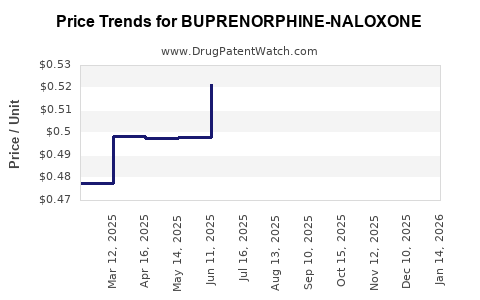
Average Pharmacy Cost for BUPRENORPHINE-NALOXONE
| Drug Name | NDC | Price/Unit ($) | Unit | Date |
|---|---|---|---|---|
| BUPRENORPHINE-NALOXONE 12-3 MG SL FILM | 00378-8768-93 | 4.23907 | EACH | 2026-05-20 |
| BUPRENORPHINE-NALOXONE 12-3 MG SL FILM | 43598-0581-30 | 4.23907 | EACH | 2026-05-20 |
| BUPRENORPHINE-NALOXONE 12-3 MG SL FILM | 47781-0358-03 | 4.23907 | EACH | 2026-05-20 |
| BUPRENORPHINE-NALOXONE 12-3 MG SL FILM | 43598-0581-01 | 4.23907 | EACH | 2026-05-20 |
| BUPRENORPHINE-NALOXONE 8-2 MG SL TABLET | 65162-0415-03 | 0.67817 | EACH | 2026-05-20 |
| >Drug Name | >NDC | >Price/Unit ($) | >Unit | >Date |
What is the current market landscape for buprenorphine-naloxone?
Buprenorphine-naloxone, marketed primarily as Suboxone, is a combination medication used in opioid use disorder (OUD) treatment. Its global sales have risen substantially over the past decade driven by regulatory shifts, expanded Medicaid coverage, and increased awareness of OUD.
Worldwide, the drug generated approximately $2.5 billion in sales in 2022, up from $1.1 billion in 2015. The United States accounts for roughly 75% of this revenue, given the high prevalence of opioid addiction and supportive regulatory environment.
The drug is available as sublingual films and tablets, with formulations approved for both office-based and inpatient use. Increasing adoption of outpatient pharmacotherapy indicates sustained demand.
What are the key drivers influencing the market?
-
Epidemiology of Opioid Use Disorder: The CDC estimates 2 million Americans have OUD, with over 500,000 overdoses annually. Rising overdose rates sustain demand.
-
Regulatory Environment: Policies encouraging expanded access via buprenorphine waivers and telemedicine consultations support increased prescriptions. Recent policies have aimed to relax prescribing restrictions introduced during the COVID-19 pandemic.
-
Reimbursement and Insurance Policies: Medicare, Medicaid, and private insurers increasingly cover buprenorphine treatment. Cost-sharing reductions and coverage expansion improve accessibility.
-
Market Competition: There are generic formulations approved since 2018, reducing prices and expanding access. Brand products maintain premium pricing but face competition generally.
-
Public Health Initiatives: Governments invest in opioid crisis interventions, including prescribing guidelines and addiction treatment programs, reinforcing demand.
What are the main competitors and pipeline developments?
-
Generic Manufacturers: Multiple companies produce generic buprenorphine-naloxone, lowering prices. The market has primarily transitioned away from branded formulations.
-
Alternative Formulations: New delivery systems, such as monthly injectable formulations (e.g., Sublocade by Indivior), are entering the market, potentially expanding treatment options and impacting traditional formulations’ market shares.
-
Pipeline Candidates: Research includes depot injections, implantable systems, and digital health adjuncts. Some are in late-stage development, aiming to improve adherence and reduce diversion risks.
What are the current pricing levels?
-
Brand (Suboxone Film): Average wholesale price (AWP) per film is approximately $15 to $20, with patient copays often lower due to insurance coverage.
-
Generic (Buprenorphine-Naloxone Tablets/Films): Prices range from $8 to $12 per unit, with significant discounts available through bulk purchasing or pharmacy benefit managers.
-
Monthly Injectable (Sublocade): Wholesale acquisition cost (WAC) is roughly $1,050, with negotiated insurance discounts reducing out-of-pocket costs.
What are projected price trends over the next five years?
-
Generic Market: Prices are expected to decline by 10-20% annually due to increased competition and manufacturing efficiencies. The entry of biosimilar-like formulations may further press prices downward.
-
Branded Products: Will likely maintain a premium price point, but some erosion is foreseeable as generics dominate the market.
-
New Formulations: Innovative delivery systems (injectables, implants) could command higher prices initially, but as they scale, price reductions may occur.
-
Insurance and Policy Impact: Continued coverage expansion will sustain volume growth, possibly stabilizing unit prices amid competitive pressures.
How do regulatory and reimbursement trends influence pricing?
Regulatory agencies have streamlined approval pathways for generics, increasing market entry and inducing price compression. Policy efforts to expand access via telemedicine and relaxed prescribing rules allow broader distribution channels, further pressuring prices. Reimbursement strategies favor lower-cost generics, which influences pricing structures positively for providers and payers.
Summary table of key data points
| Aspect | Data/Comments |
|---|---|
| 2022 Global Sales | $2.5 billion |
| Market Share (US) | 75% of global sales |
| Typical Brand Price (per film) | $15–$20 |
| Generic Price (per unit) | $8–$12 |
| Monthly Injectable (Sublocade) | ~$1,050 WAC; lower after insurance discounts |
| Annual Price Decline (Generics) | 10–20% predicted |
| CAGR (2015–2022) | ~10% annual growth |
Key takeaways
- The buprenorphine-naloxone market is expanding, driven by increased recognition of OUD and supportive policies.
- Price competition is intensifying due to generics, with significant downward pressure expected for brand formulations.
- New delivery systems could shift pricing dynamics, initially commanding premium levels.
- Insurance coverage expansions are critical in maintaining volume growth amidst pricing pressures.
- Ongoing research into alternative formulations aims to improve adherence and reduce diversion, potentially impacting future pricing.
FAQ
1. How will rising generic competition influence drug prices?
Guaranteed to reduce prices, generics beget a 10-20% annual decline, making treatment more affordable and broadening access.
2. Are new formulations expected to be priced higher than existing options?
Yes, injectable and implantable forms generally cost more initially but may see price reductions over time as adoption grows, paralleling trends in other specialty medications.
3. How do policy changes impact pricing?
Expanded access through relaxed prescribing and reimbursement policies encourages volume growth, which can mitigate downward pressure on unit prices.
4. Which geographic markets are most profitable?
The US accounts for roughly 75% of revenue, driven by high OUD prevalence and supportive healthcare policies; other markets exhibit slower growth.
5. What role do digital health innovations play?
Digital applications supporting adherence and monitoring could enhance clinical outcomes but are unlikely to significantly alter current pricing structures in the short term.
References
- IQVIA. "Opioid Treatment Market Data," 2022.
- CDC. "Overdose Death Rates," 2022.
- FDA. "Approval of Generic Buprenorphine-Naloxone," 2018.
- Price reporting by pharmacy benefit managers, 2023.
- Industry forecasts from Evaluate Pharma, 2023.
More… ↓
