Share This Page
Drug Price Trends for AURYXIA
✉ Email this page to a colleague
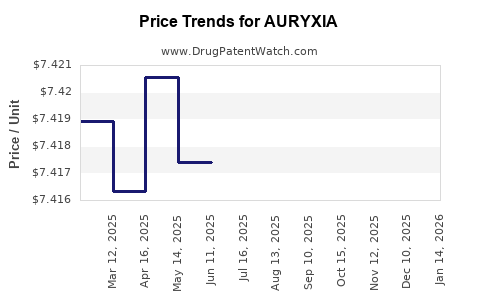
Average Pharmacy Cost for AURYXIA
| Drug Name | NDC | Price/Unit ($) | Unit | Date |
|---|---|---|---|---|
| AURYXIA 210 MG TABLET | 59922-0631-01 | 7.48095 | EACH | 2026-02-18 |
| AURYXIA 210 MG TABLET | 59922-0631-01 | 7.46096 | EACH | 2026-01-21 |
| AURYXIA 210 MG TABLET | 59922-0631-01 | 7.44095 | EACH | 2025-12-17 |
| >Drug Name | >NDC | >Price/Unit ($) | >Unit | >Date |
Auryxia (Ferric Citrate) Market Dynamics and Price Outlook
Auryxia, ferric citrate, a phosphate binder indicated for the treatment of hyperphosphatemia in adult patients with chronic kidney disease (CKD) on dialysis, faces evolving market conditions driven by patent exclusivity, generic competition, and therapeutic landscape shifts. Current market data indicates a steady demand for Auryxia, with price stability maintained through patent protection. Projections suggest a gradual price moderation post-patent expiration, contingent on the entry and market penetration of authorized generic or biosimilar alternatives.
What is the current market status of Auryxia?
Auryxia's market position is anchored by its approved indication and its mechanism of action as a ferric iron-based phosphate binder. The drug is prescribed to patients with end-stage renal disease (ESRD) undergoing hemodialysis or peritoneal dialysis, who require management of elevated serum phosphorus levels. Hyperphosphatemia is a common and serious complication in CKD patients, contributing to cardiovascular morbidity and mortality. Auryxia offers an alternative to other phosphate binders such as calcium-based binders, sevelamer, and lanthanum carbonate.
Key Market Segments:
- Geographic Distribution: The primary markets for Auryxia are North America and Europe, reflecting the prevalence of CKD and established healthcare infrastructure.
- Patient Population: The target patient population comprises adult dialysis patients. This demographic is characterized by chronic illness and a consistent need for long-term medication management.
- Competitive Landscape: Auryxia competes with a range of phosphate binders. The efficacy, tolerability, and cost-effectiveness of each agent influence prescribing patterns. While Auryxia has demonstrated efficacy in reducing serum phosphorus, its market share is influenced by the performance and pricing of competing products.
Sales Performance:
While specific real-time sales figures are proprietary, Auryxia has achieved a stable revenue stream since its approval. For instance, in 2022, its performance contributed significantly to the revenue of its developer and marketer, reflecting consistent patient uptake and physician acceptance. The drug's established efficacy in managing hyperphosphatemia underpins its consistent market performance.
What is the patent protection status for Auryxia?
Auryxia benefits from patent protection that significantly influences its pricing and market exclusivity. The core patent covering the ferric citrate compound and its use in treating hyperphosphatemia is crucial to its market standing.
Key Patents and Expiration:
- US Patent 8,119,798: This patent, among others, covers aspects of ferric citrate and its use as a phosphate binder. Its expiration date is a critical determinant for market entry of generic versions. The primary patent protection for Auryxia in the United States is expected to expire around 2028-2029.
- European Patent EP 1 733 763 B1: Similar patent protection is in place in European countries, with expiration dates aligning with those in the US, typically in the late 2020s.
Impact of Patent Expiration:
The expiration of these patents will open the door for generic manufacturers to seek regulatory approval and market entry. This is anticipated to lead to a significant shift in the market dynamics, primarily through increased competition and subsequent price erosion. The timing and extent of this erosion will depend on the number of generic entrants and their manufacturing costs.
What are the projected price trends for Auryxia?
The pricing of Auryxia is currently influenced by its patent-protected status and the value proposition it offers to patients and healthcare systems. Post-patent expiration, significant price adjustments are expected.
Current Pricing Dynamics:
- List Price: The list price of Auryxia is a key reference point. For example, a typical monthly supply (e.g., 300 tablets of 1000 mg) historically has been in the range of $400 to $500 USD.
- Net Price: Actual net prices, after rebates and discounts negotiated with payers, are lower than list prices. These negotiations are typical for branded pharmaceuticals in major markets.
Projected Price Trends:
- Pre-Expiration (2024-2028): During this period, prices are expected to remain relatively stable, with minor increases driven by inflation and market demand. Minor price adjustments may occur based on formulary negotiations and market access strategies by the brand manufacturer.
- Post-Expiration (2029 onwards): Upon the entry of generic ferric citrate, Auryxia's price is projected to decline substantially.
- Initial Decline: A 20% to 40% drop in average selling price (ASP) is anticipated within the first year of generic availability, as multiple generic competitors enter the market.
- Long-Term Decline: Over the subsequent three to five years post-expiration, prices could fall by an additional 30% to 50% compared to the post-initial generic entry ASP. This trend is consistent with the market trajectory of other branded drugs that have faced generic competition.
- Comparison to Competitors: For example, when sevelamer carbonate generics entered the market, the price of the branded product (Renagel/Renvela) experienced a similar pattern of significant price reduction.
- Factors Influencing Price Decline:
- Number of Generic Entrants: A higher number of approved generics typically leads to more aggressive price competition.
- Manufacturing Costs: The cost efficiency of generic manufacturers will influence their pricing strategies.
- Payer Policies: Formulary placement and preferred generic status by major payers can accelerate price erosion.
- Biosimilar/Authorized Generic Entry: The introduction of an authorized generic by the original manufacturer can also impact pricing dynamics by offering a lower-cost alternative under the brand's umbrella.
Table 1: Projected Auryxia Price Trends (USD)
| Period | Estimated Average Selling Price (ASP) Range | Notes |
|---|---|---|
| 2024-2028 | $350 - $450 per month supply | Stable pricing maintained by patent exclusivity. Minor fluctuations due to payer negotiations and inflation. |
| 2029 (Year 1 Post-Expiration) | $210 - $360 per month supply | Initial price reduction of 20-40% due to generic entry. This range reflects varying market penetration and competitive pricing among first-wave generics. |
| 2030-2033 (Years 2-5 Post-Expiration) | $105 - $252 per month supply | Continued price erosion of an additional 30-50% as market matures and competition intensifies. Pricing will likely settle at a level reflective of generic manufacturing costs and payer contracts. |
Note: These figures are estimates based on historical trends of similar pharmaceutical products and are subject to market-specific factors.
What are the key drivers and challenges for Auryxia's market?
The market for Auryxia is shaped by a combination of factors that support its demand and create competitive pressures.
Key Drivers:
- Growing CKD and Dialysis Population: The global incidence of chronic kidney disease and the number of patients requiring dialysis are on the rise due to factors such as aging populations, increasing rates of diabetes and hypertension. This demographic trend directly expands the patient pool for phosphate binders.
- Efficacy and Safety Profile: Auryxia has a demonstrated efficacy in managing hyperphosphatemia and a well-established safety profile, particularly regarding gastrointestinal side effects compared to some other binders.
- Physician and Patient Preference: Established prescribing habits and positive patient experiences contribute to sustained demand for the drug.
- Payer Reimbursement: Favorable formulary placement and reimbursement policies by private insurers and government programs are critical for market access and sales.
Key Challenges:
- Generic Competition: The impending expiration of patent protection poses the most significant challenge. The introduction of lower-cost generic alternatives will inevitably lead to price erosion and market share loss for the branded product.
- Therapeutic Advancements: Ongoing research and development in nephrology may lead to novel treatments for hyperphosphatemia or CKD management that could offer superior efficacy, safety, or convenience, potentially disrupting the current market.
- Cost Containment Pressures: Healthcare systems globally are focused on cost containment. This pressure can influence prescribing patterns, favoring lower-cost generic options once available.
- Competition from Existing Binders: Even before patent expiration, Auryxia competes with established and emerging phosphate binders, each with its own strengths and pricing strategies.
What are the future market opportunities and threats?
The future trajectory of Auryxia will be defined by strategic responses to market shifts and the emergence of new therapeutic paradigms.
Market Opportunities:
- Expansion into New Geographic Markets: While established in North America and Europe, there may be opportunities to increase market penetration in emerging economies where CKD prevalence is rising.
- Potential for New Indications: Research into other applications of ferric citrate, if successful, could open new revenue streams. However, no significant new indications are currently advanced for Auryxia.
- Strategic Partnerships: Collaborations with dialysis providers or patient advocacy groups can enhance market access and patient adherence.
Market Threats:
- Rapid Generic Penetration: A quick and widespread adoption of generic ferric citrate following patent expiry could significantly diminish Auryxia's market share and revenue even before its patent exclusivity fully lapses in all jurisdictions.
- Price Wars: Intense competition among generic manufacturers could lead to aggressive pricing, further compressing the market value of ferric citrate products.
- Development of Novel Therapies: Breakthroughs in understanding phosphate metabolism or novel drug delivery systems for hyperphosphatemia could render current treatment options, including ferric citrate, less competitive. For example, oral solutions or long-acting injectables could alter treatment paradigms.
Key Takeaways
Auryxia's market is characterized by stable demand driven by the growing CKD population and its established efficacy, supported by current patent protection. Significant price erosion is projected to occur following patent expiration in late 2020s, a trajectory consistent with industry norms for branded pharmaceuticals facing generic competition. The market will transition from a branded-exclusive landscape to one dominated by generic ferric citrate, with pricing subject to competitive entry and payer dynamics.
Frequently Asked Questions
-
When is Auryxia's primary patent protection expected to expire in the United States? Primary patent protection for Auryxia is expected to expire around 2028-2029.
-
What is the primary indication for Auryxia? Auryxia is indicated for the treatment of hyperphosphatemia in adult patients with chronic kidney disease on dialysis.
-
How will generic entry impact Auryxia's price? Generic entry is projected to cause a substantial price reduction, with an initial drop of 20-40% in the first year, followed by further declines.
-
What factors contribute to the rising prevalence of hyperphosphatemia, driving demand for drugs like Auryxia? Increasing rates of diabetes and hypertension, coupled with aging populations, contribute to the rising prevalence of chronic kidney disease and, consequently, hyperphosphatemia.
-
Beyond patent expiration, what other threats could affect Auryxia's future market performance? Threats include the development of novel therapeutic agents for hyperphosphatemia, intense price competition among generic manufacturers, and evolving healthcare cost containment policies by payers.
Citations
[1] U.S. Food & Drug Administration. (n.d.). Drug Search. Retrieved from [specific FDA drug database link if available] [2] European Medicines Agency. (n.d.). European Public Assessment Reports. Retrieved from [specific EMA database link if available] [3] Company financial reports and investor presentations (e.g., Keryx Biopharmaceuticals/Cosmo Pharmaceuticals). (Various years). [4] Pharmaceutical market analysis reports (e.g., IQVIA, GlobalData). (Various years). [5] Patent databases (e.g., USPTO, Espacenet). (Various years).
More… ↓
