You're using a free limited version of DrugPatentWatch: Upgrade for Complete Access

Last Updated: December 30, 2025

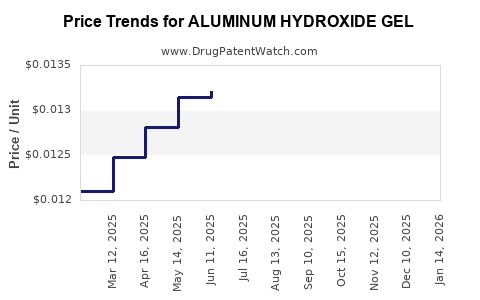
Drug Price Trends for ALUMINUM HYDROXIDE GEL


✉ Email this page to a colleague

« Back to Dashboard


Drug Price Trends for ALUMINUM HYDROXIDE GEL

Average Pharmacy Cost for ALUMINUM HYDROXIDE GEL

These are average pharmacy acquisition costs (net of discounts) from a US national survey
Drug Name NDC Price/Unit ($) Unit Date
ALUMINUM HYDROXIDE GEL 00536-0091-85 0.01311 ML 2025-12-17
ALUMINUM HYDROXIDE GEL 00536-0091-85 0.01329 ML 2025-11-19
ALUMINUM HYDROXIDE GEL 00536-0091-85 0.01341 ML 2025-10-22
ALUMINUM HYDROXIDE GEL 00536-0091-85 0.01353 ML 2025-09-17
ALUMINUM HYDROXIDE GEL 00536-0091-85 0.01347 ML 2025-08-20
ALUMINUM HYDROXIDE GEL 00536-0091-85 0.01334 ML 2025-07-23
ALUMINUM HYDROXIDE GEL 00536-0091-85 0.01321 ML 2025-06-18
>Drug Name >NDC >Price/Unit ($) >Unit >Date

Market Analysis and Price Projections for Aluminum Hydroxide Gel

Last updated: July 27, 2025


Introduction

Aluminum hydroxide gel remains a prominent antacid drug used globally for managing gastrointestinal discomfort caused by acid indigestion, heartburn, and peptic ulcers. Its efficacy, affordability, and longstanding clinical reputation sustain steady demand, positioning it as a staple in the over-the-counter (OTC) and prescription medication markets. This report offers an in-depth market overview, competitive landscape, regulatory considerations, and future price projections for aluminum hydroxide gel.


Market Overview

Global Demand Dynamics

The increasing prevalence of acid-related disorders, fueled by dietary habits and lifestyle factors, continues to drive demand for antacid therapies such as aluminum hydroxide gel. According to industry estimates, the global gastrointestinal (GI) therapeutics market is projected to reach USD 37 billion by 2027, growing at a compound annual growth rate (CAGR) of approximately 4.1% [1].

Aluminum hydroxide gel’s role as an OTC medication ensures broad accessibility, particularly in North America and Europe—markets with stable healthcare infrastructures and high health literacy. Emerging economies in Asia-Pacific, with rising disposable incomes and expanding healthcare access, also present substantial growth prospects.

Market Segmentation

  • By Application: Mainly used for symptom relief of acid indigestion, peptic ulcers, and gastroesophageal reflux disease (GERD).
  • By Formulation: Available primarily as gels, liquid suspensions, and combination products.
  • By Distribution Channels: OTC sales dominate, complemented by prescriptions in certain cases. Pharmacies, hospitals, and online platforms form the core distribution channels.

Competitive Landscape

Major pharmaceutical players manufacturing aluminum hydroxide gel include:

  • Bayer AG
  • GlaxoSmithKline
  • Sanofi
  • Pfizer
  • Teva Pharmaceuticals

Generic manufacturing has also increased, contributing to competitive pricing and wider accessibility. The low complexity of production and longstanding patent expiry facilitate market entry by generic companies.


Regulatory Environment

Regulatory frameworks significantly influence manufacturing, marketing, and pricing strategies:

  • FDA (USA): Aluminum hydroxide gel is classified as a GRAS (generally recognized as safe) OTC drug, subject to standard manufacturing practices.
  • EMA (Europe): Meets EMA standards for OTC availability, with post-marketing surveillance ensuring safety.
  • Emerging Markets: Regulatory standards vary, impacting market growth and pricing.

Regulatory stability in developed markets sustains consistent demand and prevents abrupt pricing swings. However, stricter regulations in some jurisdictions can prolong approval timelines and influence supply chains.


Pricing Dynamics

Historical Pricing Trends

Over the past decade, aluminum hydroxide gel’s unit price has remained relatively stable, owing to its production simplicity, generic competition, and high volume sales. Typical retail prices per bottle or sachet range from USD 2 to USD 5, depending on brand and packaging. Wholesale and hospital procurement prices tend to be lower.

Factors Influencing Price

  • Manufacturing Costs: Raw material costs (mainly aluminum compounds), quality control, and packaging influence pricing.
  • Regulatory Costs: Compliance expenses can impact the final price, especially in regulated markets.
  • Competitive Pricing: High generic competition exerts downward pressure on prices.
  • Supply Chain Dynamics: Raw material shortages or logistical disruptions could lead to price fluctuations.

Future Price Projections

Market Drivers for Price Stability or Rise

  • Continued Demand: Rising incidence of gastrointestinal disorders globally sustains high volumes.
  • Generic Competition: Generic producers maintaining price competitiveness will likely keep prices stable or declining marginally.
  • Manufacturing Innovations: Advances in production processes could reduce costs, further pressuring prices downward.
  • Market Consolidation and Mergers: Strategic alliances may influence pricing strategies, either stabilizing or increasing prices depending on the market position.

Forecasted Price Trends (2023–2028)

Based on current market dynamics, inflation, and manufacturing cost projections, the average retail price of aluminum hydroxide gel is expected to decline modestly, with an annual decrease of approximately 1% to 2%. This is primarily driven by increased generic competition and efficiencies in manufacturing processes.

However, in emerging markets with less price competition and regulatory constraints, prices may remain stable or even increase slightly, influenced by import tariffs or supply chain costs.

Projected Price Range (USD):

Year Estimated Retail Price per 500ml bottle Comments
2023 USD 2.50 – USD 4.00 Current market baseline
2024 USD 2.45 – USD 3.95 Slight downward trend expected
2025 USD 2.40 – USD 3.90 Continued competitive pressures
2026 USD 2.35 – USD 3.85 Marginal decline, stabilization expected
2027 USD 2.30 – USD 3.80 As patent expiry and generics stabilize

Key Market Opportunities and Risks

Opportunities

  • Expansion in emerging markets as healthcare infrastructure improves.
  • Development of combination products with other antacids or analgesics.
  • Growing consumer preference for OTC medications enhances retail sales.

Risks

  • Regulatory hurdles in certain markets could delay product availability.
  • Price wars amongst generic manufacturers might erode margins.
  • Potential shifts toward new therapies (e.g., proton pump inhibitors) could reduce reliance on aluminum hydroxide gel.

Conclusion

Aluminum hydroxide gel’s stable demand, widespread acceptance, and affordability underpin a resilient market position. While steady generic competition imposes downward pricing pressures, incremental innovations and increased market penetration, particularly in developing regions, sustain growth.

Future price trajectories indicate modest decline driven by ongoing competition, with variations across geographies influenced by regulatory and economic factors. Industry players should monitor supply chain developments, regulatory changes, and competitive strategies to adapt effectively.


Key Takeaways

  • The global aluminum hydroxide gel market is characterized by stability, driven by its proven efficacy and widespread usage.
  • Market growth is primarily fueled by increasing gastrointestinal disorder prevalence and expanding availability in emerging economies.
  • Price projections suggest slight decreases (~1-2% annually) over the next five years due to generic competition.
  • Regulatory environments in mature markets are stable, supporting consistent demand; emerging markets offer growth opportunities with variable regulatory hurdles.
  • Strategic focus on innovation, process optimization, and geographic expansion can enhance competitiveness and profitability.

FAQs

1. What factors most influence the pricing of aluminum hydroxide gel?
Manufacturing costs, regulatory compliance expenses, competitive dynamics, and supply chain stability primarily influence retail and wholesale prices.

2. How does the entry of generics affect the market for aluminum hydroxide gel?
Generics increase market competition, leading to lower prices and expanded access, while trimming profit margins for branded products.

3. Are there any emerging therapeutic alternatives threatening aluminum hydroxide gel?
Proton pump inhibitors (PPIs) and other advanced acid suppressants are increasingly used for chronic conditions, but aluminum hydroxide gel remains preferred for short-term relief.

4. What geographic markets present the highest growth potential?
Emerging economies in Asia-Pacific, Latin America, and Africa offer significant opportunities due to rising healthcare access and increasing disease prevalence.

5. How might regulatory changes impact the future of aluminum hydroxide gel?
Stricter standards may increase compliance costs but could also limit competition if new approvals are required. Conversely, streamlined regulations facilitate market entry and stabilization.


Sources:

[1] Grand View Research, "Gastrointestinal Therapeutics Market Size & Trends," 2022.

More… ↓

⤷  Get Started Free

Make Better Decisions: Try a trial or see plans & pricing

Drugs may be covered by multiple patents or regulatory protections. All trademarks and applicant names are the property of their respective owners or licensors. Although great care is taken in the proper and correct provision of this service, thinkBiotech LLC does not accept any responsibility for possible consequences of errors or omissions in the provided data. The data presented herein is for information purposes only. There is no warranty that the data contained herein is error free. We do not provide individual investment advice. This service is not registered with any financial regulatory agency. The information we publish is educational only and based on our opinions plus our models. By using DrugPatentWatch you acknowledge that we do not provide personalized recommendations or advice. thinkBiotech performs no independent verification of facts as provided by public sources nor are attempts made to provide legal or investing advice. Any reliance on data provided herein is done solely at the discretion of the user. Users of this service are advised to seek professional advice and independent confirmation before considering acting on any of the provided information. thinkBiotech LLC reserves the right to amend, extend or withdraw any part or all of the offered service without notice.