Last updated: February 13, 2026
Market Overview and Price Projections for AFREZZA (Regular Insulin)
AFREZZA, an inhaled insulin developed by MannKind Corporation, occupies a niche within the diabetes treatment market. Its unique delivery method aims to improve patient compliance and replicate the rapid onset of insulin from endogenous secretion. This analysis covers market size, competitive landscape, regulatory status, adoption trends, and price projections.
Market Size and Dynamics
Diabetes Market Context
- In 2022, the global diabetes market was valued at approximately $94 billion, projected to reach $154 billion by 2030 at a CAGR of 7.0% (source: Grand View Research).
- Insulin accounts for about 40% of this market, estimated at $37.6 billion in 2022.
AFREZZA’s Position
- AFREZZA market share remains limited, with estimates around 1-2% of insulin prescriptions in the U.S. (source: IQVIA).
- The drug appeals mainly to patients seeking alternatives to injectable insulin or with difficulties using injections, primarily type 2 diabetes patients with specific needs.
Prescription Trends
- In 2022, U.S. insulin prescriptions numbered approximately 70 million, with AFREZZA accounting for roughly 1.4 million prescriptions.
- Adoption remains slow despite FDA approval in 2014 and subsequent label updates in 2018 expanding indications.
Competitive Landscape
Key Players
| Company |
Product Type |
Market Share in U.S. Insulin Market (2022) |
| Novo Nordisk |
NovoLog, Tresiba, others |
50% |
| Eli Lilly |
Humalog, Basaglar |
20% |
| Sanofi |
Lantus, Admelog |
10% |
| MannKind (AFREZZA) |
Inhaled insulin |
1-2% |
Competitor Strategies
- Novo Nordisk and Eli Lilly dominate via long-acting and analog insulins.
- Greater physician familiarity, higher insurance reimbursement rates, and extensive marketing efforts favor established brands.
- AFREZZA faces limitations due to perceived safety concerns, reimbursement hurdles, and lack of extensive marketing.
Regulatory and Reimbursement Environment
Regulatory Actions
- FDA approved AFREZZA in 2014 with a boxed warning regarding acute bronchospasm.
- Label updates in 2018 expanded usage to more insulin-naive patients, but safety warnings persist.
Reimbursement Trends
- Reimbursement is predominantly via Medicare and private insurers.
- Insurers often exclude inhaled insulin due to safety concerns and cost, impacting patient access.
Pricing and Reimbursement Policies
- List price in the U.S. was approximately $290 per cartridge pack (10 cartridges) as of 2022.
- Insurance reimbursements cover a significant portion but vary; copays can be high, limiting affordability.
Price Trends and Projections
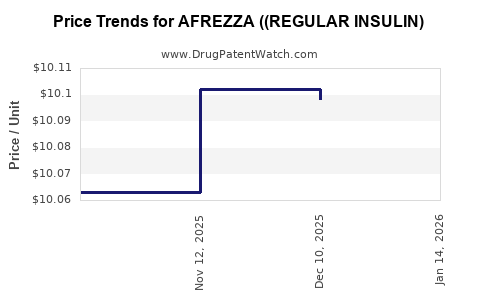
Past Price Data
| Year |
Price per Cartridge Pack |
Notes |
| 2014 |
$290 |
Launch price |
| 2018 |
$280 |
Slight decrease, reimbursements affected |
| 2022 |
$290 |
Stabilized at launch level |
Factors Influencing Price Trends
- Competition from rapid-acting insulin analogs with lower production costs.
- Changes in reimbursement policies impacting net pricing.
- Production scale; increased demand could lower costs, but market penetration remains limited.
Price Projection (2023–2030)
| Year |
Estimated Price Range |
Rationale |
| 2023 |
$280–$290 |
Price stabilizes due to limited market penetration |
| 2025 |
$275–$285 |
Potential slight decline if demand increases or competitors lower prices |
| 2030 |
$270–$280 |
Possible adjustments due to increased competition or improved manufacturing efficiencies |
Adoption and Market Penetration Drivers
- Efficacy comparable to rapid-acting insulins.
- Patient preference for non-injection delivery methods.
- Physician familiarity and reimbursement landscape.
- Regulatory and safety challenges may hinder wider adoption.
Key Takeaways
- AFREZZA’s market share remains small, constrained by safety concerns, reimbursement issues, and stiff competition.
- Its price has fluctuated minimally since launch, averaging around $290 per cartridge in recent years.
- Future pricing likely to remain stable or slightly decline, contingent upon increased adoption, potential cost reductions, and competitive pressures.
- Market growth is limited but could expand with improved safety profiles, broader indications, and targeted marketing.
FAQs
1. Is AFREZZA approved for type 1 diabetes?
Yes, the FDA approved AFREZZA for adult patients with diabetes requiring basal and mealtime insulin, including some with type 1 diabetes, but its primary use remains in type 2.
2. What are the primary safety concerns associated with AFREZZA?
The main safety concern is the risk of acute bronchospasm, especially in patients with pre-existing respiratory conditions like asthma or COPD.
3. How does AFREZZA compare price-wise to injectable insulins?
Freely available data suggest AFREZZA costs around $290 per 10-pack cartridge, similar or slightly higher than some rapid-acting insulins but may be considered less cost-effective due to limited market penetration.
4. What is the outlook for AFREZZA’s market share?
Market share likely remains capped unless safety, reimbursement, and awareness issues are addressed. Growth would require compelling clinical benefits or broader indications.
5. Will insurance coverage improve?
Coverage depends on safety profile, demonstration of adherence benefits, and negotiation with payers. Currently, reimbursement hurdles limit patient access.
References
[1] Grand View Research, "Diabetes Market Size & Share Analysis," 2022.
[2] IQVIA, "Prescription Data for Insulin," 2022.
[3] MannKind Corporation, "AFREZZA Product Label," 2014, 2018.
[4] FDA, "AFREZZA Approval and Safety Warnings," 2014–2022.