Share This Page
Drug Price Trends for ADIPEX-P
✉ Email this page to a colleague
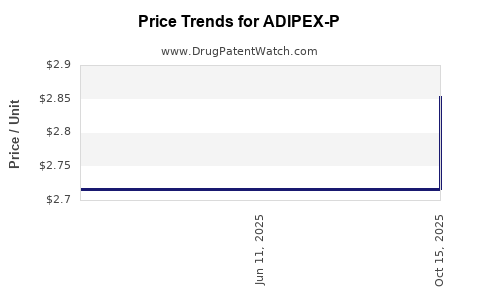
Average Pharmacy Cost for ADIPEX-P
| Drug Name | NDC | Price/Unit ($) | Unit | Date |
|---|---|---|---|---|
| ADIPEX-P 37.5 MG TABLET | 57844-0140-01 | 2.85354 | EACH | 2025-10-22 |
| ADIPEX-P 37.5 MG TABLET | 57844-0140-56 | 2.85354 | EACH | 2025-10-22 |
| >Drug Name | >NDC | >Price/Unit ($) | >Unit | >Date |
ADIPEX-P: Market Landscape and Price Forecast
What is ADIPEX-P and its Therapeutic Role?
ADIPEX-P (phentermine hydrochloride) is a central nervous system stimulant prescribed for short-term weight management in obese individuals. It functions as an appetite suppressant by affecting neurotransmitters in the brain that regulate hunger. ADIPEX-P is indicated for use in conjunction with a regimen of diet, exercise, and behavioral modification.
Current Market Presence and Key Players
The market for appetite suppressants is characterized by several active pharmaceutical ingredients and branded products. ADIPEX-P, manufactured by Teva Pharmaceuticals, holds a significant, albeit mature, position within this segment. Its primary competitor is Lomaira (phentermine hydrochloride), also available in lower-dose formulations. Other weight-loss medications, including glucagon-like peptide-1 (GLP-1) receptor agonists like semaglutide (Ozempic, Wegovy) and tirzepatide (Mounjaro, Zepbound), represent a growing and increasingly dominant force in the broader obesity market. However, these GLP-1s target different mechanisms and are indicated for chronic weight management, often with a higher price point and different patient profiles compared to short-term stimulants like ADIPEX-P.
Patent Landscape and Exclusivity
ADIPEX-P's active pharmaceutical ingredient, phentermine hydrochloride, has been available for decades. The original patents protecting phentermine have long since expired. Teva Pharmaceuticals holds the primary New Drug Application (NDA) for ADIPEX-P. The brand's market exclusivity is primarily derived from its established reputation and market penetration, rather than novel patent protection.
- Original Phentermine Patents: Expired in the mid-20th century.
- Teva Pharmaceuticals' NDA: Established market position for ADIPEX-P.
- Generic Availability: Multiple generic manufacturers produce phentermine hydrochloride, leading to competitive pricing for the active ingredient.
Pricing Dynamics and Forecast
The pricing of ADIPEX-P is influenced by several factors:
- Generic Competition: The presence of multiple generic phentermine products exerts downward pressure on pricing.
- Manufacturer Pricing Strategy: Teva's pricing strategy for the branded ADIPEX-P aims to maintain a premium over generic alternatives, leveraging brand recognition and perceived quality.
- Insurance Coverage: Payer policies and formulary placement significantly impact patient out-of-pocket costs. Historically, short-term appetite suppressants have faced stricter prior authorization requirements and limited coverage compared to newer, chronic obesity treatments.
- Demand and Prescribing Trends: While demand for short-term weight loss aids persists, the rise of more effective and broadly indicated GLP-1 agonists for chronic obesity management is gradually shifting prescribing patterns. This trend may lead to a slow, incremental decline in the market share and potentially the demand for ADIPEX-P over the long term.
- Regulatory Environment: Changes in prescribing guidelines or regulatory scrutiny of stimulant medications could impact market access and pricing.
Current Average Wholesale Price (AWP) for ADIPEX-P (37.5 mg capsules): Approximately $50-$70 per month supply, depending on the pharmacy and insurance.
Generic Phentermine Hydrochloride (37.5 mg capsules): Typically ranges from $10-$30 per month supply.
Price Projection:
- Short-Term (1-2 years): ADIPEX-P prices are expected to remain relatively stable, with minor fluctuations driven by competitive pressures and payer negotiations. The brand may continue to command a premium for its established formulation.
- Medium-Term (3-5 years): A gradual downward trend in real pricing is anticipated as the market share of ADIPEX-P erodes further in favor of newer obesity treatments. However, the price may not decline precipitously due to its established use in specific short-term weight management niches and the continued need for cost-effective options.
- Long-Term (5+ years): Prices are projected to see a more significant decline as ADIPEX-P becomes an increasingly niche product, potentially leading to reduced marketing investment and a greater reliance on generic competition. The market for short-term appetite suppressants may contract.
Market Trends and Competitive Landscape Evolution
The obesity treatment landscape is undergoing a significant transformation. The efficacy and broad applicability of GLP-1 receptor agonists have shifted the paradigm from short-term interventions to long-term, lifestyle-altering therapies.
- GLP-1 Dominance: Semaglutide and tirzepatide have demonstrated substantial weight loss efficacy and are approved for chronic weight management, positioning them as leading treatments. Their market penetration and revenue growth are substantial.
- Adoption Challenges for ADIPEX-P: Physicians and patients increasingly opt for therapies with proven long-term benefits and a broader impact on metabolic health, even at a higher cost. The short-term nature and stimulant side effects of ADIPEX-P are less appealing for chronic obesity.
- Focus on Safety and Efficacy: The pharmaceutical industry and regulatory bodies are prioritizing treatments with robust long-term safety and efficacy data for chronic conditions.
- Dawning of Combination Therapies: Future market evolution may involve combination therapies that address multiple aspects of obesity, further marginalizing single-agent, short-term treatments.
Regulatory Considerations
ADIPEX-P is classified as a Schedule IV controlled substance by the U.S. Drug Enforcement Administration (DEA) due to its stimulant properties and potential for abuse. This classification imposes specific prescribing and dispensing requirements, including:
- Prescription Validity: Prescriptions are valid for six months from the date issued.
- Refills: A maximum of five refills are allowed within that six-month period.
- DEA Registration: Prescribers must have a DEA registration number.
- Record Keeping: Strict record-keeping requirements are mandated for both prescribers and dispensers.
These regulatory controls, while necessary for patient safety, can also influence prescribing patterns and patient access.
Key Takeaways
ADIPEX-P, a long-standing short-term weight-loss medication, faces increasing market pressure from newer, highly effective chronic obesity treatments, particularly GLP-1 receptor agonists. While its original patents have expired, Teva Pharmaceuticals maintains a market position through its branded product. Pricing is influenced by generic competition, insurance coverage, and the evolving competitive landscape, with projections indicating a gradual but steady decline in real pricing over the medium to long term. The regulatory status of ADIPEX-P as a Schedule IV controlled substance imposes prescribing restrictions that impact market dynamics. The future market for ADIPEX-P is likely to be a shrinking niche within the broader, rapidly expanding obesity treatment sector.
Frequently Asked Questions
- What is the primary driver of ADIPEX-P's current market price? The primary drivers of ADIPEX-P's current market price are the manufacturer's pricing strategy, insurance coverage decisions, and the competitive pressure from generic phentermine hydrochloride.
- How will the increasing availability of GLP-1 agonists impact ADIPEX-P's long-term price trajectory? The increasing availability and adoption of GLP-1 agonists are expected to contribute to a downward pressure on ADIPEX-P's long-term price trajectory by reducing its market share and demand.
- Are there any new patents that could extend ADIPEX-P's market exclusivity? No, there are no new patents expected to extend ADIPEX-P's market exclusivity for its active pharmaceutical ingredient, phentermine hydrochloride, as the original patents have long expired.
- What are the main regulatory hurdles affecting ADIPEX-P's market access and pricing? The main regulatory hurdles affecting ADIPEX-P are its classification as a Schedule IV controlled substance by the DEA, which imposes strict prescribing, dispensing, and refill limitations.
- What is the projected market size for short-term appetite suppressants like ADIPEX-P in five years? The projected market size for short-term appetite suppressants like ADIPEX-P is expected to contract over the next five years as the focus of obesity treatment shifts towards chronic management therapies.
Citations
[1] U.S. Drug Enforcement Administration. (n.d.). Schedules of controlled substances. Retrieved from [DEA website]
More… ↓
