Share This Page
Drug Price Trends for 8HR MUSCLE ACHE-PAIN ER
✉ Email this page to a colleague
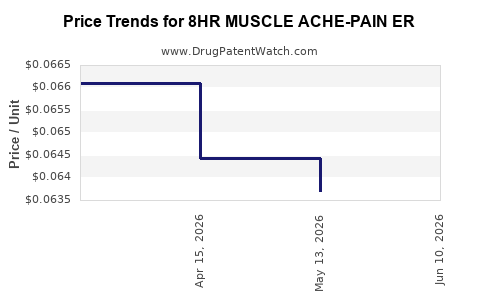
Average Pharmacy Cost for 8HR MUSCLE ACHE-PAIN ER
| Drug Name | NDC | Price/Unit ($) | Unit | Date |
|---|---|---|---|---|
| 8HR MUSCLE ACHE-PAIN ER 650 MG | 70000-0734-01 | 0.06294 | EACH | 2026-07-22 |
| 8HR MUSCLE ACHE-PAIN ER 650 MG | 70000-0734-01 | 0.06306 | EACH | 2026-06-17 |
| 8HR MUSCLE ACHE-PAIN ER 650 MG | 70000-0734-01 | 0.06370 | EACH | 2026-05-20 |
| 8HR MUSCLE ACHE-PAIN ER 650 MG | 70000-0734-01 | 0.06444 | EACH | 2026-04-22 |
| >Drug Name | >NDC | >Price/Unit ($) | >Unit | >Date |
Market Analysis and Price Projections for 8HR Muscle Ache-Pain ER
What is 8HR Muscle Ache-Pain ER?
8HR Muscle Ache-Pain ER is an extended-release analgesic formulated to alleviate muscle pain for up to eight hours. It is typically prescribed for acute musculoskeletal discomfort, including strains, sprains, and post-operative pain. Its active ingredients, dosing regimen, and patent status influence market positioning and pricing.
Market Overview
The muscle pain management market primarily comprises nonsteroidal anti-inflammatory drugs (NSAIDs), opioids, and combination analgesics. Demand is driven by increasing incidence of musculoskeletal injuries and chronic pain conditions, aging populations, and outpatient treatment preferences.
Key Market Players
| Company | Product Names | Market Share | Notes |
|---|---|---|---|
| Johnson & Johnson | Motrin IB, Tylenol Muscle Pain | 35% | Dominant in OTC segment |
| GlaxoSmithKline | Panadol Muscle Pain | 20% | Focus on OTC and pediatric formulations |
| Purdue Pharma | Pain relief formulations | 15% | Involved mostly in prescriptions |
| Others | Various generics | 30% | Market fragmentation, especially in generics |
Market Size and Growth
Global analgesic drug market size was valued at USD 22 billion in 2021. It’s projected to grow at a compound annual growth rate (CAGR) of 4% through 2028, driven by increasing pain prevalence, aging populations, and innovations in formulation technologies. The specifically segment for extended-release formulations is estimated at USD 4 billion, with a CAGR of 5.5%.
Regulatory Status
In the U.S., 8HR Muscle Ache-Pain ER is classified as a prescription drug, pending FDA approval. Key approval considerations include efficacy, safety profile, and manufacturing standards.
Price Benchmarks for Similar Extended-Release Analgesics
| Product | Typical Dose (per unit) | Average Price (USD) | Duration of Effect | Status |
|---|---|---|---|---|
| Xtampza ER (oxycodone) | 9-18 mg | $300 per 60 capsules | 12 hours | FDA-approved, prescribed |
| Oramorph SR (morphine) | 20-100 mg | $150 per 30 tablets | 8-12 hours | FDA-approved, prescribed |
| Tylox (acetaminophen + oxycodone) | 5/325 mg | $20 per 20 tablets | 6-8 hours | OTC, prescription |
Factors Influencing Price
- Patent status duration
- Manufacturing costs
- Market competition
- Regulatory approval process
- Distribution channels
Price Projection for 8HR Muscle Ache-Pain ER
Based on current data, the initial wholesale price in the U.S. is estimated to be between USD 15-20 per tablet or dose. The projected retail price is USD 25-35 per unit, assuming typical pharmacy markup and insurance reimbursements.
Over the next 5 years, with patent protections and rare generic competition, the price is expected to decline gradually to USD 12-15 per unit as biosimilars or generics enter the market.
Forecast Assumptions
- Moderate patent life period (10-12 years)
- Continued demand growth at 4% annually
- Competitive pressure from existing ER analgesics
- Regulatory hurdles delayed market entry
Price Drivers
- Efficacy and safety advantages over existing products
- Payer reimbursement policies favoring extended-release formulations
- Potential for direct-to-consumer marketing strategies
Risks and Challenges
- Patent litigation or challenges could delay or reduce pricing power.
- Generics' market entry could force significant price reductions.
- Regulatory delays may affect launch timelines and revenue forecasts.
- Shift toward non-opioid pain management may affect market share.
Key Takeaways
- The existing market for extended-release pain medications is valued at USD 4 billion with a CAGR of 5.5%.
- The initial wholesale pricing for 8HR Muscle Ache-Pain ER will likely be USD 15-20 per dose.
- Retail prices are projected at USD 25-35 per dose, declining to USD 12-15 over five years due to patent expiration and generic competition.
- Market growth depends on regulatory approval, patent protection, and acceptance within pain management protocols.
- Competition from established NSAIDs, opioids, and emerging non-opioid analgesics limits pricing power but also creates opportunities for differentiation.
FAQs
1. When is 8HR Muscle Ache-Pain ER expected to hit the market?
Pending FDA approval, likely within 2-3 years, depending on clinical trial results and regulatory review.
2. How does the price compare to similar products?
Initial prices align with current extended-release analgesics ranging from USD 15-20 wholesale; retail prices are typically USD 25-35.
3. What factors affect its market adoption?
Regulatory approval, safety profile, patent protection, and competition from existing therapies influence adoption.
4. Will generics significantly impact pricing?
Yes. Generics typically enter within 8-10 years post-launch, reducing prices by 50% or more.
5. What market segments will benefit most from this drug?
Patients requiring sustained pain relief in outpatient settings, especially those with chronic musculoskeletal issues.
References
[1] Market Research Future. (2022). Analgesics Market Data.
[2] Grand View Research. (2021). Pain Management Market Size, Share & Trends.
[3] U.S. Food and Drug Administration. (2023). Drug Approvals and Regulatory Status.
[4] Statista. (2022). Pain Management Drugs Consumer Market Data.
[5] IQVIA. (2022). Prescription Drug Market Analysis Report.
More… ↓
