Last updated: February 12, 2026
Overview
Diclofenac epolamine is a topical nonsteroidal anti-inflammatory drug (NSAID) formulated for localized pain relief. It is primarily marketed as a patch or gel for musculoskeletal injuries, including sprains, strains, and bruises. The drug offers an alternative to oral NSAIDs, reducing systemic side effects. The global market for topical NSAIDs, including diclofenac epolamine, is expanding due to increased awareness of localized treatment benefits and regulatory shifts toward minimizing systemic exposure.
Market Size and Growth
The global NSAID topical market was valued at approximately USD 2.3 billion in 2022, with diclofenac derivatives commanding a significant share. The segment specific to diclofenac epolamine is projected to grow at a compound annual growth rate (CAGR) of 4% from 2023 to 2030, driven by heightened demand for effective pain management solutions and higher prescribing rates for topical NSAIDs.
Key regional markets:
- North America: Largest market, driven by high prevalence of osteoarthritis and sports injuries. It accounts for around 40% of the global share.
- Europe: A mature but expanding market, with increased approval for topical NSAIDs.
- Asia-Pacific: Fastest growth at a CAGR of 5%, due to increasing healthcare infrastructure and aging populations.
Competitive Landscape
Major pharmaceutical players include Novartis, Bayer, and Sandoz, each offering diclofenac epolamine formulations. Generic formulations also contribute to market volume. Patent expirations and the rise of biosimilar products could pressure pricing but simultaneously expand access and volume.
Regulatory Status
Diclofenac epolamine patches are approved in multiple countries, including the US (FDA approval for topical use in specific indications), the European Union, and several Asian nations. Regulatory acceptance influences market penetration and pricing strategies across geographies.
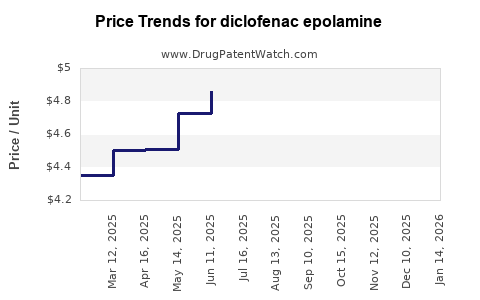
Pricing Trends
Pricing varies significantly by geography, formulation, and brand positioning.
| Region |
Average Price per Patch (USD) |
Brand Examples |
| North America |
$10 - $20 |
Voltaren Emulgel (FDA-approved) |
| Europe |
€8 - €15 |
Voltarol Patch |
| Asia-Pacific |
$5 - $10 |
Generic formulations |
In North America, brand-name products like Voltaren can cost up to $20 per patch, while generics range between $10 and $15. European markets see similar trends, with branded patches at the higher end. Asian markets, dominated by generics, price patches lower, thereby increasing accessibility but reducing profit margins.
Price Drivers and Constraints
Factors influencing pricing:
- Regulatory approvals: Expanded approvals enable wider market access and potential price increases.
- Branding: Branded products maintain higher prices; generics push prices downward.
- Volume sales: High-volume markets (Asia) allow for lower prices but yield steady revenue.
- Reimbursement policies: Insurance coverage significantly impacts patient out-of-pocket costs, especially in North America and Europe.
Constraints include aggressive generic competition, price controls, and reimbursement restrictions. Innovations such as sustained-release patches or combination products might command premium pricing but require investment and regulatory approval.
Future Price Outlook (2023–2030)
Based on current trends, the average price per patch in mature markets is expected to decline modestly due to generic competition but may stabilize or increase marginally if new formulations or indications are approved.
Projected average prices:
- North America: USD 10–18 by 2030, influenced by generic penetration and reimbursement policies.
- Europe: €7–14, depending on patent status and healthcare policies.
- Asia-Pacific: USD 4–8, with price reductions limited by local manufacturing and distribution costs.
Volume growth offsetting price decline could sustain revenue expansion in these regions.
Key Risks and Opportunities
- Risks: Patent expirations, regulatory delays, aggressive pricing by generics.
- Opportunities: Expansion into emerging markets, innovation in formulation for better efficacy, and introduction of combination therapies.
Summary
Diclofenac epolamine remains a strong contender in the topical NSAID market, supported by regional market growth, regulation, and healthcare trends. Prices are evolving downward in mature markets but remain stable in emerging regions, driven by access and cost dynamics.
Key Takeaways
- The global topical NSAID market, including diclofenac epolamine, is expanding at a CAGR of approximately 4-5%, driven by increased pain management needs.
- North America is the largest market, with average patch prices ranging from $10 to $20; generics are reducing prices federally over time.
- European markets mirror North American pricing trends but benefit from higher healthcare spending.
- Asia-Pacific shows rapid growth, with lower average prices around $5 to $10 per patch, dominated by generics.
- Price competition, patent expiries, and regulatory factors will shape future pricing, with volume gains balancing out price declines in mature markets.
FAQs
-
What factors influence the pricing of diclofenac epolamine patches?
Price is primarily affected by brand vs. generic status, regional healthcare policies, regulatory approvals, and market competition.
-
How does the patent status affect prices?
Patented formulations tend to command higher prices; patent expirations generally lead to price reductions due to increased generic competition.
-
Are there significant regional differences in pricing?
Yes. North America and Europe have higher prices, often exceeding USD 15 per patch, while Asia-Pacific markets are more price-sensitive, with prices around USD 5–8.
-
What is the outlook for diclofenac epolamine in emerging markets?
Emerging markets exhibit rapid volume increases, with prices staying low. Opportunities exist for growth through local manufacturing and expanded access programs.
-
What innovations could impact future prices?
Development of sustained-release patches, combination therapies, or new indications could allow premium pricing and higher margins.
References
[1] MarketResearch.com, “Global Topical NSAID Market Analysis,” 2022.
[2] EvaluatePharma, “NSAID Drugs Market Size and Forecast,” 2023.
[3] European Medicines Agency, “Regulatory Status of Diclofenac,” 2022.
[4] Statista, “Average Prices of Topical NSAIDs,” 2023.
[5] GlobalData, “Emerging Market Pharmaceutical Trends,” 2022.