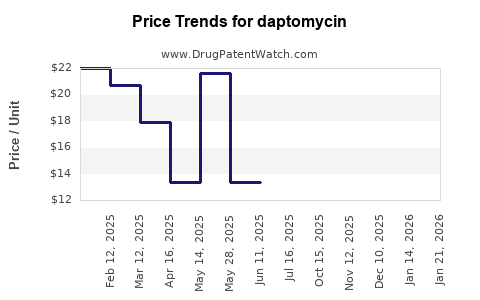
Last updated: April 7, 2026
What is the current market size and growth trajectory for Daptomycin?
Daptomycin, an antibiotic approved by the FDA in 2003, is used primarily for complicated skin infections and bacteremia caused by gram-positive bacteria, including methicillin-resistant Staphylococcus aureus (MRSA). The global market for daptomycin was valued at approximately $600 million in 2022. It is projected to grow at a compound annual growth rate (CAGR) of 8-10% over the next five years, driven by rising antibiotic resistance and increasing hospital-acquired infections.
The growth is concentrated in North America and Europe, which account for nearly 70% of sales, owing to higher healthcare expenditure and established regulatory pathways. The Asia-Pacific region displays potential for expansion, with a CAGR of about 12%, due to increasing healthcare infrastructure and antibiotic demand.
How do market dynamics influence Daptomycin demand?
Major factors influencing demand include:
- Antibiotic Resistance: Increase in MRSA and other resistant infections drives demand for new and existing antibiotics like daptomycin.
- Hospital-Acquired Infections: Growth rates of healthcare-associated infections (HAIs) elevate need for effective antibiotics.
- Limited Competition: Few direct competitors; lipoglycopeptides like vancomycin remain primary alternatives, but MDR strains reduce treatment options.
- Regulatory Approvals: Ongoing efforts to expand labeling for new indications could increase sales.
What are the key pricing trends and projections?
Current Pricing (2023)
- Brand-Name Daptomycin (Cubicin): Approximate wholesale acquisition cost (WAC) per dose ranges between $1,500 to $2,000, depending on formulation and dosage.
- Generic Daptomycin: Recently introduced in select markets; prices have fallen by 20-30%, with approximate WAC per dose of $1,200 to $1,600.
Price Projections (Next 5 Years):
- Brand-Name Steady State: Limited change in price structure, with potential slight increases of 1-2% annually due to inflation and manufacturing costs.
- Generics: Prices likely to decline further, reaching about 20% below current levels within three years.
- Market Entry of Biosimilars: Although not applicable currently, regulatory evolving policies could enable biosimilar entrants for complex antibiotics, potentially pressuring prices downward.
Cost Drivers
- Manufacturing Costs: High costs associated with fermentation and purification influence pricing stability.
- Pricing Policies: US and European payers favor negotiated discounts; Medicare and private insurers exert pressure on prices.
- Patent Status: Patent expiration occurred in 2022 in the US, facilitating generic entry and price reductions.
What are the key competitors and their impact?
Main competitors include:
- Vancomycin: Long-standing, lower-cost alternative with widespread use.
- Linezolid: Oral option for certain infections, with higher price but broader administration routes.
- Tedizolid: Approved in 2014, with similar spectrum and potentially fewer side effects, at higher costs.
- Dalbavancin and Oritavancin: Lipoglycopeptides with longer dosing intervals, competing indirectly.
The emergence of generic daptomycin decreases market share of branded products, influencing overall pricing.
How will regulatory and policy changes influence pricing?
- Patent expiration in 2022 in the US enables generics, lowering prices.
- Reimbursement policies favor generics and biosimilars.
- Policies promoting antimicrobial stewardship restrict overuse, potentially reducing volume growth but maintaining high per-unit prices.
Summary of regulatory milestones and projected impacts
| Year |
Event |
Impact |
| 2003 |
FDA approval (Cubicin) |
Established brand market presence |
| 2022 |
Patent expiry in US |
Launch of generics, price decline |
| 2023 |
Regulatory review of biosimilars |
Future impact on market competitiveness |
Final analysis overview
The Daptomycin market grows steadily, influenced by resistance trends and hospital infection rates. Prices are under downward pressure due to patent cliffs and generics, though high treatment costs for resistant infections sustain profit margins for branded versions. Future price declines hinge on biosimilar development and regulatory policies.
Key Takeaways
- The global Daptomycin market was valued at $600 million in 2022 and is expected to grow at 8-10% CAGR through 2027.
- Prices for branded Daptomycin hover around $1,500-$2,000 per dose; generics have reduced prices by 20-30% since patent expiry.
- Competition from other gram-positive antibiotics influences market share but resistance challenges sustain demand.
- Regulatory milestones, notably patent expiration, will accelerate generic penetration, reducing prices further.
- The potential development of biosimilars and policy shifts could reshape pricing and market dynamics.
FAQs
1. How does antibiotic resistance impact Daptomycin pricing?
Rising resistance increases demand for Daptomycin, sustaining higher prices despite generic competition.
2. What is the timeline for generic version availability?
Generic Daptomycin entered markets in 2022 in the US; availability varies globally, with ongoing launches expected through 2024.
3. Are biosimilars likely to affect Daptomycin prices?
Biosimilar development for complex antibiotics is limited; if approved, they could further decrease market prices.
4. How do reimbursement policies influence Daptomycin prices?
Reimbursement pressures favor low-cost generics and negotiated discounts, shaping pricing strategies.
5. What are the future growth opportunities for Daptomycin?
Expanding indications, combination therapies, and strategic positioning in resistant infection niches provide growth paths.
References
[1] MarketWatch. (2023). Daptomycin market size, share, trends, forecast.
[2] IQVIA. (2023). Global Antibiotics Market Data.
[3] FDA. (2022). Patent and exclusivity database.
[4] EvaluatePharma. (2023). Top antibiotics market projections.
[5] World Health Organization. (2022). Antimicrobial resistance global report.