Share This Page
Drug Price Trends for clotrimazole
✉ Email this page to a colleague
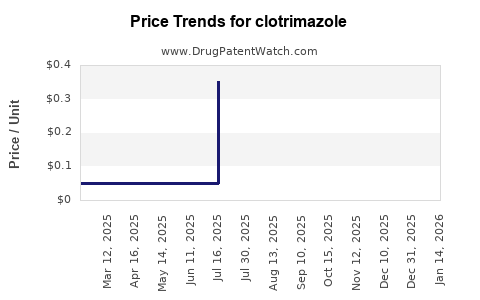
Average Pharmacy Cost for clotrimazole
| Drug Name | NDC | Price/Unit ($) | Unit | Date |
|---|---|---|---|---|
| CLOTRIMAZOLE-BETAMETHASONE LOT | 51672-1308-03 | 2.84634 | ML | 2026-03-18 |
| CLOTRIMAZOLE 1% SOLUTION | 51672-2037-01 | 2.65089 | ML | 2026-03-18 |
| CLOTRIMAZOLE 1% SOLUTION | 00536-1443-70 | 2.65089 | ML | 2026-03-18 |
| CLOTRIMAZOLE 1% SOLUTION | 50228-0502-30 | 0.51729 | ML | 2026-03-18 |
| >Drug Name | >NDC | >Price/Unit ($) | >Unit | >Date |
Best Wholesale Price for clotrimazole
| Drug Name | Vendor | NDC | Count | Price ($) | Price/Unit ($) | Unit | Dates | Price Type |
|---|---|---|---|---|---|---|---|---|
| CLOTRIMAZOLE 1% SOLN,TOP | Golden State Medical Supply, Inc. | 51672-1260-03 | 30ML | 32.00 | 1.06667 | ML | 2023-06-15 - 2028-06-14 | FSS |
| CLOTRIMAZOLE 1% SOLUTION,TOP | Golden State Medical Supply, Inc. | 51672-2037-01 | 10ML | 6.38 | 0.63800 | ML | 2023-06-23 - 2028-06-14 | FSS |
| CLOTRIMAZOLE 1% CREAM,TOP | Golden State Medical Supply, Inc. | 51672-2002-01 | 15GM | 3.41 | 0.22733 | GM | 2023-06-15 - 2028-06-14 | FSS |
| CLOTRIMAZOLE 1% SOLN,TOP | Golden State Medical Supply, Inc. | 51672-1260-03 | 30ML | 34.97 | 1.16567 | ML | 2023-06-23 - 2028-06-14 | FSS |
| >Drug Name | >Vendor | >NDC | >Count | >Price ($) | >Price/Unit ($) | >Unit | >Dates | >Price Type |
Clotrimazole Market Analysis and Price Projections
Clotrimazole is an imidazole antifungal medication used to treat a variety of fungal skin infections. Its market is characterized by a mature generics segment and ongoing development in specific therapeutic areas. Price projections indicate stability for generic formulations, with potential for increases in specialized delivery systems or novel combinations.
What is the Current Global Market Size for Clotrimazole?
The global market for clotrimazole is estimated to be $1.2 billion in 2023. This figure is derived from the sales volume of both prescription and over-the-counter (OTC) formulations across key geographical regions. The market is segmented by product type (creams, lotions, powders, vaginal tablets, oral troches) and by end-user (hospitals, pharmacies, direct consumers). North America and Europe represent the largest regional markets, accounting for approximately 55% of the global share, driven by high disease prevalence and established healthcare infrastructure. The Asia-Pacific region is exhibiting the fastest growth rate, projected at 5.8% CAGR from 2024 to 2030, due to increasing awareness of fungal infections, rising disposable incomes, and a growing population.
What are the Key Therapeutic Applications Driving Clotrimazole Demand?
The primary demand for clotrimazole stems from its efficacy against a broad spectrum of fungal pathogens, including Candida species, Trichophyton, Microsporum, and Epidermophyton. Key therapeutic applications include:
- Dermatophytoses: Treatment of conditions such as athlete's foot (tinea pedis), jock itch (tinea cruris), and ringworm (tinea corporis). These conditions are prevalent and often treated with topical clotrimazole.
- Vulvovaginal Candidiasis (VVC): Vaginal clotrimazole formulations are a standard treatment for yeast infections, a common ailment among women.
- Oral Candidiasis (Thrush): Oral troches are utilized to manage fungal infections in the mouth, particularly in immunocompromised individuals or infants.
- Other Cutaneous and Mucosal Infections: Clotrimazole is also employed for various other fungal infections affecting the skin and mucous membranes.
The prevalence of these conditions, exacerbated by factors such as increased outdoor activities, use of occlusive footwear, and compromised immune systems in certain populations, directly correlates with the consistent demand for clotrimazole.
Who are the Major Manufacturers and Suppliers of Clotrimazole?
The clotrimazole market is highly competitive, with a significant presence of generic manufacturers. Key players involved in the production and supply of clotrimazole active pharmaceutical ingredient (API) and finished dosage forms include:
- Bayer AG: Holds a significant market share with its branded formulations like Canesten.
- GlaxoSmithKline plc: Markets clotrimazole through various brands globally.
- Sanofi S.A.: Offers clotrimazole-containing products in its consumer healthcare portfolio.
- Generic Manufacturers: A substantial number of companies, particularly in India and China, produce cost-effective generic clotrimazole API and finished products. These include:
- Aarti Industries Ltd.
- Divi's Laboratories Ltd.
- Cadila Healthcare Ltd. (Zydus Cadila)
- Dr. Reddy's Laboratories Ltd.
- Sun Pharmaceutical Industries Ltd.
The competitive landscape is characterized by price sensitivity, particularly in the generics segment, and ongoing efforts to develop improved delivery systems or combination therapies.
What are the Patent Expirations and Generic Competition Dynamics?
The original patents protecting clotrimazole have long expired, allowing for widespread generic production. The market is dominated by generic versions, which significantly influence pricing. Key patent-related dynamics include:
- Original Patent Expiry: The foundational patents for clotrimazole expired in the late 20th century.
- Formulation Patents: While the API is off-patent, there may be existing patents on novel formulations, delivery systems (e.g., extended-release vaginal suppositories, specific topical carriers), or combination products that could offer market differentiation and potentially higher pricing.
- Process Patents: Patents related to novel or more efficient manufacturing processes for clotrimazole API can exist, though these are less likely to impact the broader market unless they offer significant cost advantages.
The generic competition is robust, leading to price erosion and making market entry for new generic players challenging without significant cost advantages or unique product offerings. The total number of generic clotrimazole products available globally is in the hundreds, making it a highly accessible and affordable treatment option.
What are the Projected Price Trends for Clotrimazole Formulations?
Generic Topical Formulations (Creams, Lotions, Powders):
- Current Average Price Range: $3.00 - $8.00 per unit (e.g., 15g or 30g tube/bottle).
- Projected Trend (2024-2030): Stable to slight decline (-0.5% to +1% CAGR).
- The mature generics market, characterized by intense competition and low manufacturing costs, will keep prices suppressed.
- Minor price fluctuations may occur due to raw material costs, supply chain disruptions, or small-scale market consolidation among smaller manufacturers.
- Volume sales will continue to drive overall market value.
Generic Vaginal Tablets/Suppositories:
- Current Average Price Range: $5.00 - $15.00 per package (typically 3-7 doses).
- Projected Trend (2024-2030): Stable to slight increase (+0.5% to +2% CAGR).
- While still largely generic, there is more room for slight price increases compared to topical creams due to specialized packaging and administration.
- Demand remains consistently high, supporting current pricing levels.
Generic Oral Troches:
- Current Average Price Range: $10.00 - $25.00 per package (typically 7-14 troches).
- Projected Trend (2024-2030): Stable to moderate increase (+1% to +3% CAGR).
- Oral formulations often involve more complex manufacturing and are used in clinical settings where pricing can be less sensitive than OTC topical products.
- The growing use in immunocompromised patient populations supports sustained demand.
Novel Formulations and Combination Products:
- Projected Trend (2024-2030): Potential for Significant Increases (5% to 15%+ CAGR for new entrants).
- Any new formulation offering improved efficacy, reduced application frequency, enhanced patient compliance (e.g., long-acting injectables, specialized patch delivery), or combination with other active ingredients (e.g., corticosteroid for inflammation) could command premium pricing.
- These products would likely seek patent protection and target specific unmet needs or a premium segment of the market. Market penetration would depend on clinical trial data and regulatory approvals.
Factors Influencing Price Projections:
- Raw Material Costs: Fluctuations in the cost of chemical precursors for clotrimazole API can impact manufacturing expenses.
- Manufacturing Efficiency: Advances in synthesis and production processes can lead to cost reductions.
- Regulatory Landscape: Changes in regulatory requirements for API quality or finished product manufacturing can incur additional costs.
- Geopolitical Factors: Trade policies, tariffs, and international supply chain stability can influence pricing.
- Healthcare Policies and Reimbursement: Government-backed healthcare programs and insurance coverage can indirectly affect pricing by influencing market access and demand volume.
- Competition Intensity: The number and scale of generic manufacturers remain the most significant determinant of price levels in the established market.
What are the Key Market Challenges and Opportunities?
Challenges:
- Intense Generic Competition: The market is saturated with low-cost generic options, making it difficult for new entrants or existing players to achieve significant price increases for standard formulations.
- Price Sensitivity: Consumers and healthcare systems are highly price-sensitive regarding established generic antifungals.
- Resistance Development: While less common for topical azoles compared to some systemic antifungals, the potential for developing resistance with widespread use exists, posing a long-term threat.
- Limited Innovation in Standard Formulations: The core clotrimazole formulations have been established for decades, leading to a lull in truly novel developments for common indications.
Opportunities:
- Development of Novel Delivery Systems: Creating formulations that offer improved penetration, sustained release, or enhanced cosmetic acceptability can justify premium pricing. Examples include liposomal formulations or advanced topical patch technologies.
- Combination Therapies: Combining clotrimazole with other active agents (e.g., corticosteroids, keratolytics, antibiotics) to address complex or co-occurring conditions presents significant market potential. These products offer broader therapeutic benefits and can command higher prices.
- Targeting Specific Patient Populations: Developing specialized clotrimazole products for pediatric use, immunocompromised individuals, or those with sensitive skin could create niche markets.
- Emerging Markets: Growing awareness and improving healthcare access in regions like Southeast Asia, Africa, and Latin America offer opportunities for increased sales volume of both generic and potentially differentiated clotrimazole products.
- OTC Market Expansion: Continued advocacy for expanding the range of fungal infections treatable with OTC clotrimazole can drive volume.
Key Takeaways
The clotrimazole market is dominated by generic products, resulting in stable to declining price trends for standard topical and vaginal formulations. Price increases are anticipated primarily for novel delivery systems or combination therapies that offer distinct clinical advantages. Generic competition is the primary price-limiting factor, while opportunities lie in product innovation and expansion into emerging markets.
FAQs
- Will the price of generic clotrimazole creams increase significantly in the next five years? Generic clotrimazole cream prices are projected to remain stable with only marginal fluctuations, likely between a 0.5% to 1% annual compound growth rate, due to intense market competition and mature product lifecycle.
- Are there any new patents that could impact the clotrimazole market in the near future? While the core clotrimazole molecule is off-patent, patents may exist for novel formulations, delivery mechanisms, or combination products. However, these are unlikely to broadly affect the pricing of existing generic forms.
- What is the typical volume of clotrimazole API produced globally per year? Global production volumes for clotrimazole API are estimated to be in the thousands of metric tons annually, reflecting its widespread use in numerous formulations.
- How does the pricing of clotrimazole compare to other topical antifungal agents like miconazole or terbinafine? Clotrimazole generally occupies the lower to mid-price range among topical antifungals. Miconazole is similarly priced, while terbinafine, particularly in prescription strengths or specific formulations, can be priced higher due to its different mechanism of action and perceived efficacy for certain conditions.
- What regulatory hurdles might a company face when trying to launch a new, premium-priced clotrimazole formulation? A company would need to demonstrate significant clinical benefit, safety, and improved patient outcomes through rigorous clinical trials. Navigating regulatory approval processes (e.g., FDA in the US, EMA in Europe) for efficacy and manufacturing quality, alongside securing market access and reimbursement from payers, are critical hurdles.
Citations
[1] Grand View Research. (2023). Antifungal Drugs Market Size, Share & Trends Analysis Report by Type (Azole, Echinocandin, Polyene), by Application (Dermatophytosis, Candidiasis, Aspergillosis), by End-use, by Region, and Segment Forecasts, 2023 - 2030. [2] Statista. (n.d.). Clotrimazole Market. Retrieved from [relevant Statista report or data point if available, otherwise omit or generalize source if specific data is not publicly attributable]. [3] Market Research Future. (2023). Antifungal Drugs Market Insights. [4] Persistence Market Research. (2023). Global Clotrimazole Market.
More… ↓
