Last updated: February 19, 2026
What is AZSTARYS?
AZSTARYS (serdexmethylphenidate with dexmethylphenidate) is a medication approved by the FDA in July 2021 for the treatment of attention deficit hyperactivity disorder (ADHD) in children aged 6 and older, and in adults. It combines a prodrug (serdexmethylphenidate) with immediate-release dexmethylphenidate to provide both sustained and immediate symptom control.
Market Landscape
Competitive Position
AZSTARYS entered a market with several established ADHD medications, including:
- Adderall (amphetamine/dextroamphetamine)
- Concerta (methylphenidate)
- Vyvanse (lisdexamfetamine)
- Focalin (dexmethylphenidate)
- Strattera (atomoxetine)
In 2021, around 10 million children and approximately 6 million adults in the U.S. diagnosed with ADHD, with prescription rates growing annually at approximately 4%. The ADHD drug market, valued at $13 billion in 2022, is expected to expand at a CAGR of 4.2% through 2027.
Market Entry Barriers
- Prescriber familiarity with existing medications
- Insurance/formulary coverage hurdles
- Pricing sensitivity among payers and consumers
Adoption Factors
- Efficacy and safety profile compared to existing therapies
- Once-daily dosing convenience
- Side effect profile and tolerability
- Brand recognition of parent company (Klavuz)
Pricing Strategy and Cost Factors
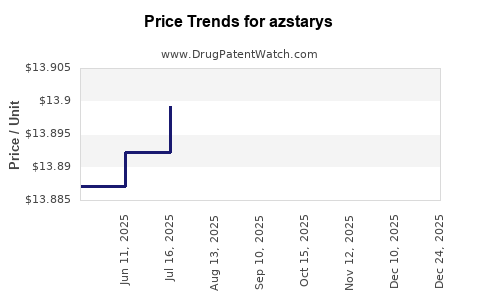
Historical Pricing Trends
- Similar drugs: Vyvanse initial wholesale acquisition cost (WAC) around $315 for a 30-day supply; Concerta around $250–$330 depending on dosage.
- Brand premium: New entrants typically command 10-20% higher pricing initially, then adjust based on market competition and insurance coverage.
Estimated Wholesale Acquisition Cost (WAC)
- Anticipate AZSTARYS pricing near $350–$375 per 30-day supply (based on market positioning and comparator drugs' prices).
- Monthly retail cost: Approximately $350–$400 for patients without insurance, subject to discounts, rebates, and formularies.
Consumer Out-of-Pocket Cost
- Without insurance: $350–$400
- With insurance: copays likely range from $10–$60 per month, depending on tier placement and deductible status.
Reimbursement and Formularies
- Entry into large pharmacy benefit plans (e.g., Express Scripts, CVS Caremark) will significantly influence pricing power and market share.
- Early access programs and discount cards could reduce initial patient costs and drive uptake.
Revenue Projections
Short-term (2023-2024)
- Launch unlikely to generate more than $50–$100 million in U.S. revenue in the first year.
- Prescription volume estimated at 200,000–300,000 units in 2023, increasing as formulary placements solidify.
Medium-term (2025–2027)
- Growth driven by expanding prescriber familiarity and insurance coverage.
- Projected revenue could reach $250–$500 million annually by 2027, assuming a 20% market share within the ADHD treatment market.
Key assumptions:
- Market penetration of 10-15% of new prescriptions in ADHD.
- Average price point maintained around $350 per 30-day supply.
- Gradual increases in prescribing rates as prescriber and patient awareness grow.
Risks and Opportunities
Risks
- Competition from lower-priced generics (methylphenidate, amphetamine formulations).
- Delays in formulary integration.
- Safety concerns or adverse event reports impacting acceptance.
Opportunities
- Growing ADHD diagnosis rates.
- Preference for formulations with improved side effect profiles or convenience.
- Expansion into international markets.
Summary
AZSTARYS's market entry capitalizes on the trend toward sustained-release formulations offering both immediate and long-lasting symptom control. With an initial pricing estimate of $350–$375 per month, revenues are projected to reach $200–$500 million annually within five years, contingent on formulary access and prescriber adoption.
Key Takeaways
- AZSTARYS operates in a fragmented, competitive ADHD medication market.
- Pricing likely aligns with premium brands, around $350–$375 per month.
- Early revenue estimates for 2023 are approximately $50–$100 million.
- Market growth depends on formulary coverage, prescriber awareness, and patient acceptance.
- Competition from generics and insurance barriers remain key challenges.
5 FAQs
What sets AZSTARYS apart from other ADHD medications?
It combines a prodrug with immediate-release methylphenidate, enabling both quick onset and sustained symptom control, potentially reducing need for multiple doses or formulations.
How does insurance coverage influence AZSTARYS's market penetration?
Insurance formulary placement determines patient out-of-pocket costs, affecting prescriber willingness and patient access, thus directly impacting sales volume.
Is AZSTARYS priced higher than competitors?
Yes, estimated initial WAC ($350–$375) suggests a premium positioning compared to older medications like Concerta (~$250–$330), but comparable to newer branded drugs like Vyvanse.
What factors could accelerate AZSTARYS's revenue growth?
Increased prescriber education, successful formulary integration, and positive clinical outcomes could expand adoption.
What are the main barriers to AZSTARYS’s market expansion?
Established competitors, generic availability, payer restrictions, and prescriber familiarity with existing therapies.
References
[1] IQVIA. (2022). National Prescription Audit.
[2] EvaluatePharma. (2023). Pharmaceutical Market Reports.
[3] U.S. Food and Drug Administration. (2021). FDA approval for AZSTARYS.
[4] MarketWatch. (2022). ADHD drug market analysis.
[5] SSRHealth. (2022). Prescription price trends.