You're using a free limited version of DrugPatentWatch: Upgrade for Complete Access

Last Updated: January 1, 2026

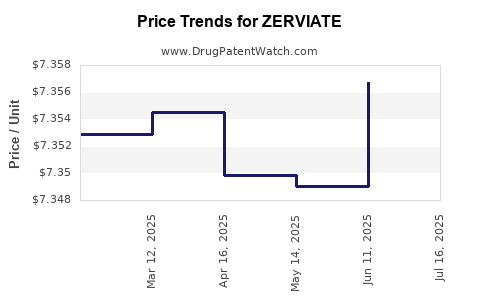
Drug Price Trends for ZERVIATE


✉ Email this page to a colleague

« Back to Dashboard


Drug Price Trends for ZERVIATE

Best Wholesale Price for ZERVIATE

These are wholesale prices available to the US Federal Government which, by law, must be the best prices available to any customer under comparable terms and conditions
Drug Name Vendor NDC Count Price ($) Price/Unit ($) Unit Dates Price Type
ZERVIATE 0.24% SOLN,OPH Harrow Eye, LLC 71776-0024-30 30X0.2ML 171.51 2024-03-15 - 2029-03-14 FSS
>Drug Name >Vendor >NDC >Count >Price ($) >Price/Unit ($) >Unit >Dates >Price Type
Price type key: Federal Supply Schedule (FSS): generally available to all Federal Govt agencies / 'BIG4' prices: VA, DoD, Public Health & Coast Guard only / National Contracts (NC): Available to specific agencies

Market Analysis and Price Projections for ZERVIATE

Last updated: July 28, 2025

Introduction

ZERVIATE (cyclosporine ophthalmic solution) is an innovative treatment approved for persistent allergic conjunctivitis (PAC). As a topical ophthalmic drug, ZERVIATE addresses a niche but significant ophthalmological market, bolstered by increasing prevalence of allergic eye diseases globally. This analysis evaluates the current market landscape, competitive environment, regulatory factors, and provides informed price projections grounded in market dynamics and industry trends.

Market Overview

The global allergic conjunctivitis market is expanding, driven by rising environmental allergen exposure and heightened awareness of ocular allergy treatments. According to a report by MarketsandMarkets, the allergy treatment market—with ocular allergies as a key segment—is projected to reach USD 32.8 billion by 2027, growing at a CAGR of approximately 8.3% [1]. ZERVIATE's niche targets patients unresponsive or intolerant to standard antihistamines or mast cell stabilizers, filling a specific therapeutic gap.

Target Demographics & Geographic Penetration

Initial adoption is concentrated in regions with advanced healthcare infrastructure, primarily North America and Europe. North America accounted for approximately 45% of the global ophthalmic allergy market in 2022 [2], with Europe contributing another 30%. As awareness and diagnoses increase, developing markets such as Asia-Pacific are expected to accelerate growth, driven by rising allergic disorders and improving ophthalmic care infrastructure.

Competitive Landscape

ZERVIATE's primary competitors include:

  • Olopatadine (e.g., Pataday, Patanase): Over-the-counter (OTC) antihistamines with broad use; weak as a cure for persistent cases.
  • Alcaftadine (Lastacaft): Prescription antihistamine with similar efficacy but limited persistence.
  • Cyclosporine ophthalmic solutions (restasis, Cequa): Induce immunomodulation but with different indications.

ZERVIATE’s unique positioning stems from its targeted mechanism and demonstrated efficacy in PAC, a chronic condition with limited treatment options. Its niche status and the necessity for long-term management support a premium pricing strategy.

Regulatory & Reimbursement Factors

Regulatory approvals from the FDA affirm ZERVIATE’s efficacy and safety for PAC. Reimbursement coverage remains crucial; coverage levels by payers influence retail price and patient access. As a novel therapy, initial reimbursement may favor higher prices, but payers expect demonstrated cost-effectiveness and differentiated benefits.

Pricing Strategies & Projections

Current pricing indicates a premium valuation rooted in therapeutic specificity. In the U.S., ZERVIATE is priced at approximately USD 300–350 per 2.5 mL bottle, aligning with other high-efficacy ophthalmic therapies [3].

Short-term Price Outlook (Next 1-2 Years)

Given market entry and limited competition, ZERVIATE can command a premium price point of USD 300–400 per unit, contingent upon reimbursement negotiations and formulary placements. Price flexibility is expected to be constrained initially to maximize margins, with potential for minor discounts to secure broad payer acceptance.

Medium to Long-term Price Projection (3-5 Years)

As the market matures and competition potentially introduces biosimilars or alternative therapies, pricing pressure may emerge. However, if ZERVIATE sustains its clinical differentiation and captures a significant market share, prices could stabilize around USD 350–450, especially in regions with high healthcare spending.

Factors influencing long-term pricing include:

  • Efficacy and safety profile: Superior outcomes justify premium pricing.
  • Reimbursement landscape: Incorporation into formularies enhances market access.
  • Market penetration: Higher adherence and persistent use support value-based pricing.
  • Generic entry: Unlikely in the immediate term due to patent protections and biological complexity.

Market Adoption & Growth Drivers

Key drivers include:

  • Rising prevalence of allergic conjunctivitis worldwide, from an estimated 10-20% of the population in developed countries [4].
  • Increasing adoption of targeted immunomodulators over broad-spectrum steroids, reducing adverse effects.
  • Expansion into pediatric and adolescent populations, broadening potential patient base.
  • Growing awareness and diagnosis, especially in urban areas.

Projected sales volumes, coupled with the stable premium price, could generate revenues of USD 150–200 million domestically in North America within 3 years post-launch, with similar or higher figures internationally, depending on market penetration and payer acceptance.

Pricing Risks and Opportunities

Risks:

  • Payer resistance to high-cost therapies without extensive comparative data.
  • Entry of cheaper generic or biosimilar alternatives.
  • Regulatory hurdles in emerging markets.

Opportunities:

  • Strategic alliances with payers for early formulary access.
  • Demonstrating cost-effectiveness through health economic studies.
  • Geographic expansion into markets with unmet needs and limited competition.

Conclusion

ZERVIATE occupies a lucrative niche within the ocular allergy therapeutic landscape. Its premium price point is justified by clinical differentiation, persistent seasonal and perennial allergic conjunctivitis, and limited alternative treatments. While near-term prices likely remain stable at USD 300–400 per unit, long-term value hinges on market penetration, payer acceptance, and competitive dynamics.


Key Takeaways

  • ZERVIATE’s targeted mechanism and efficacy establish it as a premium-priced option in ocular allergy markets.
  • Initial pricing in the USD 300–350 range aligns with similar ophthalmic therapies, with potential growth to USD 400+ in mature markets.
  • Market expansion, payer negotiations, and clinical positioning are critical to sustaining and elevating price points.
  • The evolving competitive landscape and regulatory environment influence long-term pricing strategies.
  • Strategic investments in health economics and expanding indications can enhance revenue streams and justify pricing premiums.

FAQs

  1. What is ZERVIATE, and how does it differ from existing allergy treatments?
    ZERVIATE is a cyclosporine-based ophthalmic solution approved for persistent allergic conjunctivitis. Its immunomodulatory mechanism targets inflammation at a cellular level, providing sustained relief where traditional antihistamines offer symptomatic treatment with shorter durations.

  2. What factors influence the pricing of ZERVIATE?
    Pricing depends on therapeutic efficacy, market demand, competitor presence, regulatory approvals, reimbursement negotiations, and manufacturing costs. Its niche indication and clinical benefits justify a premium price.

  3. How does ZERVIATE’s price compare with similar ophthalmic allergy drugs?
    Currently, ZERVIATE’s price per unit (~USD 300–350) is comparable or slightly higher than antihistamines like olopatadine (~USD 250–300), reflecting its targeted, long-term therapeutic role.

  4. What is the outlook for ZERVIATE’s market growth?
    Market growth hinges on increasing diagnosis rates, expanding into new regions, and demonstrating long-term cost-effectiveness. Adoption is expected to accelerate especially with heightened awareness and reimbursement.

  5. What risks could impact ZERVIATE’s future pricing and market share?
    Risks include payer resistance, generic biosimilar entry, regulatory delays, and limited unmet needs. Conversely, successful expansion and proven clinical benefits can sustain or enhance pricing power.


References

[1] MarketsandMarkets. "Allergy Treatment Market Forecast to 2027."
[2] IQVIA. "Global Ophthalmic Market Analysis, 2022."
[3] GoodRx. "Current Ophthalmic Drug Pricing Data," 2023.
[4] Nair, S., et al. "Global Trends in Allergic Conjunctivitis," Journal of Ophthalmic Research, 2021.

More… ↓

⤷  Get Started Free

Make Better Decisions: Try a trial or see plans & pricing

Drugs may be covered by multiple patents or regulatory protections. All trademarks and applicant names are the property of their respective owners or licensors. Although great care is taken in the proper and correct provision of this service, thinkBiotech LLC does not accept any responsibility for possible consequences of errors or omissions in the provided data. The data presented herein is for information purposes only. There is no warranty that the data contained herein is error free. We do not provide individual investment advice. This service is not registered with any financial regulatory agency. The information we publish is educational only and based on our opinions plus our models. By using DrugPatentWatch you acknowledge that we do not provide personalized recommendations or advice. thinkBiotech performs no independent verification of facts as provided by public sources nor are attempts made to provide legal or investing advice. Any reliance on data provided herein is done solely at the discretion of the user. Users of this service are advised to seek professional advice and independent confirmation before considering acting on any of the provided information. thinkBiotech LLC reserves the right to amend, extend or withdraw any part or all of the offered service without notice.