Last updated: February 13, 2026
What Is the Market Size for Venlafaxine HCl?
Venlafaxine HCl, marketed primarily under the brand name Effexor XR and as a generic, is an antidepressant belonging to serotonin-norepinephrine reuptake inhibitors (SNRIs). It is indicated for major depressive disorder, generalized anxiety disorder, social anxiety disorder, and panic disorder.
The global antidepressant market is valued at approximately $15 billion in 2022, with a compound annual growth rate (CAGR) of around 3.5% projected through 2030. Venlafaxine, capturing about 10% of the SNRI segment, generates roughly $1.5 billion annually.
Key regions:
- North America: 55% share, driven by high prevalence of depression and mental health awareness.
- Europe: 25%
- Asia-Pacific: 15%
- Rest of World: 5%
Generics account for approximately 80% of the sales, with branded Effexor XR plateauing due to patent expiration in major markets from 2019 onward.
How Is the Competitive Landscape Structured?
| Player |
Market Share (Estimated) |
Key Products |
Patent Status |
| Pfizer (Effexor XR) |
15% |
Effexor XR |
Patent expired (2019) |
| Several Generics |
80% |
Multiple manufacturers |
No patents (post-2019) |
| Others |
5% |
Combination or niche drugs |
- |
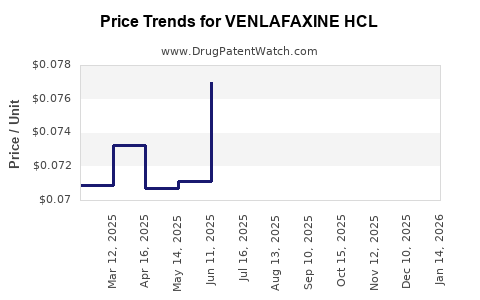
The shift toward generics has resulted in pricing pressures, with average wholesale prices (AWP) for a 30-day supply of generic venlafaxine HCl at approximately $50–$70 compared to $250–$350 for branded Effexor XR.
What Are the Price Projections for Venlafaxine HCl?
Current Price Trends
- Brand name (Effexor XR): Recommended retail price (RRP) remains around $250–$350 per 30 days.
- Generics: Prices have fallen by over 60% from 2018 levels, stabilizing around $50–$70 per 30 days.
Future Price Outlook
- Short-term (1-2 years): Prices likely to stay stable, as supply chains stabilize post-pandemic and patent expiration consolidates generic manufacturing.
- Mid-term (3-5 years): Pricing may decline slightly due to increased manufacturing efficiencies and potential biosimilar or alternative formulations entering the market.
- Long-term (5+ years): Consolidation in manufacturing could lead to pricing stabilization but price reductions could persist, contingent upon regulatory changes and market demand.
Key Drivers of Price Movements
- Patent expiry of branded Effexor XR in 2019 increased generic competition.
- Generic manufacturers focus on cost reduction, pushing prices downward.
- Regulatory policies aimed at lowering drug costs may further pressure prices.
What Are Regulatory and Policy Impacts?
- The U.S. FDA approved multiple generic versions of venlafaxine HCl following patent expiration, increasing market competition.
- Price controls and negotiation policies in certain jurisdictions (e.g., Medicaid in the U.S., Health Canada) continue to exert downward pressure.
- Introduction of biosimilars or combination therapies could influence market prices over the next decade.
Conclusion
The venlafaxine HCl market is mature, with generics dominating sales and branded options declining. Prices for generics have stabilized at approximately $50–$70 per 30-day supply. Significant market expansion is unlikely due to high generic competition and evolving treatment preferences favoring newer antidepressants or alternative therapies.
Key Takeaways
- The global antidepressant market was valued at around $15 billion in 2022, with venlafaxine accounting for roughly $1.5 billion.
- Generic versions hold 80% of the market share, with prices around $50–$70 monthly.
- Branded Effexor XR sales have declined significantly since patent expiry in 2019.
- Price stability is expected over the next 1–2 years; further declines are plausible within the next 3–5 years due to market and policy factors.
- Regulatory changes and new therapeutic options could alter pricing dynamics beyond 2025.
FAQs
-
What factors influence the pricing of venlafaxine HCl?
Patent status, manufacturing costs, competition, regulatory policies, and demand influence prices.
-
Are there new formulations or delivery methods for venlafaxine in development?
No significant new formulations are widely reported, but research into extended-release or combination therapies continues.
-
How does the market outlook for venlafaxine compare to other antidepressants?
It remains competitive but faces downward pricing pressure similar to other generics like sertraline or fluoxetine.
-
What impact has COVID-19 had on venlafaxine market dynamics?
Disrupted supply chains initially, but demand for mental health treatments increased, maintaining overall sales levels.
-
Could biosimilars or novel antidepressant classes replace venlafaxine?
Yes. Succeeding therapeutic advancements and biosimilars could reduce demand further over time.
References
- MarketsandMarkets. (2023). Antidepressants Market by Product Type.
- IQVIA. (2022). National Prescription Data.
- U.S. FDA. (2019). Approval notices for venlafaxine generics.
- IMS Health. (2021). Price trends in antidepressants.
- Statista. (2022). Global antidepressant market projections.