Share This Page
Drug Price Trends for VALTREX
✉ Email this page to a colleague
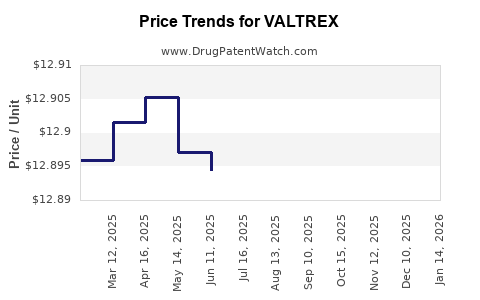
Average Pharmacy Cost for VALTREX
| Drug Name | NDC | Price/Unit ($) | Unit | Date |
|---|---|---|---|---|
| VALTREX 1 GRAM CAPLET | 00173-0565-04 | 20.24400 | EACH | 2026-05-20 |
| VALTREX 1 GRAM CAPLET | 00173-0565-10 | 20.24400 | EACH | 2026-05-20 |
| VALTREX 500 MG CAPLET | 00173-0933-08 | 12.80513 | EACH | 2026-05-20 |
| >Drug Name | >NDC | >Price/Unit ($) | >Unit | >Date |
Best Wholesale Price for VALTREX
| Drug Name | Vendor | NDC | Count | Price ($) | Price/Unit ($) | Unit | Dates | Price Type |
|---|---|---|---|---|---|---|---|---|
| VALTREX CAPLET 500MG 30S | GlaxoSmithKline | 00173-0933-08 | 30 | 363.43 | 12.11433 | EACH | 2022-08-01 - 2027-07-31 | FSS |
| VALTREX CAPLETS 1GM 90S | GlaxoSmithKline | 00173-0565-10 | 90 | 1893.41 | 21.03789 | EACH | 2022-08-01 - 2027-07-31 | FSS |
| VALTREX CAPLETS 500MG 90S | GlaxoSmithKline | 00173-0933-10 | 90 | 858.58 | 9.53978 | EACH | 2023-01-01 - 2027-07-31 | Big4 |
| >Drug Name | >Vendor | >NDC | >Count | >Price ($) | >Price/Unit ($) | >Unit | >Dates | >Price Type |
Valtrex Market Analysis and Price Projections
Valtrex (valacyclovir hydrochloride), a prodrug of acyclovir, is an antiviral medication used to treat herpes simplex virus (HSV) infections, including genital herpes, cold sores, and shingles. Its efficacy and established safety profile have maintained a significant market presence. However, patent expiries and the emergence of generic competition have fundamentally altered its market dynamics, necessitating a re-evaluation of pricing strategies and future market trajectory.
What is the Current Market Landscape for Valtrex?
The market for Valtrex has transitioned from a branded monopoly to a highly competitive generic environment. This shift is primarily driven by the expiry of key patents and the subsequent introduction of multiple generic manufacturers.
Key Market Segments
Valtrex is prescribed for the following indications:
- Genital Herpes: Treatment and suppression of outbreaks.
- Cold Sores (Herpes Labialis): Treatment of recurrent episodes.
- Shingles (Herpes Zoster): Treatment of acute infections.
- Chickenpox (Varicella): Treatment of varicella in immunocompromised individuals.
Market Size and Value
The global market for antiviral drugs, including those for herpes infections, is substantial. While specific figures for Valtrex as a branded product are no longer dominant, the collective market for valacyclovir generics is estimated to be in the hundreds of millions of dollars annually. The price erosion due to generic competition has significantly impacted the overall market value compared to its peak as a branded product.
Competitive Landscape
The primary competitors to branded Valtrex are generic valacyclovir products. Several pharmaceutical companies manufacture and distribute generic valacyclovir, leading to intense price competition.
- Major Generic Manufacturers: Teva Pharmaceutical Industries, Mylan N.V. (now part of Viatris), Aurobindo Pharma, and numerous other players operate in this space.
- Branded vs. Generic Pricing: Branded Valtrex typically commands a premium price. However, generic valacyclovir is available at a fraction of the branded cost, making it the preferred option for many healthcare systems and patients.
- Market Share: Generic valacyclovir holds the dominant market share, with branded Valtrex accounting for a small percentage of total prescriptions.
Regulatory Environment
The regulatory approval process for generic drugs, including valacyclovir, is managed by agencies like the U.S. Food and Drug Administration (FDA) and the European Medicines Agency (EMA). Generic versions must demonstrate bioequivalence to the branded product.
What is the Patent Status of Valtrex?
The patent landscape for Valtrex has evolved significantly, moving from extensive patent protection to widespread patent expiry.
Original Patent Expiries
The primary patents covering valacyclovir hydrochloride and its uses began to expire in the mid-2000s.
- U.S. Patent Expiry: Key patents expired around 2009-2010, paving the way for generic entry.
- European Patent Expiries: Similar expiry timelines were observed in major European markets.
Subsequent Patent Challenges and Litigation
While the core patents have expired, there have been instances of patent litigation related to specific formulations, manufacturing processes, or new indications. However, these challenges have generally not extended the market exclusivity for the primary therapeutic uses of valacyclovir.
Impact of Patent Expiry on Market Entry
- Generic Entry: The expiration of primary patents allowed multiple generic manufacturers to enter the market, leading to increased supply and price reductions.
- Market Dynamics: The transition from a branded-only market to a generic-dominated market is a standard lifecycle for pharmaceutical products.
What are the Current Pricing Trends for Valtrex?
Pricing for Valtrex is now largely dictated by the generic market, with significant price variation based on manufacturer, dosage form, and geographic region.
Branded Valtrex Pricing (Historical Context)
Before generic competition, branded Valtrex was priced as a premium medication, reflecting its R&D investment and market exclusivity.
- Typical Branded Price Range (Pre-Generic): Prices could range from $150-$300 for a 10-day supply, depending on dosage and insurance coverage.
Generic Valacyclovir Pricing
The introduction of generics has led to substantial price erosion. Prices are highly competitive and fluctuate based on supply, demand, and retailer markups.
- Average Generic Price Range (Per Prescription): A 10-day supply of generic valacyclovir can now range from $10-$50.
- Dosage and Quantity Impact: Higher dosages (e.g., 1g) and larger quantities (e.g., 21 or 42 tablets) may have a higher per-unit cost but a lower cost per day of therapy.
- Retailer Variations: Prices can differ significantly between major pharmacy chains, independent pharmacies, and online retailers.
- Insurance and Discount Programs: The actual out-of-pocket cost for patients varies greatly depending on insurance formularies, co-pays, and available discount cards or coupons.
Factors Influencing Generic Pricing
- Number of Generic Competitors: A higher number of manufacturers generally leads to lower prices.
- Manufacturing Costs: Efficiency in production and sourcing of active pharmaceutical ingredients (APIs) affects pricing.
- Market Volume: High prescription volumes can allow for economies of scale and further price reductions.
- Reimbursement Policies: Payer strategies and formulary placement influence prescribing patterns and, consequently, pricing pressures.
What are the Future Price Projections for Valtrex?
The future pricing of valacyclovir is expected to remain stable within the generic market, with modest fluctuations rather than significant increases or decreases.
Projections for Generic Valacyclovir
- Continued Price Stability: The market has largely settled into a competitive generic equilibrium. Significant upward price movements are unlikely unless there are unforeseen supply chain disruptions or a reduction in the number of active generic manufacturers.
- Potential for Minor Fluctuations: Seasonal demand or minor increases in API costs could lead to slight price adjustments. However, the competitive nature of the market will likely cap any substantial rises.
- Impact of Biosimilar Competition (N/A for Small Molecules): Biosimilar competition is not applicable to small molecule drugs like valacyclovir.
- Geographic Price Differentials: Price variations between countries will persist, influenced by local market regulations, healthcare systems, and currency exchange rates.
- Emergence of New Treatment Modalities: While valacyclovir remains a standard of care, the development of novel antiviral therapies for herpes infections could, over the long term, impact demand and pricing indirectly, though direct price suppression is unlikely in the short to medium term.
Projections for Branded Valtrex
- Minimal Market Share: Branded Valtrex is expected to retain a negligible market share, primarily serving patients or prescribers who specifically request the brand or where payer policies are unusual.
- Continued Premium Pricing (If Available): If any branded product remains on the market, it will likely continue to be priced at a premium, but its overall impact on the market price will be minimal.
Economic Considerations
- Cost-Effectiveness: Valacyclovir, particularly in its generic form, is a cost-effective treatment for herpes infections. This cost-effectiveness supports its continued widespread use and contributes to pricing stability.
- Healthcare Budget Constraints: Payer and government efforts to control healthcare expenditures will continue to favor the lowest-cost generic options.
What are the Key Drivers and Challenges for Valacyclovir Market Growth?
The valacyclovir market is primarily driven by the persistent prevalence of herpes infections and the drug's established efficacy. Challenges stem from the generic nature of the market and potential shifts in treatment paradigms.
Key Growth Drivers
- Prevalence of HSV Infections: Genital herpes and cold sores remain common conditions globally, ensuring a consistent demand for effective treatments. The World Health Organization (WHO) estimates that 3.7 billion people under 50 have HSV-1, and approximately 491 million people aged 15 to 49 worldwide have genital herpes caused by HSV-1 or HSV-2 [1].
- Established Efficacy and Safety Profile: Valacyclovir is a well-understood and proven treatment for managing herpes infections, offering reliable symptom relief and outbreak reduction.
- Cost-Effectiveness of Generics: The availability of affordable generic valacyclovir makes it an accessible treatment option for a broad patient population and cost-conscious healthcare systems.
- Chronic Management of Herpes: For individuals with recurrent genital herpes, suppressive therapy with valacyclovir is a common long-term management strategy, contributing to ongoing demand.
Key Challenges
- Intense Generic Competition: The high number of generic manufacturers limits pricing power and profit margins for all players.
- Price Erosion: The ongoing competition has led to significant and sustained price reductions, making it difficult for any single manufacturer to achieve substantial revenue growth from volume alone.
- Development of Novel Therapies: While valacyclovir is effective, research into new antiviral agents or potential cures for herpes infections could, in the long term, present competition or alter treatment guidelines.
- Drug Resistance: While rare, the emergence of acyclovir-resistant herpes simplex virus strains is a potential concern, particularly in immunocompromised individuals, which could necessitate alternative treatments.
- Shifting Treatment Paradigms: Advances in understanding HSV pathogenesis or the development of vaccines could fundamentally change how herpes infections are managed, potentially reducing the reliance on current antiviral therapies.
Key Takeaways
- Valtrex (valacyclovir) has transitioned from a branded pharmaceutical to a highly competitive generic market due to patent expiries.
- The global market for valacyclovir generics is substantial but characterized by significant price erosion and intense competition from numerous manufacturers.
- Generic valacyclovir prices range from $10-$50 for a 10-day supply, a significant reduction from historical branded prices.
- Future pricing for generic valacyclovir is projected to remain stable, with minor fluctuations driven by market dynamics rather than significant increases or decreases.
- The primary growth drivers for the valacyclovir market are the persistent high prevalence of herpes simplex virus infections and the drug's proven efficacy and cost-effectiveness.
- Key challenges include intense generic competition, continuous price erosion, and the potential for future development of novel herpes treatments.
Frequently Asked Questions
-
Will the price of generic valacyclovir increase significantly in the next five years? Significant price increases are unlikely. The market is highly competitive with many manufacturers, which typically leads to price stability. Minor fluctuations may occur due to supply chain factors or changes in API costs, but a substantial upward trend is not projected.
-
What is the difference in efficacy between branded Valtrex and generic valacyclovir? Generic valacyclovir must demonstrate bioequivalence to branded Valtrex. This means that generic versions are expected to deliver the same amount of active ingredient into the bloodstream as the brand-name drug, resulting in comparable efficacy and safety profiles.
-
Are there any new therapeutic uses for valacyclovir currently being developed? While valacyclovir is primarily used for herpes simplex and zoster viruses, ongoing research explores its potential in other viral infections, though no major new indications are close to market approval that would significantly alter its current market.
-
How does the prevalence of herpes simplex virus impact valacyclovir demand? The high global prevalence of HSV, estimated to affect billions worldwide, is a fundamental driver of sustained demand for effective antiviral treatments like valacyclovir, ensuring a consistent patient base.
-
What factors might cause a shortage of generic valacyclovir? Potential causes for shortages include manufacturing issues at a major production facility, disruptions in the supply chain for active pharmaceutical ingredients (APIs), or an unexpected surge in demand that outpaces production capacity.
Citations
[1] World Health Organization. (2022). Genital herpes. WHO. Retrieved from https://www.who.int/news-room/fact-sheets/detail/genital-herpes
More… ↓
