Last updated: February 13, 2026
Market Overview
Valganciclovir HCl is an antiviral drug approved primarily for the prevention and treatment of cytomegalovirus (CMV) infections in immunocompromised patient populations, such as post-transplant or AIDS patients. Marketed under brand names like Valcyte, the drug's patent expiration and evolving competition shape its future pricing and sales trajectories.
Current Market Landscape
- Global Market Size (2022): Estimated at $1.2 billion, driven predominantly by North America (50%) followed by Europe (30%), Asia-Pacific (15%), and rest of the world (5%), according to IQVIA.
- Key Players: Janssen Pharmaceuticals, through its brand Valcyte, holds dominant market share; generic manufacturers are entering markets post-patent expiry.
- Treatment Adoption: Utilized in prophylaxis and treatment; however, usage depends on clinical guidelines, approval status, and cost considerations.
Patent and Regulatory Status
- Patent Expiry: The primary U.S. patent expired in August 2020, opening the market for generics[1].
- Regulatory Landscape: While the U.S. market faces generic competition, some jurisdictions still hold patent protections or exclusivity periods.
- Generic Market Entry: Multiple generics launched post-2020, exerting downward pressure on prices.
Price Trends and Projections
Current Pricing
- Brand-Name Price (U.S.): Per 450 mg tablet costs about $45-$50; a typical treatment course (e.g., 2000 mg twice daily for 8-12 weeks) could approximate $15,000-$20,000.
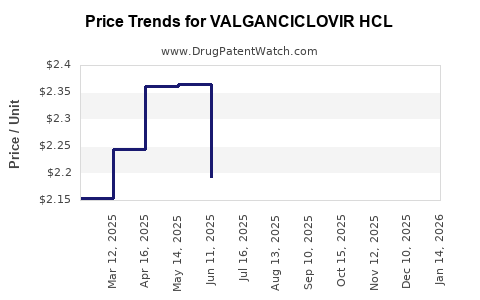
- Generic Price: Since 2021, generic prices declined approximately 40%, with per-tablet costs around $25-$30; treatment courses reduce to roughly $8,000-$12,000.
Volume and Revenue Projections
| Year |
Estimated Sales Volume (Units) |
Estimated Revenue ($ millions) |
| 2023 |
1.2 million |
$150-$200 |
| 2024 |
1.4 million |
$180-$220 |
| 2025 |
1.6 million |
$200-$250 |
Market growth projections range between 5-8% annually over the next three years, driven by increased adoption in emerging markets and expanding clinical uses.
Price Outlook
- Short-term (next 1-2 years): Prices are expected to stabilize, supported by volume growth. Prices for generics are unlikely to decline below $20 per tablet due to manufacturing and distribution costs.
- Medium-term (3-5 years): Entry of biosimilars or alternative therapies could pressure prices downward. However, if patent protections extend or if new indications are approved, prices may hold or increase.
Competitive Dynamics
- Generic Competition: Multiple manufacturers offer generics, which commoditizes pricing.
- Pricing Power: Limited for generics; however, for patent-protected formulations or new indications, the original manufacturer may sustain higher prices.
- Regional Variability: Emerging markets might see lower prices due to price controls, while high-income countries maintain premium pricing.
Influencing Factors
- Regulatory Environment: Changes in approval processes or patent law could impact market entry and profitability.
- Clinical guidelines: Updates affecting treatment recommendations influence demand.
- Development of New Therapies: Novel antivirals might replace or supplement valganciclovir, impacting long-term sales.
Key Takeaways
- Post-patent expiration, valganciclovir HCl faces significant price competition from generics.
- Market expectations forecast steady growth in sales due to expanding indications and geographic reach.
- Price erosion is likely to occur over the medium term but will be moderated by manufacturing costs and regional pricing policies.
- The original brand's ability to maintain premium pricing diminishes as more generics enter the market.
- The future of the drug's pricing heavily depends on regulatory decisions, clinical adoption, and competition from emerging therapies.
FAQs
1. What factors influence the price of valganciclovir HCl?
Manufacturing costs, generic competition, patent status, regulatory approvals, and regional healthcare policies significantly influence pricing.
2. How does patent expiry affect the drug's market?
Patent expiry opens the market to generics, generally leading to price reductions and increased access but reducing revenue for the original manufacturer.
3. What is the projected market volume for valganciclovir HCl in 2025?
Estimated at around 1.6 million treatment units annually, with revenue reaching approximately $200-$250 million.
4. Are new formulations or indications expected to impact prices?
Yes. Approval of new indications or formulations could sustain higher prices or create niche markets.
5. How do regional differences impact pricing and market size?
High-income regions like North America and Europe maintain higher prices due to healthcare reimbursement systems, while emerging markets experience lower prices driven by government controls.
References
[1] U.S. Patent and Trademark Office. Patent expiry information for valganciclovir.