Share This Page
Drug Price Trends for TRIHEXYPHENIDYL
✉ Email this page to a colleague
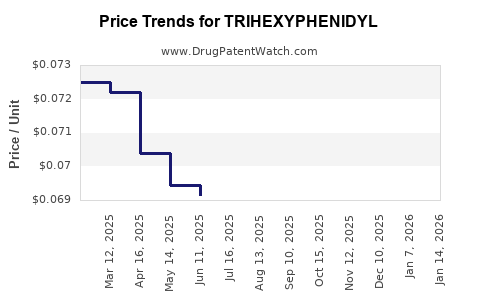
Average Pharmacy Cost for TRIHEXYPHENIDYL
| Drug Name | NDC | Price/Unit ($) | Unit | Date |
|---|---|---|---|---|
| TRIHEXYPHENIDYL 2 MG TABLET | 00591-5335-01 | 0.08713 | EACH | 2026-06-17 |
| TRIHEXYPHENIDYL 2 MG TABLET | 00591-5335-10 | 0.08713 | EACH | 2026-06-17 |
| TRIHEXYPHENIDYL 2 MG TABLET | 69452-0241-20 | 0.08713 | EACH | 2026-06-17 |
| TRIHEXYPHENIDYL 2 MG TABLET | 69452-0241-32 | 0.08713 | EACH | 2026-06-17 |
| >Drug Name | >NDC | >Price/Unit ($) | >Unit | >Date |
Best Wholesale Price for TRIHEXYPHENIDYL
| Drug Name | Vendor | NDC | Count | Price ($) | Price/Unit ($) | Unit | Dates | Price Type |
|---|---|---|---|---|---|---|---|---|
| TRIHEXYPHENIDYL HCL 5MG TAB | Golden State Medical Supply, Inc. | 51407-0266-01 | 100 | 22.66 | 0.22660 | EACH | 2023-06-23 - 2028-06-14 | FSS |
| TRIHEXYPHENIDYL HCL 5MG TAB | Golden State Medical Supply, Inc. | 51407-0266-01 | 100 | 15.19 | 0.15190 | EACH | 2023-08-04 - 2028-06-14 | FSS |
| TRIHEXYPHENIDYL HCL 2MG/5ML ELIXIR | Golden State Medical Supply, Inc. | 61748-0054-16 | 473ML | 12.65 | 0.02674 | ML | 2023-06-15 - 2028-06-14 | FSS |
| TRIHEXYPHENIDYL HCL 2MG TAB | Golden State Medical Supply, Inc. | 51407-0265-01 | 100 | 13.98 | 0.13980 | EACH | 2023-06-15 - 2028-06-14 | FSS |
| >Drug Name | >Vendor | >NDC | >Count | >Price ($) | >Price/Unit ($) | >Unit | >Dates | >Price Type |
Trihexyphenidyl Market Analysis and Price Projections
This report analyzes the market for trihexyphenidyl, a synthetic anticholinergic drug primarily used to treat Parkinson's disease symptoms and drug-induced extrapyramidal side effects. The analysis includes current market dynamics, patent landscape, and price projections.
What is Trihexyphenidyl?
Trihexyphenidyl, marketed under brand names such as Artane, is a medication that blocks muscarinic acetylcholine receptors in the brain. Its primary therapeutic applications are:
- Parkinson's Disease: Management of tremor, rigidity, and bradykinesia. It is often used as an adjunct therapy, particularly in younger patients where tremor is the dominant symptom.
- Drug-Induced Extrapyramidal Symptoms (EPS): Treatment of movement disorders (e.g., dystonia, akathisia, pseudoparkinsonism) caused by antipsychotic medications.
Trihexyphenidyl is available in oral tablet and elixir formulations. Dosing varies based on patient response and the specific condition being treated, typically ranging from 5 mg to 15 mg daily, divided into doses.
Current Market Landscape
The market for trihexyphenidyl is characterized by its established therapeutic role, generic availability, and increasing competition from newer drug classes.
Therapeutic Use and Patient Population
The primary patient population for trihexyphenidyl includes individuals diagnosed with Parkinson's disease and those undergoing treatment with dopamine-blocking antipsychotics. The prevalence of Parkinson's disease is increasing globally due to an aging population. The World Health Organization (WHO) estimates that over 10 million people worldwide have Parkinson's disease, with approximately 1% of individuals over 60 years old affected [1]. Drug-induced parkinsonism is a common side effect of antipsychotic medications, affecting a significant percentage of patients treated with these drugs, particularly in the first-generation antipsychotic class.
Competitive Landscape
Trihexyphenidyl faces competition from several drug classes:
- Other Anticholinergics: Benztropine (Cogentin) is another anticholinergic frequently used for similar indications.
- Dopaminergic Agents: Levodopa/carbidopa (Sinemet) and dopamine agonists are cornerstone therapies for Parkinson's disease, offering broader symptom management.
- NMDA Receptor Antagonists: Amantadine can be used for Parkinson's disease and drug-induced dyskinesias.
- Newer Antipsychotics: Atypical antipsychotics often have a lower incidence of EPS, reducing the need for adjunctive anticholinergic treatment in some patients.
The shift towards newer antipsychotics with improved side-effect profiles and the comprehensive symptomatic relief offered by dopaminergic agents in Parkinson's disease have impacted the demand for trihexyphenidyl. However, its effectiveness in managing specific symptoms like tremor and its low cost as a generic medication maintain its relevance.
Market Size and Growth Drivers
Accurate, up-to-date global market size figures for trihexyphenidyl are not widely published due to its generic status and inclusion in broader therapeutic category reports. However, based on prescription data and sales of generic formulations, the global market is estimated to be in the tens to low hundreds of millions of U.S. dollars annually.
Growth Drivers:
- Aging Global Population: Increased prevalence of age-related neurodegenerative diseases, including Parkinson's.
- Continued Use of Antipsychotics: While newer agents are prevalent, older generation antipsychotics are still prescribed, leading to drug-induced EPS.
- Cost-Effectiveness: As a generic drug, trihexyphenidyl offers a low-cost treatment option, particularly valuable in healthcare systems with budget constraints or for uninsured populations.
Market Restraints:
- Side Effect Profile: Anticholinergic side effects (dry mouth, constipation, blurred vision, cognitive impairment) limit its use, especially in elderly patients.
- Availability of Newer Therapies: Superior efficacy and better tolerability of newer Parkinson's treatments and atypical antipsychotics.
- Off-Label Use Decline: Reduced off-label prescribing for conditions where efficacy is less established.
Patent Landscape
Trihexyphenidyl is an older drug, with its original patents having long expired. Its primary market is now dominated by generic manufacturers.
Original Patents and Expiry
Trihexyphenidyl hydrochloride was first synthesized and patented in the 1940s. The original composition of matter patents and subsequent formulation patents have long since expired. This has allowed for widespread generic production.
Generic Approvals and Market Entry
The U.S. Food and Drug Administration (FDA) and other global regulatory bodies have approved multiple generic versions of trihexyphenidyl hydrochloride tablets and solutions. The first generic approvals date back to the 1970s and 1980s. Key generic manufacturers include:
- Teva Pharmaceuticals
- Mylan (now Viatris)
- Dr. Reddy's Laboratories
- Aurobindo Pharma
- Sun Pharmaceutical Industries
These companies contribute to a competitive generic market. The absence of new patentable innovations for trihexyphenidyl means that market exclusivity is not a factor for this drug.
Potential for New Patents
- New Formulations: While unlikely to generate significant market share against established generics, novel delivery systems or extended-release formulations could theoretically be patented, though the commercial incentive is low.
- New Indications: Repurposing trihexyphenidyl for new therapeutic uses could lead to new patents, but extensive clinical trials would be required, representing a significant R&D investment with uncertain outcomes. Currently, there are no major new indications under active clinical investigation for trihexyphenidyl.
The patent landscape is essentially closed for trihexyphenidyl, with the market driven by manufacturing efficiency and distribution networks rather than intellectual property protection.
Price Projections
The price of trihexyphenidyl is primarily influenced by the generic drug market dynamics, including manufacturing costs, competition among generic suppliers, and pharmacy benefit manager (PBM) formularies.
Current Pricing Trends
Trihexyphenidyl is one of the most affordable medications for its therapeutic class. Prices vary by dosage strength (e.g., 2 mg, 5 mg) and formulation (tablet vs. elixir), as well as by manufacturer and geographic market.
- Wholesale Acquisition Cost (WAC): For generic trihexyphenidyl tablets (e.g., 5 mg), WAC typically ranges from $0.10 to $0.50 per tablet [2, 3].
- Elixir Formulations: The price for elixir formulations, often sold in 473 mL bottles, can range from $15 to $40 per bottle [3].
- Insurance Coverage: Most insurance plans cover generic trihexyphenidyl, often with low co-pays. Out-of-pocket costs for patients with insurance are typically under $10 for a month's supply of tablets.
- Cash Prices: For uninsured individuals or those without prescription drug coverage, the cash price for a month's supply of tablets is generally between $10 and $30.
Factors Influencing Future Pricing
- Raw Material Costs: Fluctuations in the cost of active pharmaceutical ingredients (APIs) and excipients can impact manufacturing costs and, subsequently, prices. However, for older, widely produced generics, these fluctuations are typically minor.
- Competition Among Generic Manufacturers: The presence of numerous generic suppliers keeps prices low. Any consolidation among manufacturers or supply chain disruptions could lead to temporary price increases.
- Demand and Prescription Volume: While demand is relatively stable due to its established use, significant shifts in prescribing patterns (e.g., increased adoption of newer Parkinson's therapies) could lead to a gradual decrease in volume, potentially impacting the marginal profitability for manufacturers.
- Regulatory Landscape: Changes in manufacturing regulations or quality control requirements could increase production costs. However, for a well-established drug like trihexyphenidyl, such changes are unlikely to be significant drivers of price volatility.
- Pharmacy Benefit Manager (PBM) Negotiations: PBMs negotiate prices with generic manufacturers. Their influence can lead to rebates and further drive down net prices, but this primarily affects manufacturer margins rather than list prices.
Price Projections (Next 5 Years)
Given the factors above, the price of trihexyphenidyl is projected to remain stable to slightly declining over the next five years.
- Tablets: The average price per tablet for generic trihexyphenidyl is projected to remain in the $0.10 to $0.50 range. Price increases are unlikely unless significant supply chain disruptions occur. A slight downward trend might be observed due to intense competition.
- Elixir: The price for elixir formulations is expected to follow a similar trend, remaining within the $15 to $40 per bottle range.
Scenario Analysis:
- Base Case (High Probability): Continued stable pricing driven by generic competition. Minor price fluctuations due to manufacturing efficiencies or modest increases in raw material costs.
- Slight Decline Scenario (Moderate Probability): Increased competition among manufacturers, coupled with a potential marginal decrease in prescription volume as newer therapies gain traction, could lead to a slight downward pressure on prices.
- Moderate Increase Scenario (Low Probability): Significant disruptions in API sourcing or a major consolidation among key generic manufacturers could lead to temporary price spikes, but the availability of multiple alternatives would likely limit sustained high prices.
The overall outlook is for continued affordability and accessibility of trihexyphenidyl, making it a cost-effective option for its approved indications.
Key Takeaways
- Trihexyphenidyl is an established generic anticholinergic drug used for Parkinson's disease and drug-induced extrapyramidal symptoms.
- Its patent landscape is closed, with market dominance by generic manufacturers.
- The drug is highly affordable, with tablet prices averaging $0.10-$0.50.
- Pricing is expected to remain stable or slightly decline over the next five years due to ongoing generic competition and the absence of patent-driven price increases.
- The aging population is a driver for its continued demand, while newer therapeutic alternatives represent a market restraint.
Frequently Asked Questions
-
What is the primary indication for which trihexyphenidyl is currently prescribed? Trihexyphenidyl is primarily prescribed for the management of symptoms associated with Parkinson's disease, specifically tremor and rigidity, and to counteract drug-induced extrapyramidal side effects caused by antipsychotic medications.
-
Are there any new patent applications or research activities related to novel uses of trihexyphenidyl? As of current data, there are no significant patent applications or major research initiatives focused on discovering novel indications or significantly improved formulations for trihexyphenidyl that would likely impact its market exclusivity. Its market is mature and generic-driven.
-
How do the costs of trihexyphenidyl compare to newer treatments for Parkinson's disease? Trihexyphenidyl is substantially more cost-effective than newer disease-modifying therapies or more advanced symptomatic treatments for Parkinson's disease. Its generic status makes it one of the most affordable treatment options available.
-
What are the main factors contributing to the low price of trihexyphenidyl? The primary factors contributing to trihexyphenidyl's low price are its long-standing patent expiry, widespread generic availability from multiple manufacturers, mature manufacturing processes, and competition among generic suppliers.
-
What is the expected impact of the increasing prevalence of atypical antipsychotics on the demand for trihexyphenidyl? The increasing use of atypical antipsychotics, which generally have a lower propensity to cause extrapyramidal side effects compared to older generation antipsychotics, is expected to exert downward pressure on the demand for trihexyphenidyl for drug-induced movement disorders.
Citations
[1] World Health Organization. (2023). Parkinson disease. Retrieved from https://www.who.int/news-room/fact-sheets/detail/parkinson-disease
[2] GoodRx. (n.d.). Trihexyphenidol prices, coupons, and patient assistance programs. Retrieved from https://www.goodrx.com/trihexyphenidyl
[3] Drugs.com. (n.d.). Artane (trihexyphenidyl) pricing, coupons, and discounts. Retrieved from https://www.drugs.com/price-guide/artane
More… ↓
