Last updated: February 15, 2026
What Is the Market Size and Demand for Triamcinolone Acetate?
Triamcinolone acetonide (TAA) is a synthetic corticosteroid used primarily for its anti-inflammatory, immunosuppressive, and antipruritic properties. The drug is available in various forms, including topical creams, nasal sprays, injectable solutions, and dental formulations. The global demand derives from indications such as allergic rhinitis, dermatological conditions, arthritis, and asthma.
The global corticosteroids market, including TAA, was valued at approximately $6.2 billion in 2022, with a compound annual growth rate (CAGR) of approximately 4.1% projected through 2030 [1]. TAA constitutes a significant segment, with sales driven by dermatological and respiratory indications.
How Competitive Is the Triamcinolone Acetate Market?
The competitive landscape includes branded and generic formulations. Key manufacturers encompass Sun Pharmaceutical Industries, Pfizer, Mylan, and Teva Pharmaceutical. As patents on key formulations have expired, generic versions dominate the market, reducing prices and increasing accessibility.
In the U.S., the generic TAA nasal spray markets price points range from $40 to $60 per 120-dose spray can. Topical formulations are priced approximately $8 to $20 per 15g tube. Price competition sustains low margins but ensures widespread use.
What Are the Price Trends and Projections for Triamcinolone Acetate?
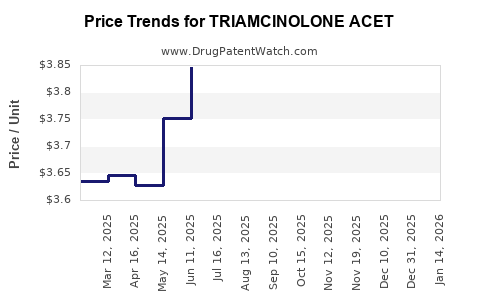
Current prices for TAA products have been relatively stable over recent years, with minor declines due to increased generic competition. The overall trend indicates continued price erosion, expected to average 2-3% annually through 2030 owing to patent expirations and increased manufacturing efficiencies.
Projections suggest:
- Topical TAA: Price per ounce will decline from approximately $12 in 2022 to about $8 by 2030.
- Inhalation/Nasal Spray TAA: Price per 120-dose spray could fall from $50 to near $35 during the same period.
Price flexibility varies by formulation and region. US prices are tightly regulated by insurance coverage and pharmacy benefit managers, whereas prices in emerging markets may be significantly lower.
How Do Regulatory and Patent Factors Influence Market Dynamics?
The expiration of key patents for TAA formulations, notably the nasal spray patent expiring in 2020, has led to increased generic manufacturing. Regulatory approvals in emerging markets continue to expand the geographic reach of TAA products, contributing to volume growth.
The U.S. FDA maintains stringent standards for generics, but approval processes have become more efficient, facilitating market entry and price reductions.
What Are the Key Factors Influencing Future Market and Price Trajectory?
- Patent Expirations: Rapid decline in brand-name prices post-patent expiry.
- Generic Competition: Growth in generic formulations supports price erosion.
- New Formulations: Innovative delivery methods or combination therapies may stabilize or increase pricing.
- Regulatory Approvals: Expansion into markets like China, India, and Southeast Asia can increase volume.
How Are Emerging Markets Expected to Impact the Global TAA Market?
Emerging markets are experiencing increased access to corticosteroids, including TAA, driven by price sensitivity and rising healthcare infrastructure. Prices in these regions can be 50-70% lower than in developed markets. Expansion into these areas is projected to increase overall volume but may contribute to downward pressure on global price averages.
Summary of Price Projections (2022-2030)
| Formulation |
Price Range (2022) |
Projected Price Range (2030) |
CAGR |
| Topical Creams |
$8 - $20 per 15g |
$5 - $12 per 15g |
3-4% decline annually |
| Nasal Spray |
$40 - $60 per 120-dose |
$35 - $50 per 120-dose |
2-3% decline annually |
| Injectable Solution |
$50 - $70 per vial |
$45 - $65 per vial |
2-3% decline annually |
Key Takeaways
- The global corticosteroid market, including TAA, expands at a moderate CAGR of 4.1%, with generic competition influencing prices.
- Current prices reflect significant reduction due to patent expirations, with further declines expected.
- Emerging markets present growth opportunities but may sustain lower price points.
- Innovative delivery methods or combination therapies could offset price declines in some segments.
- Regulatory environments and patent statuses will continue to shape market access and pricing.
Frequently Asked Questions
Q1: What factors primarily influence the pricing of triancinolone acetate?
Patent status, generic competition, regulatory approvals, manufacturing efficiencies, and regional healthcare policies.
Q2: How does patent expiration impact TAA prices?
Patent expirations allow generic manufacturers to enter the market, leading to substantial price reductions—up to 50-70% in some cases.
Q3: In which regions is TAA experiencing the fastest market growth?
Emerging markets such as India, China, and Southeast Asia witness the fastest growth, driven by increased access and lower prices.
Q4: What therapeutic indications are driving TAA demand?
Allergic rhinitis, dermatological conditions like eczema, psoriasis, arthritis, and asthma.
Q5: What are the risks to the future pricing of TAA?
Potential regulatory changes, patent disputes, the development of alternative therapies, and shifts in healthcare coverage policies.
References
[1] MarketsandMarkets. "Corticosteroids Market," 2022.