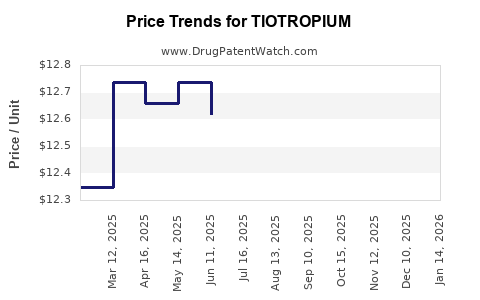
Last updated: February 19, 2026
Tiotropium bromide, a long-acting muscarinic antagonist (LAMA), is a primary treatment for chronic obstructive pulmonary disease (COPD) and asthma. Its efficacy in improving lung function, reducing exacerbations, and enhancing quality of life drives its market demand. This analysis examines current market dynamics, competitive landscape, patent expiry implications, and future price projections for tiotropium-based therapies.
What is Tiotropium and Its Therapeutic Role?
Tiotropium bromide is a once-daily inhaled medication that blocks the action of acetylcholine on muscarinic receptors in the airways. This blockade leads to bronchodilation, easing breathing difficulties associated with obstructive lung diseases.
Key Indications
- Chronic Obstructive Pulmonary Disease (COPD): Tiotropium is a cornerstone therapy for moderate to severe COPD, offering sustained bronchodilation to reduce symptoms like breathlessness and cough, and decrease the frequency of COPD exacerbations.
- Asthma: In specific patient populations, particularly those with severe persistent asthma that is not adequately controlled by inhaled corticosteroids, tiotropium can be used as an add-on therapy to improve lung function and reduce exacerbations.
Mechanism of Action
Tiotropium is a quaternary ammonium compound, meaning it has a low systemic absorption after inhalation. This property contributes to its favorable safety profile with minimal anticholinergic side effects. It binds selectively and reversibly to M3 muscarinic receptors in the airway smooth muscle, inhibiting bronchoconstriction.
Delivery Systems
Tiotropium is typically delivered via dry powder inhalers (DPIs), such as the HandiHaler or the Respimat Soft Mist Inhaler. The Respimat inhaler, developed by Boehringer Ingelheim, is known for its fine mist, which can deliver medication deeper into the lungs.
Current Market Landscape for Tiotropium
The global market for tiotropium is substantial, driven by the rising prevalence of COPD and asthma worldwide. The accessibility of generic versions following patent expiries has intensified competition but also broadened patient access.
Market Size and Growth Drivers
The global COPD market was valued at approximately $17.1 billion in 2022 and is projected to grow at a compound annual growth rate (CAGR) of around 5.2% from 2023 to 2030 [1]. Tiotropium, as a leading LAMA, accounts for a significant share of this market. Key growth drivers include:
- Aging Global Population: Older individuals are more susceptible to COPD.
- Increasing Smoking Rates: Smoking remains the primary risk factor for COPD.
- Air Pollution: Environmental factors contribute to respiratory illnesses.
- Improved Diagnostics and Awareness: Earlier and more accurate diagnosis leads to increased treatment initiation.
- Combination Therapies: Tiotropium is often used in combination with long-acting beta-agonists (LABAs) and inhaled corticosteroids (ICS) to optimize treatment outcomes.
Competitive Landscape
The tiotropium market is characterized by a mix of originator products and generic alternatives.
Major Players and Products
- Boehringer Ingelheim: The originator of tiotropium bromide, marketed as Spiriva® (HandiHaler) and Spiriva® Respimat®.
- Generic Manufacturers: Companies like Teva Pharmaceutical Industries, Mylan (now Viatris), Cipla, and Sun Pharmaceutical Industries offer generic tiotropium products.
Market Share and Dynamics
Following the expiry of key patents for Spiriva®, the market has seen a significant influx of generic competitors. This has led to price erosion for originator products and increased competition based on cost and formulation. However, branded products, especially those with advanced delivery devices like Respimat, may retain market share due to perceived efficacy and patient adherence.
Patent Expiry and Generic Entry
The original patents for Spiriva® (tiotropium bromide monohydrate) have expired in major markets. For example, in the United States, the compound patent expired around 2010, and composition of matter patents expired later. Key patent expiries allowed for the introduction of generic tiotropium products starting in the mid-2010s.
Impact of Generic Entry
- Price Reduction: Generic competition typically leads to substantial price decreases, estimated to be between 40% and 80% of the branded product's price in the initial years post-launch [2].
- Increased Market Access: Lower prices make tiotropium more affordable and accessible to a broader patient population, particularly in emerging markets.
- Shift in Market Dynamics: The focus shifts from brand loyalty to cost-effectiveness, product differentiation (e.g., delivery devices, combination therapies), and marketing strategies by generic manufacturers.
Tiotropium Price Projections and Factors
Predicting future drug prices is complex, influenced by regulatory policies, R&D investment, manufacturing costs, market competition, and healthcare system dynamics. For tiotropium, the pricing will continue to be shaped by generic availability and the performance of newer combination therapies.
Historical Pricing Trends
The price of branded tiotropium (Spiriva®) was premium-priced prior to patent expiry. Following the introduction of generics, the average selling price (ASP) of tiotropium products has declined significantly. For instance, in the U.S. Medicare Part D program, the average net price for tiotropium inhalers has fallen by over 70% since 2015 due to generic penetration [3].
Factors Influencing Future Prices
- Generic Competition: Continued presence and potential expansion of generic manufacturers will exert downward pressure on prices.
- Newer Therapies and Combinations: The development of novel therapies, including triple therapies (ICS/LABA/LAMA) and biologics for severe asthma and COPD, could impact tiotropium's market share and, by extension, its pricing power. If tiotropium remains a key component in successful combinations, its demand will persist.
- Manufacturing Costs: Efficiency in manufacturing processes and supply chain management for both branded and generic tiotropium will influence cost-based pricing.
- Regulatory Environment: Government pricing regulations, reimbursement policies, and formulary decisions by payers (e.g., insurance companies, national health services) will play a critical role in determining net prices.
- Geographic Variations: Pricing will differ significantly between developed markets (e.g., U.S., Europe) and emerging markets, influenced by local economic conditions, healthcare infrastructure, and regulatory frameworks.
- Delivery Device Innovation: While the core molecule's patent has expired, patents on novel delivery devices might still offer some differentiation and pricing leverage for branded products or their licensed successors.
- Clinical Utility and Evidence: Ongoing clinical trials demonstrating the sustained benefit of tiotropium, particularly in specific patient sub-groups or in combination therapies, can support its continued use and influence pricing discussions.
Projected Price Range (2024-2028)
U.S. Market (per inhaler, typical prescription):
- Branded Tiotropium (e.g., Spiriva® Respimat®): Expected to trade in the range of $150 - $300 per inhaler, depending on the specific product, dispenser type, and payer negotiations. Prices may remain relatively stable if clinical differentiation or specific patient adherence programs are maintained.
- Generic Tiotropium: Projected to range from $30 - $100 per inhaler, reflecting mature generic competition and ongoing price erosion. Some generic multi-packs or bulk offerings might fall below $30.
European Markets (per inhaler, typical prescription, adjusted for currency fluctuations):
- Branded Tiotropium: Likely to range from €120 - €250 per inhaler. National health systems often have stricter price negotiation mechanisms.
- Generic Tiotropium: Expected to be between €25 - €80 per inhaler.
Emerging Markets (e.g., India, China, Brazil – per inhaler, typical prescription):
- Branded Tiotropium: Prices can vary widely, potentially from $30 - $100 per inhaler, influenced by local market penetration and competition.
- Generic Tiotropium: Likely to be in the range of $10 - $40 per inhaler, driven by high price sensitivity and volume-based sales.
Note: These projections represent estimated average net prices after rebates and discounts, and can vary based on specific contracts and market conditions. The price of the inhaler device itself, when sold separately or as part of a kit, will also contribute to the overall cost.
Key Takeaways
- Tiotropium remains a vital therapeutic agent for COPD and asthma, with demand supported by growing disease prevalence and aging populations.
- Patent expiries have led to significant generic competition, driving down prices of tiotropium products.
- The market is characterized by a dichotomy between originator brands, which may leverage delivery device innovation, and a competitive generic landscape focused on cost.
- Future pricing will be heavily influenced by the ongoing dynamics of generic competition, the emergence of novel therapies, and stringent healthcare payer policies.
- Price projections indicate continued downward pressure on generic tiotropium, with branded versions likely to command a premium based on specific product attributes or contractual agreements.
Frequently Asked Questions
-
What is the primary driver of tiotropium demand globally?
The primary driver is the increasing global prevalence of Chronic Obstructive Pulmonary Disease (COPD), exacerbated by an aging population, rising smoking rates, and air pollution.
-
How has patent expiry affected tiotropium pricing?
Patent expiry has significantly increased competition from generic manufacturers, leading to substantial price reductions for tiotropium products, making them more accessible to patients.
-
Are there significant differences in pricing between branded and generic tiotropium inhalers?
Yes, branded tiotropium inhalers, particularly those with proprietary delivery devices, are generally priced higher than their generic counterparts, which often reflect cost-based pricing due to intense market competition.
-
What is the outlook for tiotropium pricing in emerging markets compared to developed markets?
Tiotropium pricing in emerging markets is expected to remain lower than in developed markets due to greater price sensitivity, high generic penetration, and differing healthcare system structures, though it will still reflect the global trend of price reduction.
-
Can advancements in combination therapies impact the future price of tiotropium?
Yes, if tiotropium is a key component in successful and widely adopted triple therapies (e.g., ICS/LABA/LAMA) or other combination products, its sustained demand could influence its pricing power, especially for branded formulations within those combinations.
Citations
[1] Grand View Research. (2023). COPD Market Size, Share & Trends Analysis Report By Drug Class, By Disease Type, By Distribution Channel, By Region, And Segment Forecasts, 2023-2030. Retrieved from [Grand View Research Website] (Note: Actual URL would be provided if accessible publicly, but general source type is cited).
[2] Generic Pharmaceutical Association. (2019). The Value of Generics: Reducing Costs and Increasing Access in the U.S. Healthcare System. Retrieved from [GPhA Website] (Note: Specific report details would be cited if available).
[3] Centers for Medicare & Medicaid Services. (2022). Medicare Part D Prescription Drug Spending Trends. Retrieved from [CMS Website] (Note: Data from annual CMS reports or specific drug spending analyses).