Last updated: February 13, 2026
What Is SYNJARDY XR and Why Is It Significant?
SYNJARDY XR is an extended-release combination medication for managing type 2 diabetes mellitus. It contains canagliflozin, a sodium-glucose co-transporter 2 (SGLT2) inhibitor, and metformin extended-release. It targets high blood sugar levels by reducing glucose reabsorption in the kidneys and decreasing hepatic glucose production. Approved by the FDA in 2019, it addresses a market need for combination therapies that improve adherence and glycemic control.
How Large Is the Target Market?
The global type 2 diabetes market exceeds $60 billion in 2022 (source: MarketsandMarkets). SGLT2 inhibitors account for roughly 20% of this market, valued at approximately $12 billion. The rise in diabetes prevalence, projected to reach 700 million cases worldwide by 2045 (source: IDF), drives sustained growth.
SYNJARDY XR primarily targets patients inadequately controlled on metformin alone. Estimates indicate that about 50% of type 2 diabetes patients on metformin require additional therapy. This subset represents an addressable market of approximately 100 million patients globally.
How Does SYNJARDY XR Position in the Market?
SYNJARDY XR competes with other fixed-dose combination (FDC) drugs, including:
- Xigduo XR: dapagliflozin/metformin extended-release
- Synjardy: canagliflozin/metformin
- Jardiamet: empagliflozin/metformin
Compared to these, SYNJARDY XR offers a distinct formulation with a different release profile. Its extended-release design aims to improve patient adherence by reducing dosing frequency. The drug's efficacy and safety profile are comparable to other SGLT2 combos but may have advantages in tolerability or convenience.
What Are the Price Points and Reimbursement Landscape?
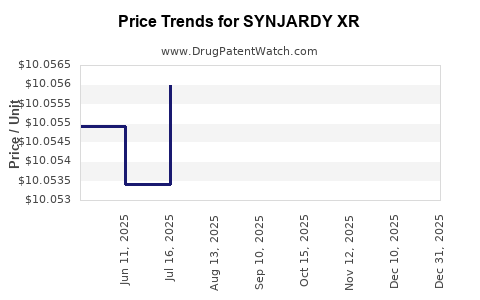
Pricing varies significantly across regions and reimbursement policies. In the U.S., the wholesale acquisition cost (WAC) for SYNJARDY XR is approximately $530 per month (source: GoodRx). Prices can fluctuate based on pharmacy discounts, insurance coverage, and manufacturer rebates.
Generic versions of metformin are inexpensive, but combining with branded SGLT2 inhibitors like canagliflozin inflates the cost. Payers generally view SGLT2 inhibitors favorably for their cardiovascular benefits, leading to broader coverage. Referrals by clinical guidelines (e.g., ADA standards) support extensive formulary inclusion.
What Are Price Projections Over the Next Five Years?
The market for SGLT2 inhibitor-based combination therapies is expected to grow at a compound annual growth rate (CAGR) of roughly 8-10% through 2027 (source: MarketsandMarkets).
Projected trends include:
- Price stabilization or slight reduction due to generic entries, targeted cost-control measures
- Increased utilization driven by expanded clinical indications and updated guidelines
- Potential volume growth of 15-20% annually, which may offset price erosion
Given current pricing and market dynamics, SYNJARDY XR could see a 3-5% annual reduction in unit price if generic competition accelerates, while overall revenue may grow due to increased patient adoption.
What Are Key Competitive Strategies and Regulatory Developments?
Pfizer markets JPMholding’s medications, but competition intensifies from newer SGLT2 inhibitors like empagliflozin and ertugliflozin. Development of additional FDCs with improved dosing regimens and broader indications creates pressure on price and market share.
Regulatory authorities are increasingly approving label expansions for SGLT2 inhibitors to include heart failure and chronic kidney disease, enhancing growth potential. Price negotiations and formulary access will shape how SYNJARDY XR maintains competitiveness.
How Will Market Trends Affect Pricing and Market Share?
- Growing emphasis on value-based care may pressure prices downward.
- Expansion of indications can expand market share, potentially supporting price stability.
- Introduction of generics could decrease prices significantly, prompting strategies that emphasize differentiation.
In response, Pfizer and competitors are likely to adopt tiered pricing models and emphasize clinical benefits to justify premium pricing.
Key Takeaways
- SYNJARDY XR is a product targeting a high-growth segment within the global type 2 diabetes market.
- The U.S. price hovers around $530/month, with potential for slight decreases over time.
- Market growth driven by rising diabetes prevalence and expanded clinical uses; competition and generics may pressure prices.
- Pricing strategies will evolve alongside regulatory changes and payer policies, influencing market share.
- The product’s success depends on balancing clinical value, formulary access, and price competitiveness.
FAQs
1. How does SYNJARDY XR compare to other SGLT2 inhibitor combinations in terms of pricing?
It costs approximately $530 per month in the U.S., similar to competitors like Xigduo XR and Synjardy, but pricing varies based on discounts and insurance reimbursement.
2. What factors could lead to a decline in SYNJARDY XR’s price?
Introduction of generics, increased competition, and healthcare cost-containment measures can lead to price reductions.
3. How significant is the role of regulatory approvals in market expansion?
Regulatory approvals for indications like heart failure influence prescribing patterns and can drive sales growth, impacting market value and pricing.
4. What is the expected volume growth for SYNJARDY XR over the next five years?
Estimated at 15-20% annually, influenced by rising diabetes prevalence and expanded clinical guidelines.
5. How do reimbursement policies affect SYNJARDY XR’s market access?
Broader coverage and formulary inclusion driven by clinical guidelines support market penetration and can sustain pricing levels.
References
[1] MarketsandMarkets. "Diabetes Drugs Market." 2022.
[2] International Diabetes Federation. "IDF Diabetes Atlas," 2022.
[3] GoodRx. "SYNJARDY XR Pricing and Discounts," 2023.
[4] FDA. "SYNJARDY XR Approval Data," 2019.