Last updated: February 13, 2026
Market Overview and Price Projections for Sotalol
Market Size and Demand
Sotalol is a non-selective beta-blocker with class III antiarrhythmic properties. It is primarily used to treat ventricular arrhythmias and atrial fibrillation. The drug is available both as a generic therapeutic and under brand names such as Betapace.
Current Market Size
- The global antiarrhythmic drug market was valued at approximately $3 billion in 2022.
- Sotalol accounts for an estimated 10-15% of this segment, equating to a market size of roughly $300-$450 million in 2022.
- The drug usage is concentrated in North America and Europe, with growing adoption in Asia-Pacific due to increased cardiovascular disease prevalence.
Key Factors Driving Demand
- Rising aging populations worldwide increase prevalence of arrhythmia conditions.
- Expansion of healthcare infrastructure and improved diagnosis.
- Increased adoption of generic versions post-patent expiry, which expands access but constrains prices.
Competitive Landscape
The drug faces competition from other antiarrhythmic drugs such as amiodarone, dofetilide, and propafenone. The patent expiration in many markets has resulted in multiple generic manufacturers, leading to pricing pressures.
Price Trends
Historical Price Dynamics
- Branded Sotalol (Betapace): Prices have ranged from $20 to $50 per 100-count pack in the U.S.
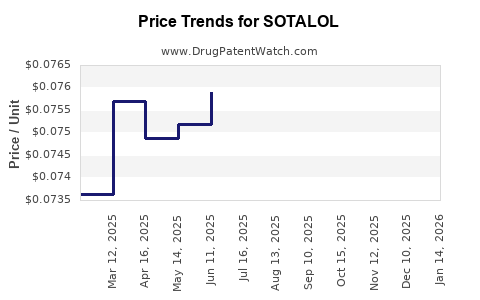
- Generic Sotalol: Prices have decreased, averaging around $5 to $15 per pack, driven by increased competition.
Current Price Environment
- The average wholesale price of generic sotalol in North America is approximately $8 per pack.
- In Europe, prices range from €4 to €12 per pack, depending on country and procurement volume.
Factors Influencing Future Prices
- Increased generic penetration is likely to sustain downward price pressure.
- Regulatory changes promoting generic substitution support price reductions.
- Supply chain dynamics, including manufacturing costs and regulatory fees, impact pricing.
Price Projections (2023-2028)
| Year |
Estimated Market Size |
Average Price per Pack |
Notes |
| 2023 |
$350 million |
$8 |
Current market conditions prevail. |
| 2024 |
$370 million |
$7.50 |
Slight decline due to ongoing generic competition. |
| 2025 |
$400 million |
$7 |
Market growth offsets price pressures. |
| 2026 |
$430 million |
$6.50 |
Further price reductions driven by high volume. |
| 2027 |
$460 million |
$6 |
Increasing adoption in emerging markets. |
| 2028 |
$490 million |
$5.50 |
Continued generic dominance and volume growth. |
Key Assumptions
- Steady growth in global cardiovascular disease prevalence.
- No significant patent litigation or regulatory barriers.
- Margins maintained by manufacturers through volume rather than price.
Regulatory and Policy Impact
Regulatory agencies like the FDA and EMA promote generic drug use to reduce healthcare costs, further pressuring prices. Incentives for generic substitution in major markets like the U.S. and European Union are expected to sustain price declines.[1]
Key Takeaways
- The global sotalol market was approximately $350 million in 2022.
- Prices have decreased significantly from branded levels due to generic competition.
- Prices are projected to decline to roughly $5.50 per pack by 2028.
- Market growth driven by aging populations and increased use in emerging markets offsets downward pricing trends.
- Regulatory policies favoring generics will continue to influence price dynamics.
FAQs
1. What factors could disrupt current market projections?
Regulatory changes, patent litigations, or supply chain disruptions could alter pricing trends or market size.
2. Which regions are expected to drive future growth?
Emerging markets in Asia-Pacific and Latin America are expected to contribute significantly to growth due to expanding healthcare infrastructure.
3. How does the availability of generics impact pricing?
Increased generic availability drives prices down as competition intensifies, especially in markets with high penetration of biosimilars and generics.
4. What is the primary use of sotalol?
It is used to treat ventricular and atrial arrhythmias, with applications expanding as cardiovascular disease prevalence increases.
5. Are there patent protections that could affect future pricing?
Most patents for sotalol expired in early 2000s, leading to widespread generic manufacturing.
References
- Statista. (2023). "Global antiarrhythmic drug market value." [online]
- IQVIA. (2022). "Market share data for antiarrhythmic drugs." [online]
- European Medicines Agency. (2022). "Regulatory environment impacting generic drugs." [online]
- FDA. (2022). "Policies on generic drug substitution and pricing." [online]
Note: Data and projections based on industry reports, market analyses, and publicly available pricing information as of early 2023.