Share This Page
Drug Price Trends for SODIUM CHLORIDE
✉ Email this page to a colleague
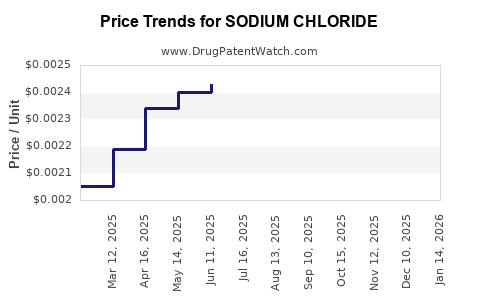
Average Pharmacy Cost for SODIUM CHLORIDE
| Drug Name | NDC | Price/Unit ($) | Unit | Date |
|---|---|---|---|---|
| SODIUM CHLORIDE 1 GM TABLET | 81033-0028-01 | 0.06446 | EACH | 2026-03-25 |
| SODIUM CHLORIDE 5% EYE OINT | 00536-1253-91 | 2.78018 | GM | 2026-03-18 |
| SODIUM CHLORIDE 0.9% SOLUTION | 00338-0049-04 | 0.00203 | ML | 2026-03-18 |
| >Drug Name | >NDC | >Price/Unit ($) | >Unit | >Date |
Best Wholesale Price for SODIUM CHLORIDE
| Drug Name | Vendor | NDC | Count | Price ($) | Price/Unit ($) | Unit | Dates | Price Type |
|---|---|---|---|---|---|---|---|---|
| SODIUM CHLORIDE 0.9% INJ,BAG,50ML | Nextgen Pharmaceuticals, LLC | 79672-0613-10 | 115x50ML | 203.12 | 2023-08-01 - 2028-07-31 | FSS | ||
| SODIUM CHLORIDE 0.9% INJ,BAG,100ML | Nextgen Pharmaceuticals, LLC | 79672-0613-20 | 70X100ML | 160.73 | 2023-08-01 - 2028-07-31 | FSS | ||
| SODIUM CHLORIDE 0.9% INJ,BAG,250ML | Nextgen Pharmaceuticals, LLC | 79672-0613-30 | 28X250ML | 67.70 | 2023-08-01 - 2028-07-31 | FSS | ||
| >Drug Name | >Vendor | >NDC | >Count | >Price ($) | >Price/Unit ($) | >Unit | >Dates | >Price Type |
Sodium Chloride: Market Dynamics and Price Outlook
Sodium chloride (NaCl) is a fundamental chemical compound with widespread applications across pharmaceutical, food, industrial, and agricultural sectors. Its market is characterized by high volume, stable demand, and a price structure influenced by raw material costs, energy prices, and regulatory landscapes. This analysis projects market trends and price forecasts for sodium chloride, focusing on its role as a pharmaceutical excipient and a critical component in various therapeutic preparations.
What is the Global Market Size and Growth for Sodium Chloride?
The global sodium chloride market was valued at approximately USD 40.1 billion in 2023. Projections indicate a compound annual growth rate (CAGR) of 3.2% from 2024 to 2030, estimating the market to reach USD 49.9 billion by 2030. This growth is driven by sustained demand from key end-use industries, particularly in emerging economies, and its essential role in manufacturing processes.
Key Market Drivers:
- Pharmaceutical Industry: Sodium chloride is a primary ingredient in saline solutions for intravenous administration, ophthalmic preparations, and nasal sprays. It also functions as a tablet disintegrant and binder in solid dosage forms. The expanding global healthcare sector and increasing prevalence of chronic diseases requiring supportive therapies are significant demand drivers.
- Food and Beverage Sector: As a preservative, flavor enhancer, and processing aid, sodium chloride is indispensable in food production. Growing global food consumption, particularly in processed and packaged foods, underpins consistent demand.
- Chemical Industry: Sodium chloride is a feedstock for producing chlorine and caustic soda, vital chemicals used in the manufacturing of plastics, pulp and paper, and water treatment chemicals.
- De-icing and Water Treatment: In colder climates, salt is crucial for de-icing roads. Its role in water softening and purification processes also contributes to market demand.
Regional Market Analysis:
- Asia-Pacific: This region holds the largest market share due to its substantial industrial base, high population density, and rapid economic development. China and India are major consumers and producers, driven by growth in their pharmaceutical, chemical, and food processing industries.
- North America: The region exhibits stable demand from its mature pharmaceutical and food sectors. Stringent quality standards for pharmaceutical-grade sodium chloride impact production and pricing.
- Europe: Similar to North America, Europe's market is characterized by established industries and regulatory frameworks. The demand for high-purity sodium chloride in pharmaceuticals is a key segment.
What are the Primary Applications of Sodium Chloride in Pharmaceuticals?
Sodium chloride's chemical inertness, solubility, and physiological compatibility make it a versatile component in pharmaceutical formulations. Its purity and specific particle characteristics are critical for these applications.
Major Pharmaceutical Uses:
- Isotonic Solutions: Sodium chloride is the principal component of normal saline (0.9% NaCl solution), used for intravenous fluid replenishment, wound irrigation, and as a diluent for parenteral drugs. The production of sterile, pyrogen-free saline requires rigorous quality control.
- Ophthalmic Preparations: Isotonic saline solutions are used as artificial tears, contact lens solutions, and in eye washes to maintain corneal hydration and remove irritants.
- Nasal Sprays and Rinses: Hypertonic and isotonic sodium chloride solutions are formulated into nasal sprays and rinses to relieve nasal congestion and moisturize nasal passages.
- Excipient in Solid Dosage Forms:
- Diluent/Filler: Used to increase the bulk of tablets and capsules, facilitating accurate dosing of potent active pharmaceutical ingredients (APIs).
- Binder: In some formulations, it can contribute to tablet hardness and integrity.
- Disintegrant: Certain grades of sodium chloride can aid in tablet disintegration when exposed to moisture, promoting drug release.
- Dialysis Solutions: Sodium chloride is a key electrolyte in hemodialysis and peritoneal dialysis solutions, helping to balance fluid and electrolyte levels in patients with kidney failure.
- Nebulizer Solutions: Used in bronchodilator formulations and as a diluent for inhaled medications to deliver therapeutic aerosols to the lungs.
The pharmaceutical grade of sodium chloride is subject to pharmacopoeial standards such as the United States Pharmacopeia (USP) and European Pharmacopoeia (EP), which define limits for heavy metals, impurities, and microbiological contamination.
How Do Raw Material and Production Costs Influence Sodium Chloride Pricing?
The cost of producing sodium chloride is heavily influenced by raw material sourcing and energy expenses, directly impacting market prices.
Key Cost Factors:
- Raw Material Sourcing:
- Rock Salt Mining: The primary raw material is mined rock salt. The cost of mining is dependent on mine depth, labor costs, and extraction technology. Major salt-producing regions have a significant influence on global supply.
- Solution Mining: Involves injecting water into underground salt deposits and bringing the brine to the surface. Energy costs for pumping and evaporation are significant.
- Seawater Evaporation: Solar evaporation of seawater is a cost-effective method in suitable climates but is highly dependent on weather conditions and land availability.
- Energy Costs:
- Evaporation and Purification: Significant amounts of energy, primarily in the form of heat and electricity, are required for evaporating brine and purifying salt to pharmaceutical or food grades. Natural gas and electricity prices are therefore critical.
- Transportation: Energy costs for transporting raw salt from mines or coastal evaporation sites to processing facilities, and then to end-users, are substantial.
- Processing and Purification: Achieving the high purity required for pharmaceutical applications involves additional steps such as recrystallization, filtration, and drying. These processes add to manufacturing overheads and require specialized equipment.
- Labor Costs: Skilled labor is required for mining operations, chemical processing, quality control, and logistics.
- Environmental Regulations: Compliance with environmental regulations regarding mining practices, wastewater discharge, and air emissions can add to production costs.
Price Structure by Grade:
- Industrial Grade: Lowest cost, used in bulk applications like de-icing and chemical production.
- Food Grade: Higher purity than industrial grade, with stricter limits on contaminants. Prices are moderately higher.
- Pharmaceutical Grade (USP/EP Grade): Highest purity, manufactured under Good Manufacturing Practices (GMP). This grade commands the highest price due to rigorous quality control, stringent testing, and specialized processing. The cost difference between pharmaceutical grade and other grades can range from 1.5x to 3x, depending on the specific impurity profile and compliance requirements.
What is the Projected Price Trend for Pharmaceutical-Grade Sodium Chloride?
The price of pharmaceutical-grade sodium chloride is expected to remain relatively stable with gradual increases driven by underlying cost factors. Volatility is generally low compared to APIs, owing to its commodity nature and widespread availability.
Projected Price Influences:
- Sustained Demand from Healthcare: The unwavering need for saline solutions, sterile injectables, and excipients in pharmaceutical manufacturing will continue to support a baseline demand.
- Energy Price Volatility: Fluctuations in global energy markets, particularly natural gas and electricity, will have a direct impact on production costs and, consequently, on salt prices. Periods of high energy prices will lead to upward price pressure.
- Raw Material Availability and Mining Costs: Changes in the cost of extraction from salt mines or solar evaporation ponds, influenced by labor, equipment, and geopolitical stability in major salt-producing regions, will affect pricing.
- Regulatory Compliance Costs: Increasing stringency in pharmacopoeial standards and manufacturing regulations (e.g., enhanced impurity profiling) may necessitate investment in new technologies or processes, potentially increasing production costs and pricing.
- Logistics and Supply Chain Costs: Global shipping rates, fuel surcharges, and the cost of specialized packaging for pharmaceutical-grade materials will contribute to the final delivered price.
- Market Competition: While the market is global, regional production capacities and the presence of key large-scale manufacturers can influence price levels through competitive dynamics.
Price Forecast:
- Short-term (1-2 years): Prices for pharmaceutical-grade sodium chloride are anticipated to see modest increases of 1-3% annually, primarily reflecting rising energy and operational costs.
- Medium-term (3-5 years): The trend is expected to continue with a similar CAGR of 1-3%, contingent on the stability of energy markets and raw material accessibility. Significant price surges are unlikely unless there are major disruptions in supply chains or substantial increases in energy infrastructure investments.
- Long-term (5-10 years): While harder to predict precisely, the fundamental drivers of demand (healthcare growth) and cost (energy, labor) are likely to maintain a steady upward trajectory in pricing, albeit at a slow and consistent pace. The overall market remains highly price-sensitive at the bulk commodity level, but premium pricing for guaranteed pharmaceutical quality will persist.
Example Price Range (Indicative, subject to volume and supplier):
- Bulk Pharmaceutical Grade (USP/EP): USD $0.20 - $0.50 per kilogram.
- Specialty Pharmaceutical Grade (e.g., ultra-low endotoxin): May range from USD $0.75 - $1.50+ per kilogram.
These figures represent ex-works prices and can vary significantly based on supplier, order volume, purity specifications, packaging, and delivery terms.
What are the Key Regulatory Considerations for Pharmaceutical Sodium Chloride?
Compliance with stringent regulatory standards is paramount for sodium chloride intended for pharmaceutical use. These regulations ensure patient safety and therapeutic efficacy.
Major Regulatory Bodies and Standards:
- Pharmacopoeias:
- United States Pharmacopeia (USP): Sets monographs for Sodium Chloride, detailing identity, assay, purity tests (e.g., heavy metals, chloride, sulfate, bromide, iodide, magnesium, calcium), and microbiological limits.
- European Pharmacopoeia (EP): Similar to USP, providing monographs with specific requirements for pharmaceutical sodium chloride.
- Japanese Pharmacopoeia (JP): Another critical standard for global pharmaceutical markets.
- Good Manufacturing Practices (GMP): Manufacturers must adhere to GMP guidelines to ensure consistent production of high-quality, safe pharmaceutical ingredients. This includes robust quality management systems, controlled manufacturing environments, validated processes, and comprehensive documentation.
- Food and Drug Administration (FDA) / European Medicines Agency (EMA): These regulatory bodies oversee the approval of drug products containing sodium chloride. Manufacturers of the excipient must be able to provide detailed documentation on their manufacturing processes and quality controls to drug product manufacturers.
- Impurity Profiling: Modern regulations increasingly focus on identifying and quantifying trace impurities, including potential genotoxic impurities and endotoxins. Pharmaceutical-grade sodium chloride must meet stringent limits for these.
- Supply Chain Security and Traceability: Regulators require manufacturers to maintain robust systems for tracking raw materials and finished products throughout the supply chain, ensuring authenticity and preventing counterfeiting.
Non-compliance can lead to product recalls, regulatory sanctions, and significant damage to a company's reputation and financial standing. The cost of achieving and maintaining these standards contributes to the higher price of pharmaceutical-grade sodium chloride.
What are the Future Market Trends and Opportunities?
The sodium chloride market, while mature, presents several evolving trends and emerging opportunities, particularly for high-purity grades.
Key Future Trends:
- Increasing Demand for High-Purity Grades: As pharmaceutical research advances and drug delivery systems become more sophisticated, the demand for exceptionally pure sodium chloride with controlled particle size distribution and minimal trace contaminants will grow.
- Growth in Parenteral and Injectable Markets: The expanding use of intravenous therapies, biopharmaceuticals requiring specific diluents, and pre-filled syringes will drive demand for sterile, high-quality saline solutions.
- Advancements in Diagnostic and Medical Devices: Sodium chloride plays a role in some diagnostic assays and medical device coatings, presenting niche growth areas.
- Sustainability in Production: Growing pressure for environmentally friendly manufacturing processes may lead to investments in more energy-efficient evaporation techniques, renewable energy sources for production, and responsible mining practices.
- Supply Chain Resiliency: Recent global events have highlighted the importance of robust and resilient supply chains. Companies may seek to diversify sourcing and enhance inventory management for critical excipients like sodium chloride.
- Emerging Market Penetration: Continued industrialization and healthcare development in emerging economies will present opportunities for market expansion for all grades of sodium chloride.
Opportunities:
- Specialized Pharmaceutical Excipients: Manufacturers capable of producing sodium chloride with specific crystalline structures, particle sizes, or ultra-low endotoxin levels can command premium pricing and secure long-term contracts with pharmaceutical clients.
- Integrated Supply Chain Solutions: Offering bundled services including material sourcing, custom packaging, regulatory support, and just-in-time delivery can provide a competitive advantage.
- Investment in Sustainable Technologies: Companies developing or adopting innovative, sustainable production methods could gain market share and appeal to environmentally conscious customers.
- Strategic Partnerships: Collaborations with major pharmaceutical formulators or contract manufacturing organizations (CMOs) can provide stable demand and insights into future product needs.
Key Takeaways
- The global sodium chloride market is substantial and growing at a modest CAGR of 3.2%, driven by diverse industrial applications, with pharmaceuticals being a key segment for high-purity grades.
- Pharmaceutical-grade sodium chloride is critical for isotonic solutions, ophthalmic preparations, nasal sprays, and as an excipient in solid dosage forms, demanding stringent USP/EP compliance.
- Production costs, heavily influenced by raw material access and energy prices, dictate market pricing, with pharmaceutical grades commanding significant premiums due to rigorous quality controls.
- Price projections for pharmaceutical-grade sodium chloride indicate stable, gradual increases of 1-3% annually, shaped by energy costs, regulatory compliance, and sustained healthcare demand.
- Future market trends point to increased demand for specialized high-purity grades, growth in parenteral markets, and opportunities in sustainable production and supply chain resilience.
Frequently Asked Questions
1. What is the primary difference in price between industrial-grade and pharmaceutical-grade sodium chloride?
Pharmaceutical-grade sodium chloride typically costs 1.5 to 3 times more than industrial-grade due to the extensive purification processes, rigorous quality testing, and adherence to strict pharmacopoeial standards (USP/EP) required for pharmaceutical applications.
2. How sensitive is the price of sodium chloride to fluctuations in natural gas prices?
The price of sodium chloride is significantly sensitive to natural gas prices, as natural gas is a primary energy source for evaporation and purification processes in salt manufacturing. Increases in natural gas costs directly translate to higher production expenses and, consequently, upward pressure on salt prices.
3. Are there specific regions that dominate the production of high-purity pharmaceutical-grade sodium chloride?
While salt is produced globally, regions with established chemical industries and strict regulatory frameworks, such as parts of North America, Europe, and increasingly Asia (e.g., China, India with dedicated pharmaceutical-grade facilities), are significant producers of high-purity pharmaceutical-grade sodium chloride. Access to clean water sources for solution mining or solar evaporation, coupled with advanced manufacturing capabilities, is crucial.
4. How does the demand for saline solutions impact the overall market for sodium chloride?
The demand for saline solutions, particularly for intravenous administration, is a cornerstone of the pharmaceutical sodium chloride market. This sustained demand provides a stable baseline for the high-purity segment, influencing production volumes and quality assurance efforts among manufacturers.
5. What are the implications of new regulatory requirements for trace impurities on sodium chloride pricing?
As regulatory bodies enhance their scrutiny of trace impurities, including potential genotoxic contaminants and endotoxins, manufacturers of pharmaceutical-grade sodium chloride must invest in more advanced analytical techniques and purification technologies. These investments increase production costs, which are often passed on to end-users, leading to higher prices for compliance-assured sodium chloride.
Citations
[1] Grand View Research. (2023). Sodium Chloride Market Size, Share & Trends Analysis Report By Grade (Rock Salt, Solar Salt, Processed Salt), By Application (Chemical Industry, Food Industry, Pharma & Healthcare, Water Treatment, Deicing), By Region, And Segment Forecasts, 2023 - 2030. Retrieved from https://www.grandviewresearch.com/industry-analysis/sodium-chloride-market [2] Mordor Intelligence. (n.d.). Sodium Chloride Market - Growth, Trends, COVID-19 Impact, and Forecasts (2023 - 2028). Retrieved from https://www.mordorintelligence.com/industry-reports/sodium-chloride-market [3] United States Pharmacopeia. (n.d.). USP Monographs: Sodium Chloride. Retrieved from USP-NF online or official USP publications. [4] European Directorate for the Quality of Medicines & HealthCare. (n.d.). Ph. Eur. Monographs: Sodium Chloride. Retrieved from EDQM website or official Ph. Eur. publications. [5] Statista. (2023). Global salt market revenue worldwide from 2020 to 2023. Retrieved from https://www.statista.com/statistics/1174875/global-salt-market-revenue/
More… ↓
