Share This Page
Drug Price Trends for SOD FLUORIDE ENAM PROT
✉ Email this page to a colleague
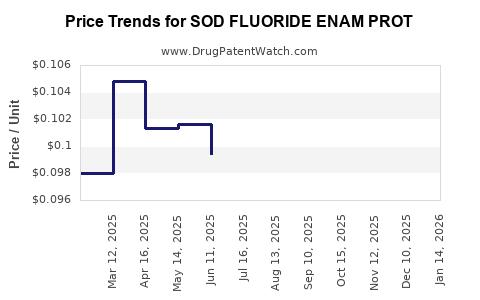
Average Pharmacy Cost for SOD FLUORIDE ENAM PROT
| Drug Name | NDC | Price/Unit ($) | Unit | Date |
|---|---|---|---|---|
| SOD FLUORIDE ENAM PROT 5000PPM | 11527-0745-34 | 0.11924 | ML | 2026-07-22 |
| SOD FLUORIDE ENAM PROT 5000PPM | 11527-0745-34 | 0.11918 | ML | 2026-06-17 |
| SOD FLUORIDE ENAM PROT 5000PPM | 11527-0745-34 | 0.11878 | ML | 2026-05-20 |
| >Drug Name | >NDC | >Price/Unit ($) | >Unit | >Date |
SODIUM FLUORIDE ENAMEL PROTECTOR MARKET ANALYSIS AND PRICE PROJECTIONS
SUMMARY
The global market for sodium fluoride enamel protectors, primarily used in dental hygiene products for caries prevention, is projected to grow steadily. Key market drivers include increasing awareness of oral health, rising disposable incomes in emerging economies, and an expanding product portfolio by manufacturers. Patent expirations for certain sodium fluoride formulations will lead to increased generic competition and price erosion in the near term, while demand for high-purity, specialized formulations for advanced dental treatments is expected to sustain premium pricing.
MARKET OVERVIEW
The sodium fluoride enamel protector market encompasses active pharmaceutical ingredients (APIs) and finished dental products (toothpastes, varnishes, rinses) containing sodium fluoride (NaF) as the primary anticaries agent. Sodium fluoride works by promoting remineralization of tooth enamel and inhibiting demineralization caused by oral bacteria's acid production.
Key Market Segments:
- Product Type:
- Sodium Fluoride API
- Fluoride Toothpastes
- Fluoride Mouthwashes
- Fluoride Varnishes and Gels
- End-Use Application:
- Consumer Dental Care
- Professional Dental Treatments
- Distribution Channel:
- Retail (Supermarkets, Drugstores)
- Dental Clinics and Pharmacies
- Online Sales
MARKET DRIVERS AND TRENDS
Increasing Oral Health Awareness: Global campaigns promoting regular dental check-ups and the benefits of fluoride have bolstered consumer demand for fluoride-containing products. Organizations like the World Health Organization (WHO) recommend fluoride for caries prevention, influencing public health policies and consumer choices [1].
Rising Disposable Incomes: Economic development in Asia-Pacific, Latin America, and Africa has led to increased consumer spending on personal care products, including premium dental hygiene items. This demographic shift is driving growth in markets previously underserved by advanced oral care solutions.
Product Innovation and Diversification: Manufacturers are developing new formulations of sodium fluoride products to cater to specific needs, such as sensitivity, enamel repair, and professional application. Examples include high-concentration fluoride varnishes for in-office treatments and toothpastes with enhanced remineralization properties.
Aging Global Population: Older adults are more susceptible to dental issues such as root caries. This demographic trend supports sustained demand for effective preventative measures like sodium fluoride treatments.
Regulatory Landscape: Regulatory bodies in developed markets (e.g., FDA in the U.S., EMA in Europe) set standards for fluoride concentration and safety in dental products. Compliance with these regulations influences manufacturing processes and product development. For instance, the ADA Seal of Acceptance ensures that a product meets established safety and efficacy criteria for fluoride efficacy in reducing caries [2].
PATENT LANDSCAPE AND COMPETITION
The patent landscape for sodium fluoride formulations is mature. While foundational patents on the use of sodium fluoride in dental care have long expired, innovation continues in areas such as:
- Novel Delivery Systems: Encapsulation technologies, controlled-release matrices, and new application methods for sodium fluoride.
- Synergistic Combinations: Formulations combining sodium fluoride with other active ingredients like hydroxyapatite or xylitol for enhanced efficacy.
- High-Purity Formulations: Development of pharmaceutical-grade sodium fluoride for specialized dental therapies with stringent purity requirements.
Key Patent Expirations and Impact:
Several broad patents covering specific sodium fluoride concentrations and delivery methods in consumer toothpastes and mouthwashes have expired or are nearing expiration. This has opened the door for generic manufacturers to enter the market, leading to price competition.
- Example: Patents covering standard 0.24% sodium fluoride toothpaste formulations, widely used in consumer products, have expired in major markets.
Competitive Dynamics:
The market is characterized by a mix of large multinational consumer goods companies and specialized dental product manufacturers.
- Established Brands: Companies like Colgate-Palmolive, Procter & Gamble, and GSK (now Haleon) dominate the consumer segment with widely recognized fluoride toothpaste brands.
- Professional Dental Suppliers: Companies such as 3M, Dentsply Sirona, and GC Corporation are key players in the professional segment, offering fluoride varnishes, gels, and professional-use rinses.
- API Manufacturers: Several chemical and pharmaceutical companies globally supply pharmaceutical-grade sodium fluoride API to dental product manufacturers. China and India are significant sources of API production.
PRICE PROJECTIONS
Price projections for sodium fluoride enamel protectors are influenced by several factors, including API costs, manufacturing expenses, regulatory compliance, branding, and competitive intensity.
Factors Influencing Price:
- Sodium Fluoride API Cost: Fluctuations in raw material prices, energy costs, and global supply-demand dynamics for chemical precursors impact API pricing.
- Formulation Complexity: Advanced formulations (e.g., controlled-release, combined active ingredients) command higher prices than standard formulations.
- Product Concentration and Efficacy: Higher concentrations of NaF, particularly in professional-grade products, are priced higher.
- Brand Reputation and Marketing: Established brands with significant marketing investments typically achieve premium pricing.
- Generic Competition: The entry of generic products following patent expirations will exert downward pressure on prices for comparable formulations.
- Regulatory Approvals: The cost and time associated with obtaining regulatory approvals for new formulations or enhanced claims contribute to pricing.
- Distribution Channels: Products sold through professional dental channels often have higher retail prices due to markups and perceived value.
Price Projections by Segment:
| Product Segment | Current Average Price Range (USD) | Projected 5-Year CAGR (%) | Key Price Drivers |
|---|---|---|---|
| Sodium Fluoride API | $15 - $50 per kg | 3.0% - 4.5% | Raw material costs, supply chain stability, purity |
| Consumer Toothpaste (Standard) | $1.50 - $5.00 per tube | 2.0% - 3.5% | Brand competition, generic entries, marketing costs |
| Consumer Toothpaste (Premium/Therapeutic) | $5.00 - $10.00 per tube | 4.0% - 6.0% | Unique formulations, targeted benefits, branding |
| Mouthwash (Standard) | $3.00 - $8.00 per bottle | 2.5% - 4.0% | Brand loyalty, promotional pricing |
| Mouthwash (Professional/High Concentration) | $8.00 - $15.00 per bottle | 5.0% - 7.0% | Professional endorsement, specialized use |
| Fluoride Varnishes/Gels | $50 - $200 per kit (professional) | 5.5% - 8.0% | High efficacy, professional application, R&D |
Analysis:
- API Segment: Stable growth is expected, driven by consistent demand from the dental product manufacturing sector. Price increases will be moderate, influenced by manufacturing costs and raw material availability.
- Consumer Toothpaste: Standard formulations will experience price erosion due to generic competition, leading to a lower CAGR. Premium and therapeutic toothpastes, however, will see moderate to strong growth as consumers opt for specialized oral care benefits.
- Mouthwash: Similar to toothpaste, standard mouthwashes will face price pressure, while specialized and professional-grade mouthwashes will command higher prices and see more robust growth.
- Professional Products (Varnishes/Gels): This segment is projected to exhibit the highest growth. Innovations in delivery systems, increased adoption in dental practices for caries prevention in high-risk patients, and demand for advanced clinical solutions will drive both volume and price.
Impact of Patent Expirations:
The expiration of patents for widely used sodium fluoride formulations in consumer products will lead to increased market entry by generic manufacturers. This is expected to:
- Increase Price Competition: Particularly for standard toothpastes and mouthwashes, leading to a downward trend in average selling prices over the next 1-3 years.
- Drive Down API Prices: As demand for generic formulations increases, API manufacturers may face pressure to lower prices.
- Shift Focus to Innovation: Manufacturers will likely prioritize R&D in novel delivery systems, synergistic formulations, and high-purity products to differentiate and maintain premium pricing.
Regional Price Variations:
- Developed Markets (North America, Europe): Mature markets with established regulatory frameworks and high consumer spending on premium oral care products. Prices are generally higher, reflecting R&D investment and brand value.
- Emerging Markets (Asia-Pacific, Latin America): Rapidly growing markets where increased disposable income is driving demand for both standard and premium oral care products. Price sensitivity is higher, but a growing segment is willing to pay for perceived quality and advanced benefits.
MARKET CHALLENGES
Fluoride Safety Concerns and Public Perception: Despite scientific consensus on fluoride's efficacy and safety in recommended concentrations, some public skepticism and misinformation persist regarding potential health risks. This can influence consumer choices and regulatory scrutiny.
Competition from Alternative Oral Care Ingredients: While fluoride remains the gold standard, research into alternative caries prevention agents (e.g., hydroxyapatite, certain natural extracts) continues, potentially impacting market share in specific niches.
Regulatory Hurdles for New Formulations: Obtaining approval for new sodium fluoride formulations or claims can be a lengthy and costly process, particularly for products making therapeutic claims.
Supply Chain Volatility: Global geopolitical events, trade policies, and natural disasters can impact the availability and cost of raw materials and finished products.
KEY TAKEAWAYS
The sodium fluoride enamel protector market is poised for sustained growth, driven by essential oral health benefits and expanding consumer demand. While patent expirations will lead to price moderation in standard consumer product segments due to increased generic competition, the market for innovative, high-purity, and professionally applied sodium fluoride solutions is expected to remain robust, commanding premium pricing. Manufacturers focusing on R&D for novel delivery systems and synergistic formulations will be best positioned to capitalize on market opportunities.
FREQUENTLY ASKED QUESTIONS
-
What is the primary mechanism of action for sodium fluoride in preventing dental caries? Sodium fluoride enhances enamel remineralization by increasing the concentration of fluoride ions in saliva, which then participate in the formation of fluorapatite. Fluorapatite is more resistant to acid dissolution than natural hydroxyapatite, thereby inhibiting demineralization caused by oral bacteria.
-
How do patent expirations specifically impact the pricing of sodium fluoride-based toothpastes? When patents on specific formulations or delivery methods expire, generic manufacturers can produce and market similar products without licensing fees. This increased competition typically leads to lower pricing for comparable toothpastes as manufacturers vie for market share.
-
What are the key differences in pricing between consumer-grade and professional-grade sodium fluoride products? Professional-grade sodium fluoride products, such as dental varnishes and high-concentration gels used in clinical settings, are typically priced higher than consumer-grade toothpastes and mouthwashes. This premium pricing reflects their specialized formulations, higher active ingredient concentrations, intended for professional application, and the higher research, development, and regulatory compliance costs associated with medical devices or prescription products.
-
Which regions are currently the largest consumers of sodium fluoride enamel protectors, and which are projected to see the fastest growth? North America and Europe are currently the largest consumers due to established markets for oral hygiene products and widespread access to dental care. Asia-Pacific, particularly countries with growing economies and increasing middle classes, is projected to experience the fastest growth due to rising disposable incomes and greater awareness of oral health practices.
-
Are there any significant emerging alternatives to sodium fluoride for caries prevention that could disrupt the market? While sodium fluoride remains the most widely researched and recommended active ingredient for caries prevention, emerging alternatives include synthetic hydroxyapatite (SHAP) and stannous fluoride. SHAP aims to directly remineralize enamel, while stannous fluoride offers both anti-caries and anti-gingivitis benefits. However, sodium fluoride's cost-effectiveness, extensive clinical evidence, and established regulatory approval continue to make it the dominant player in the market.
CITATIONS
[1] World Health Organization. (2022). Guideline: sugars intake for adults and children. WHO. https://www.who.int/publications/i/item/9789240056397 (Note: While this guideline focuses on sugar, WHO consistently advocates for fluoride in water fluoridation and dental products for caries prevention as a key public health strategy.)
[2] American Dental Association. (n.d.). The ADA Seal of Acceptance. ADA. https://www.mouthhealthy.org/en/all-topics/a/ada-seal-of-acceptance
More… ↓
