Share This Page
Drug Price Trends for SM STOOL SOFTENER-LAXATIVE TAB
✉ Email this page to a colleague
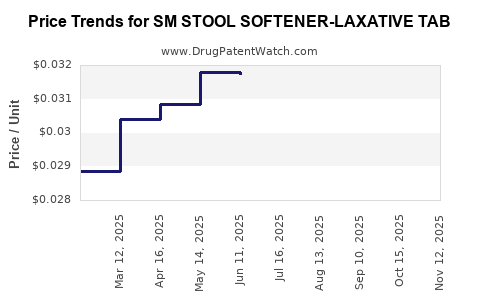
Average Pharmacy Cost for SM STOOL SOFTENER-LAXATIVE TAB
| Drug Name | NDC | Price/Unit ($) | Unit | Date |
|---|---|---|---|---|
| SM STOOL SOFTENER-LAXATIVE TAB | 70677-0083-01 | 0.03270 | EACH | 2025-11-19 |
| SM STOOL SOFTENER-LAXATIVE TAB | 70677-0083-01 | 0.03217 | EACH | 2025-10-22 |
| SM STOOL SOFTENER-LAXATIVE TAB | 70677-0083-01 | 0.03099 | EACH | 2025-09-17 |
| SM STOOL SOFTENER-LAXATIVE TAB | 70677-0083-01 | 0.03094 | EACH | 2025-08-20 |
| >Drug Name | >NDC | >Price/Unit ($) | >Unit | >Date |
Market Analysis and Price Projections for SM Stool Softener-Laxative Tab
SM Stool Softener-Laxative Tab (active ingredient: Docusate Sodium) occupies a stable segment within the over-the-counter (OTC) laxative market. The drug's primary function is to increase the water content of stool, facilitating easier passage and relieving constipation. This mechanism of action positions it as a gentle, non-stimulant laxative suitable for a broad patient population, including pregnant women and the elderly, who often require careful management of bowel regularity. The market for SM Stool Softener-Laxative Tab is characterized by high generic competition, established consumer awareness, and a consistent demand driven by lifestyle and dietary factors.
What is the Current Market Size and Growth Trajectory for SM Stool Softener-Laxative Tab?
The global market for laxatives, a category SM Stool Softener-Laxative Tab belongs to, was valued at approximately $4.5 billion in 2023. This market is projected to grow at a compound annual growth rate (CAGR) of 3.5% from 2024 to 2030, reaching an estimated $5.7 billion by the end of the forecast period. While specific market data for SM Stool Softener-Laxative Tab as a distinct branded entity is limited due to its prevalence as a generic, its active ingredient, Docusate Sodium, accounts for a significant portion of the stool softener sub-segment. This sub-segment is estimated to represent 25-30% of the total laxative market.
Factors contributing to this growth include an aging global population, increasing prevalence of chronic constipation linked to sedentary lifestyles and poor dietary habits, and greater consumer awareness of OTC treatment options. The convenience and accessibility of OTC medications like SM Stool Softener-Laxative Tab are key drivers for sustained demand.
Who are the Key Players and Competitors in the SM Stool Softener-Laxative Tab Market?
The market for SM Stool Softener-Laxative Tab is highly fragmented, dominated by generic manufacturers and private label brands. Major pharmaceutical companies and contract manufacturers produce Docusate Sodium-based stool softeners. Key players in the broader OTC laxative market, which include manufacturers of Docusate Sodium products, include:
- Bayer AG: Through its consumer health division, offering products like MiraLAX (Polyethylene Glycol 3350), a different class of laxative, but a significant player in the overall category.
- Johnson & Johnson: With brands like Tylenol and Benadryl, J&J also has a presence in the digestive health space.
- Procter & Gamble: While not a direct competitor with a Docusate Sodium stool softener under a prominent brand, P&G is a major player in the OTC pharmaceutical market.
- Generic Manufacturers: Numerous companies, including Teva Pharmaceutical Industries, Sandoz (a Novartis division), and Mylan (now part of Viatris), are significant producers of generic Docusate Sodium tablets.
- Retailer Private Labels: Major pharmacy chains and supermarkets (e.g., CVS Health, Walgreens, Walmart, Costco) offer their own branded versions of stool softeners containing Docusate Sodium, often at lower price points.
These competitors vie for market share based on price, product availability, and established distribution channels, particularly within retail pharmacy and mass merchandiser settings.
What is the Pricing Landscape and What are the Price Projections for SM Stool Softener-Laxative Tab?
The pricing for SM Stool Softener-Laxative Tab is heavily influenced by its generic status and the competitive retail landscape. Prices vary based on:
- Dosage Strength: Typically available in 50mg or 100mg capsules/tablets.
- Count Size: Packaging ranges from 30-count to 200-count or more.
- Brand vs. Generic: Branded Docusate Sodium products, if they exist, command a premium over generic formulations.
- Retailer: Prices differ significantly between national pharmacy chains, independent pharmacies, mass merchandisers, and online retailers.
Current Pricing Benchmarks (as of Q2 2024, USD):
-
Generic Docusate Sodium 100mg, 100-count bottle:
- Mass Merchandisers (e.g., Walmart, Target): $5 - $9
- Drug Stores (e.g., CVS, Walgreens): $7 - $12
- Warehouse Clubs (e.g., Costco, Sam's Club): $6 - $10 for larger counts
- Online Retailers (e.g., Amazon, Walmart.com): $5 - $10 for comparable counts
-
Private Label Docusate Sodium 100mg, 100-count bottle:
- CVS Health Brand: $6 - $9
- Walgreens Brand: $6 - $9
- Amazon Basics: $5 - $8
Price Projections:
Given the mature nature of the Docusate Sodium market and the prevalence of generic competition, significant price increases are not anticipated in the near to medium term.
- Short-Term (1-2 years): Prices are expected to remain stable, with minor fluctuations driven by promotional activities and retailer-specific pricing strategies. A potential increase of 1-2% annually may be observed due to inflationary pressures on manufacturing and logistics costs.
- Medium-Term (3-5 years): The market is likely to continue its trajectory with a CAGR of 1-2% for Docusate Sodium products. Price projections will largely mirror the overall OTC laxative market's modest growth. The primary drivers for price stability will be continued generic availability and the price sensitivity of consumers for this class of medication.
- Long-Term (5+ years): Unless there is a significant shift in regulatory policy, the introduction of novel therapeutic alternatives, or a major disruption in the supply chain, prices for SM Stool Softener-Laxative Tab are expected to maintain their steady, low-growth pattern. The market is unlikely to support substantial price hikes due to its established position as an affordable, effective treatment.
Factors that could influence price deviations:
- Raw Material Costs: Fluctuations in the cost of Docusate Sodium API or excipients could impact manufacturing costs, potentially leading to marginal price adjustments.
- Supply Chain Disruptions: Global events affecting manufacturing or transportation could cause temporary price volatility.
- Increased Regulatory Scrutiny: Any new regulatory requirements for manufacturing or labeling could increase compliance costs for producers.
- Competitive Dynamics: Aggressive pricing by large retailers or manufacturers could lead to price wars, temporarily lowering consumer prices.
What are the Regulatory and Patent Landscape Considerations for SM Stool Softener-Laxative Tab?
SM Stool Softener-Laxative Tab, containing Docusate Sodium, is a well-established drug with a long history of use.
- Patent Expiry: The original patents for Docusate Sodium have long expired. This means that no company holds exclusive patent rights for the active pharmaceutical ingredient itself.
- Formulation Patents: While the API is off-patent, specific formulations, delivery mechanisms (e.g., delayed-release capsules, liquid concentrates), or combination therapies involving Docusate Sodium may have had or could have their own patents. However, for the standard tablet/capsule form, such patents are rare and typically short-lived.
- Generic Approval: Regulatory bodies like the U.S. Food and Drug Administration (FDA) have approved numerous generic versions of Docusate Sodium. Approval for generics relies on demonstrating bioequivalence to the reference listed drug.
- Market Exclusivity: The primary barrier to entry is not patent protection but rather the cost and complexity of achieving regulatory approval, establishing manufacturing capabilities, and building distribution networks.
- Labeling and Advertising: Regulatory bodies oversee the labeling and advertising of OTC drugs to ensure safety, efficacy, and accurate claims. This includes adhering to Good Manufacturing Practices (GMP).
Regulatory Landscape:
The regulatory environment for OTC drugs like SM Stool Softener-Laxative Tab is characterized by:
- Over-the-Counter (OTC) Monograph System: Docusate Sodium is generally recognized as safe and effective (GRASE) for its indicated uses and falls under the OTC monograph system in the U.S. This system streamlines the approval of many common OTC drugs.
- FDA Oversight: The FDA regulates the manufacturing, labeling, and marketing of all drugs, including OTCs, to ensure they meet quality, safety, and efficacy standards.
- State-Level Pharmacy Regulations: State boards of pharmacy govern dispensing practices, labeling requirements, and the scope of practice for pharmacists, which indirectly affects the availability and sale of OTC products.
- International Variations: Regulatory requirements vary by country, with agencies such as the European Medicines Agency (EMA) and Health Canada having their own frameworks for OTC drug approval and oversight.
What are the Market Trends and Future Outlook for SM Stool Softener-Laxative Tab?
The market for SM Stool Softener-Laxative Tab is influenced by several key trends:
- Aging Population: The demographic shift towards an older population is a primary driver for constipation treatments. Elderly individuals are more prone to constipation due to reduced mobility, changes in diet, and comorbidities.
- Lifestyle and Diet: Sedentary lifestyles, inadequate fiber intake, and insufficient hydration remain significant contributors to constipation, sustaining demand for laxatives.
- Consumer Preference for Gentle Laxatives: Patients often prefer gentler, non-stimulant laxatives like stool softeners due to concerns about dependence and cramping associated with stimulant laxatives. This preference favors Docusate Sodium.
- Rise of E-commerce: Online sales channels are increasingly important for OTC medications. Consumers can easily compare prices and purchase convenience products like stool softeners through various online platforms. This trend may lead to greater price transparency and pressure.
- Increased Health and Wellness Awareness: Consumers are more proactive in managing their health, leading to greater self-treatment of common ailments like constipation.
- Competition from Alternative Treatments: While Docusate Sodium is well-established, it faces competition from other classes of laxatives (e.g., osmotic laxatives like polyethylene glycol, bulk-forming laxatives like psyllium) and emerging natural or dietary solutions. However, the low cost and established efficacy of Docusate Sodium maintain its market position.
Future Outlook:
The outlook for SM Stool Softener-Laxative Tab is stable. The drug's established safety profile, affordability, and gentle mechanism of action ensure continued demand. While radical growth is unlikely, the market is expected to grow in line with the broader OTC laxative category, driven by demographic trends and lifestyle factors. Innovation in this segment is limited, with most developments focusing on improved delivery formats or combination products, rather than novel active ingredients. The primary competitive advantage will continue to be cost-effectiveness and broad availability.
What are the Risks and Opportunities for Stakeholders in the SM Stool Softener-Laxative Tab Market?
Risks:
- Intense Price Competition: The highly genericized nature of the market leads to significant price pressure, impacting profit margins for manufacturers and distributors.
- Retailer Dominance: The strong influence of large retail chains and private label brands can dictate pricing and product placement, limiting the negotiating power of smaller manufacturers.
- Regulatory Changes: Any unforeseen changes in FDA regulations regarding OTC drug monographs, labeling, or manufacturing standards could increase compliance costs.
- Emergence of New Therapies: While unlikely to displace stool softeners entirely, disruptive new therapeutic approaches for constipation management could marginally reduce market share.
- Supply Chain Volatility: Dependence on global supply chains for APIs and raw materials can expose manufacturers to risks from geopolitical events, natural disasters, or pandemics.
Opportunities:
- Growing Demand from Aging Population: This demographic is a consistent and expanding consumer base for stool softeners.
- Expansion through Private Labeling: Manufacturers can secure consistent sales by partnering with retailers to produce private label versions of Docusate Sodium.
- E-commerce Channel Growth: Increased online sales present opportunities for wider distribution and direct-to-consumer engagement.
- International Market Penetration: As global populations age and lifestyles evolve, demand for accessible OTC treatments like stool softeners is rising in emerging markets.
- Product Line Extensions: While innovation is limited, there may be opportunities for niche formulations, such as sugar-free or dye-free options, or larger package sizes to cater to specific consumer preferences or bulk purchasing.
Key Takeaways
- SM Stool Softener-Laxative Tab (Docusate Sodium) operates within a mature, genericized OTC laxative market valued at approximately $4.5 billion, projected to grow at 3.5% CAGR.
- The market is highly competitive, dominated by generic manufacturers and retailer private labels, with major pharmaceutical companies also participating in the broader laxative category.
- Prices for generic Docusate Sodium are stable and projected to grow minimally (1-2% annually) due to intense competition and its status as an affordable staple.
- The patent landscape for Docusate Sodium has long expired, with regulatory approval based on bioequivalence for generic versions.
- Market growth is driven by an aging population, lifestyle factors, and consumer preference for gentle laxatives. E-commerce is a growing sales channel.
- Key risks include price competition and retailer dominance, while opportunities lie in the expanding elderly demographic and e-commerce growth.
Frequently Asked Questions
-
Will the price of SM Stool Softener-Laxative Tab increase significantly due to raw material costs? Significant price increases due to raw material costs are unlikely. While API costs can fluctuate, the highly competitive generic market for Docusate Sodium means manufacturers typically absorb minor cost increases or pass them on very gradually, preserving volume.
-
Are there any emerging alternative treatments that could threaten the market for Docusate Sodium? While new therapies for constipation are under development, for the specific indication of gentle stool softening, Docusate Sodium's established safety profile, affordability, and broad accessibility make it resilient. Disruptions are more likely to affect stimulant laxatives or broader constipation management categories.
-
What is the impact of online retailers on the pricing and distribution of SM Stool Softener-Laxative Tab? Online retailers have increased price transparency and accessibility. They often offer competitive pricing and a wide range of product sizes, which can put downward pressure on prices across all sales channels and expand distribution reach.
-
Does the FDA have specific regulations for stool softeners beyond general drug safety and efficacy? Docusate Sodium falls under the OTC monograph system in the U.S., meaning it is generally recognized as safe and effective for its labeled indications. Regulations focus on manufacturing standards (GMP), labeling accuracy, and consumer safety, rather than unique prescription-level controls.
-
What is the primary advantage SM Stool Softener-Laxative Tab holds over other laxative types? Its primary advantage is its gentle, non-stimulant mechanism of action, which softens stool by increasing water content. This makes it suitable for a wider range of users, including those who may experience cramping or dependency with stimulant laxatives, and positions it as a preferred choice for chronic or occasional mild constipation.
Citations
[1] Grand View Research. (2024). Laxatives Market Size, Share & Trends Analysis Report By Type (Stimulant, Bulk-forming, Stool Softeners, Lubricant), By Distribution Channel (Hospital Pharmacies, Retail Pharmacies, Online), By Region, And Segment Forecasts, 2024 - 2030. Retrieved from https://www.grandviewresearch.com/industry-analysis/laxatives-market
[2] U.S. Food and Drug Administration. (n.d.). Over-the-Counter (OTC) Monograph Reform. Retrieved from https://www.fda.gov/drugs/over-the-counter-otc-drugs/over-the-counter-otc-monograph-reform
[3] Persistence Market Research. (2023). Laxatives Market: Global Industry Analysis, Size, Share, Growth, Trends, and Forecast 2023-2033. Retrieved from https://www.persistencemarketresearch.com/market-research/laxatives-market.asp
More… ↓
